Politics
Ebonyi Commissioner Dismisses “Auto Reverse Gear” Verdict On

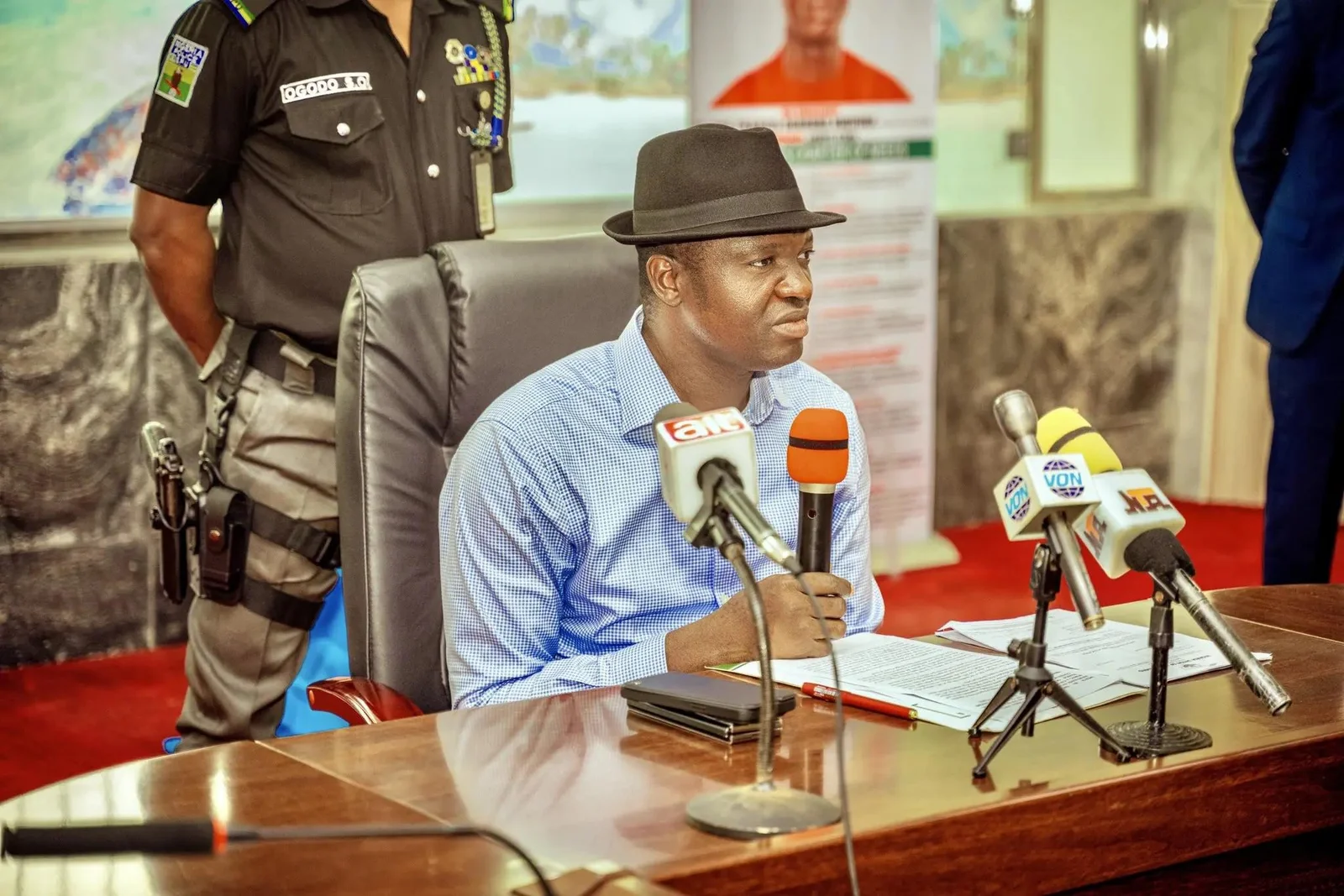
The Ebonyi State Commissioner for Information and Communication Technology (ICT), Uzoh Machiavelli, has dismissed the verdict by critics that the state has been placed on “auto reverse gear” under Governor Francis Nwifuru.
The commissioner challenged the opposition in the state to produce empirical evidence to substantiate the allegation.
Key Highlights:
- Ebonyi Commissioner Uzoh Machiavelli rejected claims that Governor Nwifuru is taking the state backwards.
- He cited projects in roads, education, healthcare, ICT and agriculture as evidence of progress.
- The government also highlighted youth empowerment, scholarships, housing and workers’ welfare.
- Uzoh challenged critics to provide verifiable evidence of the alleged decline.
- He pledged support for Nwifuru and Tinubu’s re-election in 2027.
He vowed to mobilize massive support for the re-election of Governor Nwifuru and President Bola Tinubu in 2027.
Uzoh, in a statement on Tuesday, said the verdict contradicts developments across key sectors of the state, including education, healthcare, infrastructure, agriculture, digital technology, workers’ welfare, youth empowerment and industrialisation.
He was reacting to comments attributed to opposition figures, including Awuzie Frankline and Pascal Okechukwu, who had criticized the Nwifuru administration and alleged that the state was regressing under the governor.
The commissioner said political criticism is legitimate in a democracy but should be based on verifiable facts, policies and measurable outcomes rather than personal attacks and unsubstantiated assertions.
According to him, Nwifuru’s administration has pursued its “People’s Charter of Needs” through programmes designed to improve the welfare and living conditions of workers, pensioners, youths, women and vulnerable residents.
Uzoh cited the payment of pension and gratuity arrears dating back to 1996, overseas scholarships for more than 1,000 Ebonyians pursuing Master’s and PhD programmes, construction of smart model schools across communities and the establishment of an ICT university as evidence of the government’s investment in human capital.
He also listed the upgrading and equipping of healthcare facilities, recruitment of health workers, improved remuneration and welfare packages for resident doctors, as well as the enrolment of civil servants and about 200,000 residents in the state health insurance scheme.
On infrastructure, the commissioner said the government has embarked on road construction across the state, including at least two-kilometre roads in the autonomous communities, while more than 800 kilometres of rural and community roads had either been initiated or completed.
He mentioned several major projects, including the 23-kilometre Stadium-Nwofe Road, 19-kilometre Obvudechi-Iziogo Road with a two-span bridge, Ebonyi Ring Road, New Mile 50 Road, Court Area Okposi-Isinkwo-Ojigwe Road, Okebigwe-Nworie Road, Akanu Ibiam Road, Ndibe-Nkpoghoro Road and other inter-community and feeder roads.
Uzoh said the administration has equally invested in housing and resettlement programmes, including houses for widows and vulnerable residents, 140 housing units for civil servants and more than 400 housing units for people displaced by communal conflicts.
The commissioner said the state’s digital transformation drive has seen the deployment of fibre-optic infrastructure across the capital and other areas, the provision of free internet services for students and public offices, and training and certification of more than 2,000 Ebonyians in advanced ICT skills.
Read also:
He further disclosed that the government has intensified its industrialisation programme through the revitalisation of the pipe production, hatchery and fertiliser factories,
On agriculture and youth empowerment, Uzoh said 200 young Ebonyians trained at CSS Farms in Gora, Nasarawa State, received N5 million each as start-up capital, representing a N1 billion intervention.
He added that 300 other youths trained in rice production, fishery, poultry, piggery and other agro-based enterprises were empowered with N3 million each, while 500 Ebonyians received N2 million business grants and another 1,500 youths were given N1 million each to support their businesses and livelihoods.
The commissioner argued that the programmes represent a deliberate attempt by the government to combine skills, capital and opportunity to create sustainable livelihoods rather than merely announce empowerment initiatives.
Uzoh also attributed the state’s development strides partly to the peace and security sustained under the present administration, stressing that investors, businesses and farmers could not operate effectively in an atmosphere of insecurity.
He therefore challenged those alleging that Ebonyi was on “auto reverse gear” to identify the sector they believed had collapsed, the major projects they claimed had been abandoned, the policies they considered failures and the measurable development indicators that had regressed.
“Criticism is healthy in a democracy, but it should be constructive. You can disagree with Governor Nwifuru’s policies, question his priorities and challenge his figures, but serious criticism must be supported by evidence,” he said.
Uzoh maintained that the scale of interventions in infrastructure, education, healthcare, agriculture, ICT, industrialisation and human capital development did not support the claim that Ebonyi was moving backwards.
He urged political actors and commentators ahead of the 2027 elections to shift the conversation from personal attacks to issues, policies and verifiable records, insisting that “facts do not become false because they are inconvenient.”
The commissioner said the Nwifuru administration would remain focused on its development agenda and urged Ebonyians to judge the government by its programmes, projects and impact on the lives of citizens.


Kano APC rally: Ahmed Bala hails TSG, Faleke, says four years not enough to consolidate Tinubu’s reforms

EPL: ‘No longer sharp, quick’ – Carragher names who to blame for Arsenal’s first goal against Chelsea

“If Peter Obi becomes President, insecurity will become a thing of the past” – Ex-military officer declares

2027: If You Had The Guts To Challenge Sitting President, Why Didn’t You Come Out? – Sambo Fires Datti

Evening recap: FG to give Nigerian shipowners $25m, Drivers, cooks, traders can own refinery shares, other top stories

Oyo 2027: Civil servants wait for seven to 10 years before receiving entitlements – ADC guber candidate

CBN Deputy Governor Emem Usoro Who Was Side Chic To A Married Man Accused Of Watching Him Take His Last Breath, Buried Him Alone And Took His Death Certificate From His Wife – Secrets Reporters Nigeria

Paper Promises vs. Real Pulses: Why Nigeria’s Hypertension Crisis Demands Cash-Backing, Not Just Budget Speech-Making – Professor Emmanuel Alhassan and LISDEL

Ibiyeomie Rejects Offerings From Internet Fraudsters, Tells Them To Leave » Apples Bite Int’l Magazine

Exclusive: Niger Delta Suffers While MDGIF Director Oluwole Adama Hides N12.9 Billion Natural Gas Fund – Secrets Reporters Nigeria

Sowore slams blockade of Peter Obi’s convoy in Benue

Harry Kane, Kylian Mbappé lead 30-man Ballon d’Or 2026 shortlist

2027: Lagos APC Says Tinubu Deserves Second Term

2027: NDC Speaks on Alleged Diversion of Aspirants’ Levies, Donations

4.72 CGPA: How Trader’s Son Became First-Class Trailblazer at Moses Orshio Adasu University

Penis enlargement fillers aren’t risk-free, doctor warns after Nigerian-British man’s death

Benue Govt Denies Sponsoring Thugs To Block Peter Obi From Entering State

Military air strikes kill several suspected terrorists in Zamfara

Nigerians Condemn Beating Of 2 Women For Alleged Theft

87-year-old man Allegedly Cūt Off Judge’s Hand in Fufore, Adamawa — Att&cked Him During Court Case Over Dispute

 News17 hours ago
Evening recap: FG to give Nigerian shipowners $25m, Drivers, cooks, traders can own refinery shares, other top stories
- Headlines9 hours ago
Oyo 2027: Civil servants wait for seven to 10 years before receiving entitlements – ADC guber candidate
 News14 hours ago
CBN Deputy Governor Emem Usoro Who Was Side Chic To A Married Man Accused Of Watching Him Take His Last Breath, Buried Him Alone And Took His Death Certificate From His Wife – Secrets Reporters Nigeria
- News11 hours ago
Ibiyeomie Rejects Offerings From Internet Fraudsters, Tells Them To Leave » Apples Bite Int’l Magazine
 News14 hours ago
Exclusive: Niger Delta Suffers While MDGIF Director Oluwole Adama Hides N12.9 Billion Natural Gas Fund – Secrets Reporters Nigeria
- News9 hours ago
Investigation: SEEPCO’s Anthony Chukwueke Was the FG Regulator Sacked in 2007 for Improperly Awarding Oil Licenses and Is Now Chairman of the Company That Walked Away With Nigeria’s Richest Well – Part One – Secrets Reporters Nigeria
- Politics7 hours ago
‘After Working With Peter Obi, You Risk Suffering Post-political Identity Crisis’ – Kenneth Okonkwo Defends Datti
- News7 hours ago
Shettima Tasks Transporters on Peaceful Mobilisation for Tinubu’s 2027 Re-election Bid » Apples Bite Int’l Magazine