Metro
Chimamanda Adichie Says Son’s Death Changed Her Feelings Towards Nigeria

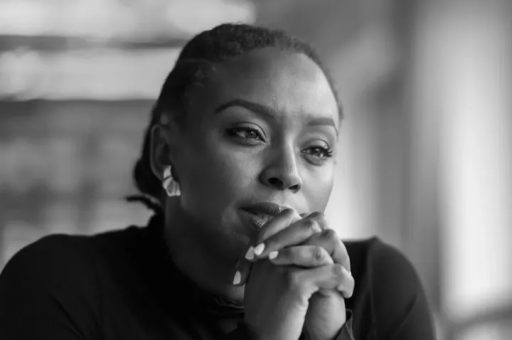
Award-winning Nigerian author Chimamanda Ngozi Adichie has said the death of her 21-month-old son, Nkanu, has changed her feelings towards Nigeria, saying she no longer wants to return to the country. Adichie made the disclosure in an interview with The New York Times, where she reflected on the death of……
Award-winning Nigerian author Chimamanda Ngozi Adichie has said the death of her 21-month-old son, Nkanu, has changed her feelings towards Nigeria, saying she no longer wants to return to the country.
Adichie made the disclosure in an interview with The New York Times, where she reflected on the death of her son in Lagos in December 2025 and how the loss has affected her relationship with her home country.
Nkanu, one of the twin boys Adichie had with her husband, Ivara Esege, became ill while the family was spending the holidays at their home in Lagos.
According to the interview, Nkanu initially developed what appeared to be a cold and later developed a fever. Esege, a physician, started him on antibiotics, but the child did not improve.
The couple subsequently took him to a local children’s hospital. Esege also contacted Johns Hopkins Hospital in the United States, where the family has a home, and doctors there agreed to take Nkanu as a patient but requested additional tests before he could be transported.
Read Also: Chimamanda Adichie Issues Legal Notice To Lagos Hospital Over Son’s Death
The couple then took Nkanu to Euracare in Lagos for an MRI examination.
Adichie told The New York Times that her son was sedated with propofol to keep him still during the examination. She was waiting outside when a doctor hurried into the room where Nkanu was undergoing the procedure.
She said she waited in “pure panic” before the doctor returned and told her that the child had been given too much propofol.
Adichie said she had trusted the doctor, whom she knew from accompanying her parents to their medical check-ups at Euracare.
She told the newspaper that she had considered him a friend and recalled that he had been kind to her after her father died.
The circumstances surrounding Nkanu’s death are now the subject of a coroner’s inquest. Adichie and Esege have urged the inquest to investigate what happened, saying they hope the process can help improve Nigeria’s healthcare system.
The couple told The New York Times that they are not suing the hospital or the doctors and that they want a better healthcare system.
The death has also affected Adichie’s longstanding connection to Nigeria.
The author has spent much of her career writing about Nigeria and the experiences of Nigerians at home and abroad. In the interview, she described Nigeria as a country that had been deeply connected to her identity and her development as a writer.
She said that while the United States made it possible for her to pursue writing as her life’s vocation, Nigeria gave her what she needed to become a writer.
“I think that America made it possible for me to write, which is my life’s vocation,” she said.
“But Nigeria gave me everything I needed to be able to write. And I feel grateful for that.”
However, the loss of her son has changed that relationship.
When asked whether Nigeria was still where she felt she was supposed to be, Adichie spoke about the difficulty of processing her son’s death.
“I mean, it is so surreal, all of this. I still can’t believe we’re talking about my son who died,” she said.
“You’re going through something, but you also feel like you’re outside of it.”
She then gave a direct response about returning to Nigeria.
“I do not want to go back to Nigeria,” she said.
Despite this, Adichie said her children remain deeply connected to Nigeria.
She told the newspaper that she and Esege had planned to return to Nigeria and that their children had been raised to love the country while also understanding its challenges.
Her daughter, she said, considers Nigeria her “happy place” and is one of the reasons the family would return.
Adichie said her surviving son also talks about his brother being in Lagos.
The author said that before Nkanu’s death, she and her family had effectively maintained two homes and regularly spent Christmas, Easter and summers in Nigeria.
She said the loss of her son had now complicated that relationship with the country she had always considered home.
For Adichie, the grief has also been physically and emotionally overwhelming.
Reflecting on the loss, she said grief had become something she felt in her body and described the difficulty of coping while caring for her other children.
She also recalled having to continue being a mother even while dealing with the loss of Nkanu.
The interview comes months after Adichie publicly raised concerns about the medical treatment her son received before his death.


SEDC To Roll Out Community -Based Social Impact Programmes To Improve Livelihoods In Rural Communities

Evening Recap: Man stabs Sokoto Islamic cleric, FG pays ex-Nigeria Airways workers N18bn, other top stories

Morning recap: Again, Nigerians lose savings to Ponzi scheme, Dangote refinery raises petrol gantry price, other top stories

Lagos Government Dismisses Viral Video Showing People Living Under Oja Oba Bridge » Apples Bite Int’l Magazine

Infinix Launches GT 50 Pro: The Ultimate Hardcore Gaming Flagship with Industry-First Cooling and Control

Evening recap: Bamanga Tukur dies at 90, Dangote projects N10,000 refinery shares, 54 countries offer eVisa, other top stories

“You cannot pin anything on him” – Gospel minister, Lawrence Oyor speaks on Peter Obi’s political record

ALERT: Nigerian Army Warns of Possible Coordinated Terrorist Attacks on Churches, Schools and Youth Camps

We Won’t Release You Until The Network Improves — Residents Tell Telecom Employee As They Tie Him To A Pole Over Poor Network

“Is NELFUND Upkeep Meant To Feed The Student Or Her Family?” — APC Campaign Spokesman’s ₦10,000 Example Raises Questions

BRICS: Nigeria seeks reform of UN, global financial system

Nigerian-American teenager Ugochukwu wins Formula 3 title

2026 U-20 WWC: Falconets annihilate New Caledonia to book Round of 16 spot

Why Northern women Ulama endorsed Tinubu – Uba Sani
Why Northern women Ulama endorsed Tinubu – Uba Sani

Movement mobilises Nigerians for International Praise Day

Gunmen attack NDC members during meeting in Enugu
Gunmen attack NDC members during meeting in Enugu
Russia hits Poland-Ukraine border area amid wave of attacks targeting gas stations, Kyiv says

U-20 World Cup: Falconets Thrash New Caledonia 10-1, Reach Round Of 16

 News21 hours ago
Evening recap: Bamanga Tukur dies at 90, Dangote projects N10,000 refinery shares, 54 countries offer eVisa, other top stories
- Politics18 hours ago
ALERT: Nigerian Army Warns of Possible Coordinated Terrorist Attacks on Churches, Schools and Youth Camps
- Special Report21 hours ago
We Won’t Release You Until The Network Improves — Residents Tell Telecom Employee As They Tie Him To A Pole Over Poor Network
- Entertainment22 hours ago
Verydarkman shares first video of Poco Lee and Burna Boy following his alleged release from UK prison
- Metro19 hours ago
“Is NELFUND Upkeep Meant To Feed The Student Or Her Family?” — APC Campaign Spokesman’s ₦10,000 Example Raises Questions
- Special Report20 hours ago
Foreign Minister, Hon Okudzeto Ablakwa Presents Chop Boxes, Beds And 100 Bicycles To North Tongu Students Ahead Of SHS Resumption
- Headlines10 hours ago
EPL: Why I played Ola Aina as centre-back in 2-1 win over Aston Villa – Nottingham Forest boss, Glasner
- News8 hours ago
Morning recap: Terrorists plot attacks on Osun worship centres, Lagos crackdown raises child protection concerns, other top stories