Metro
APC Unveils Roadmap To $1tn Economy By 2030

The All Progressives Congress (APC) has unveiled an economic roadmap aimed at transforming Nigeria into a $1 trillion economy by 2030, anchored on infrastructure, industrialisation, energy, human capital development and increased trade….
The All Progressives Congress (APC) has unveiled an economic roadmap aimed at transforming Nigeria into a $1 trillion economy by 2030, anchored on infrastructure, industrialisation, energy, human capital development and increased trade.
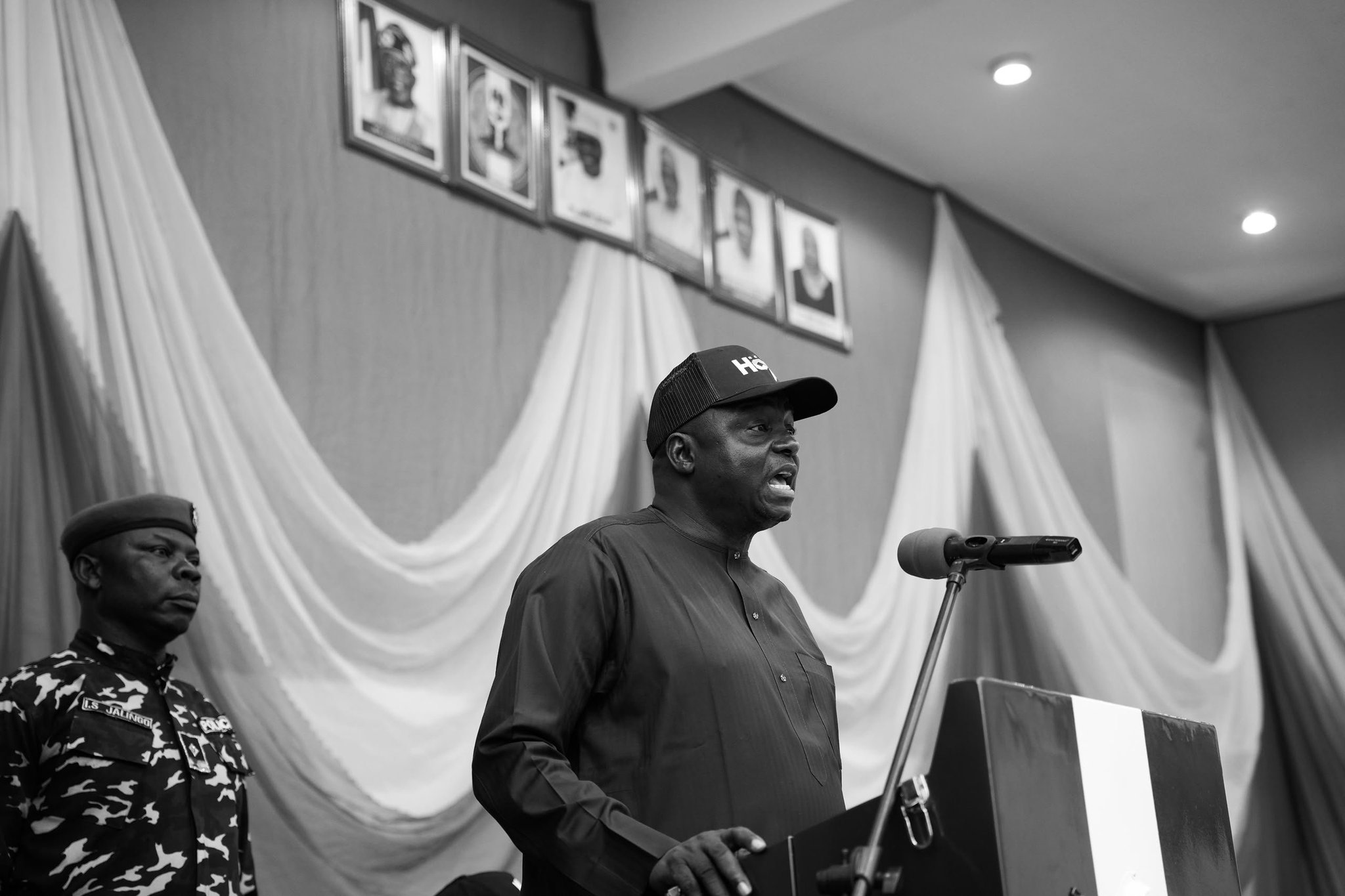
The National Chairman of the party, Prof. Nentawe Yilwatda, disclosed this on Monday while representing President Bola Ahmed Tinubu as Special Guest of Honour at the second edition of the Asiwaju Scorecard Series/Asiwaju Policy Roundtable organised by the APC Professional Forum.
Yilwatda said the administration inherited an economy burdened by fuel subsidy distortions, multiple foreign exchange windows, weak revenue mobilisation, foreign exchange shortages, rising debt-service obligations and years of inadequate infrastructure investment.
He said the removal of fuel subsidy and foreign exchange reforms were difficult but necessary measures to reposition the economy.
According to him, recent economic indicators show that the foundation for growth is strengthening, citing external reserves of about $52.7 billion as of August 2026, consolidated non-oil revenue of N16.4 trillion in the first two quarters of 2026, real GDP growth of 4.43 per cent in the second quarter and a decline in inflation to about 15.4 per cent.
“These figures do not mean that our economic challenges have disappeared, but they demonstrate that the direction of travel has changed,” he said.
Yilwatda stressed that macroeconomic stability was only the foundation, insisting that the ultimate measure of the administration’s policies would be improvements in Nigerians’ living standards.
“The ultimate test is when stability translates into cheaper food, more jobs, affordable credit, reliable electricity and greater purchasing power for Nigerians,” he said.
The APC chairman proposed an integrated five-port maritime and logistics corridor linking major deep-sea ports in Lagos, Ondo, Akwa Ibom, Rivers and Cross River through modern rail and road networks.
He said the Lagos-Calabar Coastal Super Highway could serve as the principal coastal road spine, while rail and road corridors would connect the ports to production centres, markets and neighbouring countries.
He identified the Lagos-Abuja-Kaduna-Kano rail corridor and the proposed Sokoto-Badagry Super Highway as key components of the Western Corridor, while the Port Harcourt-Abuja-Kaduna-Kano rail corridor and proposed Calabar-Maiduguri Trans-Sahara Super Highway would strengthen the Eastern Corridor.
According to him, the network could eventually connect Nigeria’s maritime gateways with landlocked markets in Niger, Chad, Burkina Faso, Sudan and the Central African Republic.
“This is how Nigeria can move beyond being simply a coastal trading nation to becoming the maritime gateway and logistics hub of West and Central Africa,” he said.
Yilwatda described the infrastructure plan as “a trade architecture”, saying it would create opportunities in logistics, warehousing, manufacturing, banking, insurance, agro-processing and distribution.
He called for industrial parks, export-processing zones, logistics parks and agro-processing clusters to be established along the corridors.


Ex-IYC President Advises Tinubu To Channel Subsidy Removal Savings Into Rehabilitating Refineries, Strengthening LG Autonomy

‘Why can’t Nigerians buy petrol for N441-N872 per litre like, Saudi Arabia, others’ – Atiku questions Tinubu

Adeleke happy with UNIOSUN’s meteoric rise, extends VC’s tenure by two years, inaugurates new governing council

Evening recap: Tinubu targets $1tn economy, police rescue NYSC members, IPOB threatens 2027, other top stories

“If America, Cannot Fully Open Tinubu’s Drug Files, Who Told You Obi or Atiku Can Win Without a Revolution?” – IPOB

“No Office, Title Or Social Status Places Anyone Above The Law” — Olukoyede Says EFCC Secured 10,872 Convictions In 34 Months

Private Business Claims Linked to Permanent Secretary John Chidiebere Ezeamama in Violation of Code of Conduct for Civil Servants – Secrets Reporters Nigeria

2027: Nigerians Would Have Known Him For Four Years – ADC Spokesperson Reveals How Atiku Will Defeat Tinubu

BUSTED: Highly Classified Intelligence Report Reveals Bola Tinubu Is Not on Vacation, But in Europe to Seek Political Protection From His “Friends” to Ensure His US Drug-Related Documents Are Never Released
Atiku’s Absence At Coalition Talks For Single-candidate Should Not Be Interpreted As Boycott – Phrank Shaibu

Ballon d’Or 2026: Kane didn’t win World Cup – Frank Verlaat picks top candidate for award
Ballon d’Or 2026: Kane didn’t win World Cup – Frank Verlaat picks top candidate for award

Army rescues retired general’s wife hours after Abuja abduction – The Witness Nigeria

Tinubu hails Shettima as ‘patriot, trusted ally’ on 60th birthday

EFCC Arraigns Man Over Alleged N1.09bn Proceeds of Criminal Activity

Oluremi Tinubu celebrates Shettima at 60

IGP narrates how Air Force strike paved way for ‘2Baba’s death’
IGP narrates how Air Force strike paved way for ‘2Baba’s death’
IGP narrates how Air Force strike paved way for ‘2Baba’s death’

Brazil’s China borrowing, Trump accuses 9 Latam countries: 7 Latin America relations reads

 News14 hours ago
Evening recap: Tinubu targets $1tn economy, police rescue NYSC members, IPOB threatens 2027, other top stories
- News13 hours ago
Private Business Claims Linked to Permanent Secretary John Chidiebere Ezeamama in Violation of Code of Conduct for Civil Servants – Secrets Reporters Nigeria
- Politics12 hours ago
2027: Nigerians Would Have Known Him For Four Years – ADC Spokesperson Reveals How Atiku Will Defeat Tinubu
- Politics17 hours ago
Atiku’s Absence At Coalition Talks For Single-candidate Should Not Be Interpreted As Boycott – Phrank Shaibu
- Politics21 hours ago
Tinubu’s Old Certificate and U.S. Forfeiture Controversies Resurface Ahead of Nigeria’s 2027 Election
- News12 hours ago
N10 Billion Paid To Six Months Old Company And Four Ghost Companies: Inside Fmr Minister Wale Edun, NRS Chairman Zaach Adedeji And Perm. Sec Lydia Jafiya’s PCNGI Contract Heist – Secrets Reporters Nigeria
- Politics14 hours ago
You Are Attacking Atiku’s Policy Because He Has Chosen To Stand With Nigerians – Phrank Shaibu To Tinubu
- Politics20 hours ago
CRITICAL THREAT ALERT: Hundreds of Armed Fighters Moving Toward Kaduna; Churches in Southern Kaduna and Plateau Placed on Red Alert