Metro
Spain Installs Floating Border Barrier After Deadly Ceuta Migrant Surge

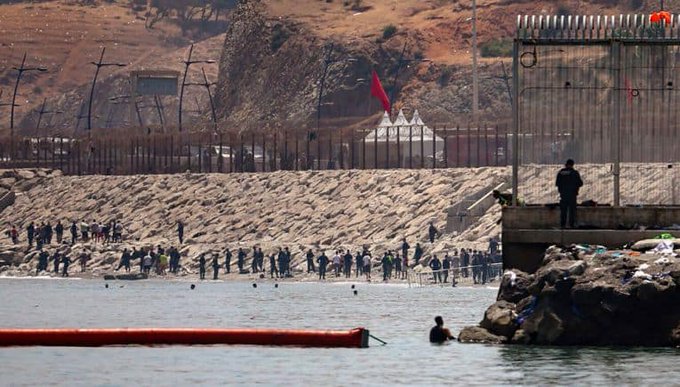
Spain has begun installing a 500-metre floating barrier off the coast of Ceuta following a mass influx of illegal migrants that left at least 67 people dead, according to Reuters. Spanish authorities said illegal migrant crossings into the North African enclave came to a halt overnight after police and the……
Spain has begun installing a 500-metre floating barrier off the coast of Ceuta following a mass influx of illegal migrants that left at least 67 people dead, according to Reuters.
Spanish authorities said illegal migrant crossings into the North African enclave came to a halt overnight after police and the Civil Guard began deploying the floating barrier on Saturday along the maritime border with Morocco.
The development follows an unprecedented migration surge that saw about 50,000 people attempt to enter Ceuta by land and sea since Thursday, making it one of the largest migration incidents ever recorded at one of the European Union’s only land borders with Africa.
Spanish authorities said more than 48,000 migrants were returned to Morocco within 48 hours as part of efforts to restore order at the border.
Reuters footage showed Spanish soldiers and police patrolling the largely deserted Tarajal beach, one of the main entry points into Spanish territory.
Read Also: Spain’s Unai Simón Makes World Cup History With Unprecedented Clean Sheet Record
The Spanish government said the Civil Guard started installing the barrier at the Tarajal breakwater on Saturday. The inflatable structure, supported by anchored buoys, extends between 30 and 70 centimetres above the water and reaches up to one metre below the surface. It also features a navigable opening to allow Civil Guard patrol vessels to pass through.
Spanish officials said at least 67 bodies have been recovered on the Spanish side of the border, with many of the victims believed to have drowned or died while attempting to climb the breakwater and border fence.
Authorities attributed the surge to worsening economic conditions facing many migrants, while also blaming false information circulated on social media that encouraged thousands to attempt the dangerous crossing.


Lere Olayinka Mocks Peter Obi For Saying He Would’ve Led Soldiers To Rescue Orrire Kidnapped Victims If He Was President

Peter Obi Is A Classless Politician, Wants To Destroy Every Rising Star From Southeast – Kenneth Okonkwo

Northern Bishops Break Decades of Silence, Confront Nigeria’s Escalating Anti‑Christian Terror Campaign

“Peller sell this cloth for ₦1 million, chop my money” – Kolu speaks after arriving at Peller and Jarvis’ wedding venue

“They always come back to apologise” – Prudent Gabriel opens up about former students, workers who wronged her

Ministers Of Foreign Affairs, Aviation To Host Third Edition Of The Expatriates Business Awards In Abuja

Aare Adetola EmmanuelKing, The National Golden Patron of PCRC, Hosts Ogun CP On Security Summit In Remoland
“I was asked to resign immediately” – TikToker Becca recounts losing her banking job over social media content

Anthony Joshua’s Possible Return to Nigeria Excites Boxing Fans
“My son is avoiding me”- Mother cries out over what she saw in 16-year-old son bag

NDLEA intercepts China, Italy-bound cocaine concealed in mortar, backpack

WAFU B U-20: Flying Eagles aim to seal Group B top spot against Burkina Faso
WAFU B U-20: Flying Eagles aim to seal Group B top spot against Burkina Faso
WAFU B U-20: Flying Eagles aim to seal Group B top spot against Burkina Faso

Popular Juju singer St Janet dies after brief illness

SERAP Urges Tinubu To Probe Alleged ₦6.79bn Missing Police Funds, Firearms

Atiku Does Not Regret Working With Obasanjo – Paul Ibe

Husband Confronts Wife at August Meeting Over Sick Child

Moment masked guest gifts Peller and Jarvis N10M at lavish wedding ceremony

Oba Femi Defeats Brock Lesnar in Hell In A Cell Match At WWE SummerSlam

 Entertainment17 hours ago
“Peller sell this cloth for ₦1 million, chop my money” – Kolu speaks after arriving at Peller and Jarvis’ wedding venue
- Special Report18 hours ago
Police Arrest 12-Year-Old Boy and Truck Driver After Video of Teen Driving Articulated Truck Went Viral
- Special Report20 hours ago
Disgusting!! Koko Seller Caught On Camera Using Sponge She Uses To Wash Bowls For Customers To Wash Her Feet
- World10 hours ago
'Kind of Madness': Iran Vows to Target US, Israeli Energy Assets if Attacked as Trump Weighs Fresh Strikes
- News24 hours ago
Alaafin Demands Apology, Retraction From Professor Over ‘Late Arrival’ Claim
- News23 hours ago
US Embassy Warns Nigerians Against AI-Edited Passport Photos
- Entertainment21 hours ago
Top celebrities arrive at Peller and Jarvis’ wedding
- Entertainment17 hours ago
“I flew him to Ilorin”- Cute Abiola opens up on why he arrived Peller’s wedding early