Metro
Nigeria’s 2027 Election Campaigns Begin Amid Economic Hardship, Security Concerns

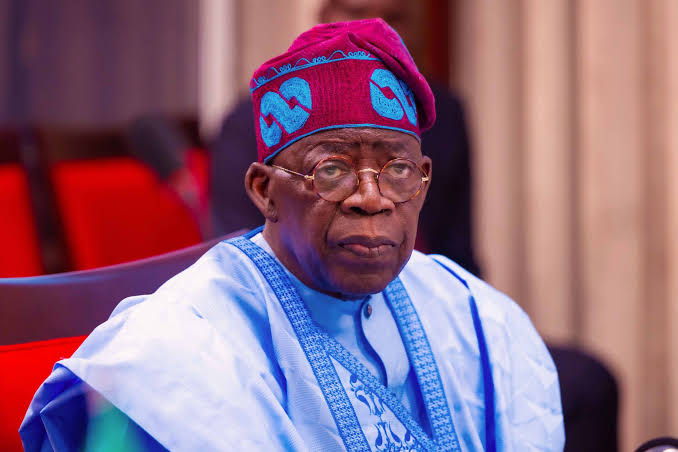
Campaigning for Nigeria’s 2027 general elections begins on Wednesday, with the economy, cost-of-living crisis and insecurity expected to dominate political debates as President Bola Tinubu seeks a second term. AFP reported that Nigeria continues to grapple with economic difficulties and violence involving armed groups, while divisions within the opposition could……
Campaigning for Nigeria’s 2027 general elections begins on Wednesday, with the economy, cost-of-living crisis and insecurity expected to dominate political debates as President Bola Tinubu seeks a second term.
AFP reported that Nigeria continues to grapple with economic difficulties and violence involving armed groups, while divisions within the opposition could strengthen Tinubu’s bid for re-election.
“The economy is the biggest issue. That’s the one thing that cuts across different parts of the country, and it continues to affect security and development concerns,” said Afolabi Adekaiyaoja, author of The Bellwether newsletter on Nigerian politics.
Tinubu, who was elected in 2023, has pursued major economic reforms, most notably the removal of the fuel subsidy that had kept prices artificially low for years.
Although the reforms have received support from economists and investors, they have also triggered a severe cost-of-living crisis, with the naira losing significant value and inflation rising to 34 per cent before easing to 15.4 per cent in July.
The economic difficulties have compounded a poverty crisis that began before Tinubu assumed office. The World Bank estimates that more than 60 per cent of Nigerians now live below the poverty line, compared with 40 per cent in 2019.
Nigeria is also facing several security challenges, including jihadist insurgencies, armed banditry, clashes between farmers and herders and separatist violence.
According to Ladd Serwat, a senior Africa analyst at conflict monitor ACLED, violence has increased since 2024, driven by the expansion of armed banditry in northern and central Nigeria and renewed conflict in Borno State, a major centre of the jihadist insurgency.
Read Also: 83 Nigerians To Return From South Africa Amid Xenophobic Attacks
Adekaiyaoja said the opposition had also struggled to present a clear alternative to Tinubu’s policies because of internal disagreements and legal challenges.
“The opposition has been too mired in internal and legal issues to really articulate a difference” between their policies and Tinubu’s, he said.
For some voters, the economy remains the decisive issue. A civil servant, Afolayan Abdullahi, 42, said he planned to support Tinubu, citing economic concerns and the rising cost of living.
Tinubu enters the election as a formidable political contender, with his All Progressives Congress controlling the National Assembly and 31 of Nigeria’s 36 governorships.
The January 16 presidential election is expected to feature a repeat of the 2023 contest, with Tinubu facing former Anambra State governor Peter Obi, former Vice President Atiku Abubakar and other candidates.
Tinubu won the 2023 election with 36.6 per cent of the vote, while Abubakar polled 29 per cent and Obi secured 25 per cent. Rabiu Kwankwaso, who received about six per cent, has since joined forces with Obi as his running mate.
Security concerns could also affect voter turnout. Becky Alegbe, a 28-year-old street vendor in Abuja, said she was unwilling to travel to her home village in Edo State to vote because of insecurity and the sharp rise in transport costs.
“Nigeria is not safe — terrorists, kidnappers, bandits everywhere,” she said.
She also raised concerns about vote buying, an issue that has affected previous elections. Voter turnout stood at only 27 per cent in 2023.
The commencement of campaigning follows Tuesday’s signing of the National Peace Accord by presidential candidates and representatives of political parties ahead of the 2027 elections.
Channels Television reported that the ceremony was held at the Bola Ahmed Tinubu International Conference Centre in Abuja and attended by political leaders, governorship and National Assembly candidates, INEC Chairman Joash Amupitan, Secretary to the Government of the Federation George Akume and other stakeholders.
Tinubu was represented at the event by Akume, while Obi, African Action Congress presidential candidate Omoyele Sowore and Peoples Redemption Party candidate Donald Duke were among those who signed the accord.
Organised by the National Peace Committee, the agreement is aimed at promoting peaceful political engagement before, during and after the elections, with a second phase expected after the polls.
Obi urged Nigerians to ensure their votes count and called for a credible and violence-free election.
“I don’t have any fear [going into next year’s election] except to say that, please, for the sake of the children of Nigeria, can we have an election where people’s votes will count?” Obi said.
He also urged voters to reject candidates or parties that violate the terms of the peace accord.
“Well, the punishment is that Nigerians should not vote for them,” he said when asked how violators should be sanctioned.
Obi further called on political contestants to “be exemplary” in their conduct ahead of the elections.
“You can’t answer ‘His Excellency’ without being an excellent person,” he said. “So, the process that will make you answer ‘His Excellency’ should be excellent, and the only way to do it is to conduct yourself properly.”
Speaking through Akume, Tinubu commended the National Peace Committee and its leaders, including former Head of State Abdulsalami Abubakar, Sultan of Sokoto Muhammad Sa’ad Abubakar and Bishop Matthew Hassan Kukah, for sustaining the initiative since 2014.
The President also pointed to technological improvements such as the Bimodal Voter Accreditation System as evidence of greater transparency in Nigeria’s elections.
“Different parties won them, and local and foreign observers described them as free, credible, and transparent. When the process and outcome are manifestly transparent, we see less post-election litigation in our courts,” he said.
Tinubu added that “politicians are now more accountable to the people because votes count.”


“Any Algorithm Can Calculate, But It Cannot Care” — NMCN Registrar Warns Nurses Against Overreliance On AI

2027: ‘Peter Obi’s Logic Is Short-Term Turnover Unlike Tinubu Who Thinks Of Next Generation’ – Oshiomhole

‘Politics is expensive everywhere’ – Wike replies critics over high billboard cost in Abuja

“Courts Must Guard Their Independence, Impartiality And Integrity” — NDC Warns After Atiku’s Candidacy Is Nullified

‘He’s closest to Lionel Messi’ – Rashford names player to win more Ballons d’Or than Cristiano Ronaldo

“Not To Own It, But To Give It Another Chance At Life” — Foreigner Rescues Sea Turtle From Lagos Sellers As NESREA Faces Enforcement Questions

Power Outage: Tegbe assures Nigerians of swift restoration as electricity disruptions hit Lagos, Abuja

Jesus de Miguel’s death: ‘He’d never intentionally hurt anyone’ – Owono’s team-mate defends goalkeeper

Investigate hijab controversy in Nigerian law schools immediately- MURIC to Council of Legal Education

“Leadership Must Emerge Through Lawful Process, Not Imposition” — Bala Gombe Commends Justice Lifu Over ADC Judgment

2027 not war, shun thuggery- Fintiri tells youths

Release graduates’ results or risk youths being used as political thugs- Oye residents warn FUOYE

Kaduna NBA chairman loses daughter

Rivers: ‘You Did Not Campaign, Nobody Will Vote For You” – Wike Mocks Amaechi

Tinubu to Niger Republic leader: Nigeria stands with you

EPL: Okafor on target as Leeds halt Tottenham’s winning streak

Turkey: Galatasaray no longer dependent on Osimhen – Küçük

‘Atiku Is Intellectually Malnourished’- Shettima Fires Opposition Candidates

MILITARY, VIGILANTES ENGAGE OVER 100 SUSPECTED TERRORISTS IN MARIGA FOREST

Garba commends Governor Yusuf for appointing Bature Kano Information Commissioner

 Politics7 days ago
Over 200 Boko Haram Terrorists Are Moving To Attack Military Camp In Buni Yadi As Rockets Target Troops; IED Threat Raises Travel Concerns
- Metro7 days ago
“Publishing His Name Is Subject To The Final Outcome Of A Court Order” — INEC Leaves Gwarzo Off Updated Kano Governorship List
- Metro7 days ago
“The Election Must Hold As Scheduled” — INEC Chairman Rules Out Postponement Of 2027 General Elections
- Metro7 days ago
“Ebola Outbreak Is Not Yet Under Control” — Africa CDC Warns As Confirmed Cases Exceed 10,200, Death Toll Surpasses 5,000
- Metro6 days ago
“They Beat Me Like A Criminal” — Sowore Recounts Ekiti Attack As Govt Denies Involvement, Calls For Police Investigation
- Metro7 days ago
“Sowore’s Whereabouts Remain Unknown” — Armed Men Allegedly Abduct AAC Presidential Candidate In Ado-Ekiti, Damage Vehicles And Restaurant
- Metro7 days ago
“21 Exotic Vehicles Affected, No Life Lost” — LASEMA Confirms Lagos Mechanic Workshop Fire, Averts Disaster At Nearby Filling Station
- Metro7 days ago
“We Know What They Did And How They Did It, But I Don’t Know Why” — INEC Reveals Findings On AI-Generated Photos In Voters’ Register