Politics
Nigeria Renews Ban on Illegal Mining as Fulani Militia Cells Expand in Mineral‑Rich Villages

Illegal Mining Ban Renewed in Taraba as Villages Fall to Expanding Fulani Militia Networks
By Mike Odeh James and Izhi Bitrus Adamu
TARABA, Nigeria — Governor Agbu Kefas on Monday signed a renewed executive order banning illegal mining in Taraba. It is the third such order since he first signed bans on illegal mining, political thuggery and asset recovery on August 4, 2023 at Government House, Jalingo, according to Punch.
The renewed Executive Order No. 02 suspends all mining activities pending documentation and establishes a committee to profile and license miners. The government cites revenue loss and rising insecurity in border communities as justification.
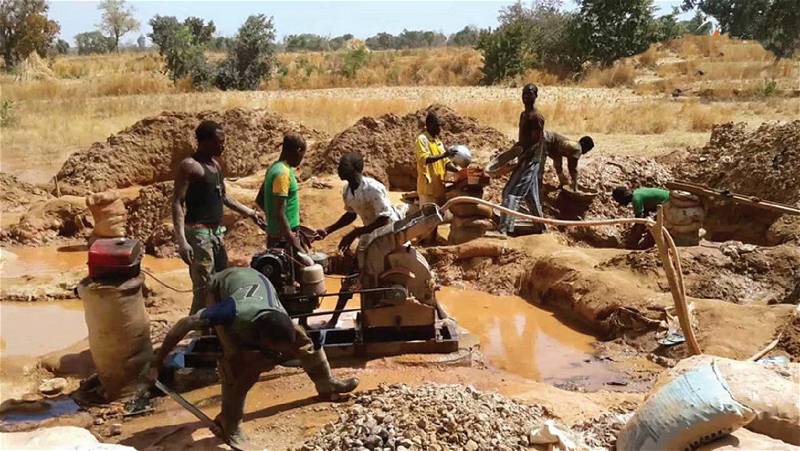
Community leaders in Lau, Karim Lamido and Takum say the timing reveals a pattern. Attacks by Fulani Ethnic Militia have emptied Christian farming villages sitting on gold, zinc, lapidolites, mica, quartz and tantalites deposits, while illegal miners continue to operate in the same areas with little resistance, Premium Times reports.
Lau Raid Shatters Peace Deal
Renewed raids by Fulani Ethnic Militia in Lau over the past 48 hours left at least five villagers dead, a traditional monarch abducted, hundreds displaced, and homes burned. Families are now sheltering in schools and with relatives in Jalingo.
Community leaders who signed a peace accord with Fulani representatives in June said the latest violence has ended any trust built in that process. The attack was documented by Metoric Post, Daily Post, The Guardian, and HumAngle.
The Lau attack is part of a widening wave across Taraba. In Karim Lamido, FEM abducted a diabetic elder and demanded more ransom days after his release. In Takum, three people have been killed in two weeks. The escalation comes days after FEM killed more than 30 people in a midnight raid in Kaduna, prompting President Bola Tinubu to order arrests.
Kidnap in Karim Lamido and Fresh Attacks
Armed FEM fighters abducted Mr. Solomon Dodo Isa, mid‑60s and diabetic, from Kwatibi in Karim Lamido at 1:00 a.m. on July 13, 2026. Attackers arrived on motorcycles, parked on Gwanna mountain, and trekked in with AK‑47 rifles. They went straight to Isa’s house, shooting sporadically. Vigilantes chased them toward the mountain.
Less than 20 hours later, kidnappers demanded ₦12,000,000. Isa was freed on July 16 after ₦10 million and motorcycles were paid. He returned home July 21.
Pastor Emmanuel Mashi Yaggah told TruthNigeria on August 3 that the family was preparing additional ransom — including solar accessories and phones — when new attacks hit on July 20 and 29. TruthNigeria previously reported the case.
In Gora, vigilantes killed one kidnapper. In Sabon Layi, two elderly residents were abducted but rescued. In Kwatibi, one kidnapper was arrested and handed to security agencies.
Yaggah added that soldiers who sometimes lead vigilante operations ordered them not to shoot, making villagers’ resilience “unproductive.” He said the July case is the sixth member of his church kidnapped this year.
A June TruthNigeria investigation documented FEM kidnapping networks expanding across Taraba, Plateau, Bauchi and Gombe, using mountainous terrain to move across state lines.
Displacement and Mineral Targeting: 1925–2026
Between 1925 and 1930, colonial prospectors marked mineral deposits in parts of Takum and Lau — including lapidolites, mica, quartz and tantalites — but left them untapped.
From 2023 to 2026, dozens of villages in Takum, Lau, Karim Lamido and Ussa have been sacked or partially displaced by FEM attacks. Most displaced residents are now in IDP camps in Jalingo, Wukari, Bali and host communities.
Community leaders allege the attacks follow mineral belts: villages on gold, lapidolites, mica, quartz and tantalites deposits are repeatedly attacked, then taken over by herders and illegal miners after residents flee.
The July 28 executive order is the governor’s third attempt to halt illegal mining since 2023, but enforcement remains weak in remote areas.
Experts: Ban Ignores Root Cause of Displacement
Security analysts and community leaders say Executive Order 02 focuses on revenue and regulation but fails to address why mining sites are vulnerable.
“You cannot regulate mines in communities that no longer exist,” said Barr. Sam Tokz, a Plateau indigenous advocate based in Jalingo.
A civil society leader in Wukari said the order should have been paired with reconstruction and resettlement: “For three years we have been burying people and moving to IDP camps. Banning mining without security means the land will still be taken over — this time by armed men instead of illegal miners.”
Pastor Tudi Hiko noted that colonial authorities marked mineral sites in Takum 100 years ago, yet host communities still have no schools, clinics or protection.
Residents argue that until there is permanent military presence and rebuilding of sacked villages, any mining ban will only push the trade deeper underground.
Why Taraba Is Key
Taraba sits between Boko Haram’s Northeast base and Middle Belt communities where FEM operate. Its borders with Cameroon, Borno, Adamawa, Benue, Plateau, Bauchi and Gombe make it a transit corridor for weapons, fighters and ransom money.
The state’s hilly, forested terrain and ungoverned spaces provide cover for camps. Analysts say the Mambilla Plateau and mountains along the Cameroon border are increasingly used as staging areas.
To address this, the Nigerian Army announced a new 10 Division to enhance border security, with headquarters covering parts of the Northeast and Middle Belt including Taraba, The Guardian reports.
Taraba is also a food security frontline. When farmers are driven off land and cows destroy crops, hunger spreads beyond the state.
In Takum, Pastor Ukeji Othniel Igdana said villages including Amadu, Chanchanji, Said and Abako are under threat and farming has collapsed.
U.S. Pressure Mounts
The U.S. House approved withholding 50–100 percent of aid to Nigeria until the State Department certifies measurable steps to protect Christians, according to Vanguard and NewsGhana.
Congress also earmarked $235 million for Middle Belt security and $2 million for atrocity prevention, while State and Treasury review sanctions and possible Pentagon engagement.
Congress recommends a bilateral agreement requiring Nigeria to co‑fund humanitarian aid for IDPs, deploy security forces to the Middle Belt, and remove Fulani militias from confiscated farmland.
U.S. Haul vs. Ground Reality
Recent Taraba attacks come weeks after the U.S. announced it recovered the largest cache of terrorist electronic equipment in Nigeria since 9/11, and that over 1,000 jihadists have been killed, ThisDay reports.
But Middle Belt leaders say new cells are forming faster than they can be dismantled.
TruthNigeria asked: After Historic U.S.–Nigeria Terror Haul, Who Will Defend the Middle Belt?
TruthNigeria also reported that Nigeria’s new Army map quietly admits the Middle Belt is a war zone.
Military Response
Troops recently raided a kidnappers’ hideout in Taraba and rescued two victims, according to Punch.
Residents say presence has not stopped attacks. In the last three months, FEM attacked a military station in Karim Lamido and soldiers retreated. Villagers complain troops arrive after attacks and leave within days. The Army says terrain makes permanent deployment difficult.
Conflicting Narratives
The Nigerian government describes the attacks as terrorism, banditry and land disputes. U.S. officials call it a deliberate war on Christian communities.
Rep. Riley Moore urged forceful action to protect Christians. The U.S. condemned recent killings, including the murder of a pastor’s family after President Trump reposted a plea for help.
President Trump later redesignated Nigeria a Country of Particular Concern in late 2025.
Abuja hired U.S. lobbying firm DCI Group for $9 million to communicate its efforts. The government maintains violence affects all faiths and stems from terrorism, not religious persecution.
Communities Call for Protection
In Lau, displaced families need food, shelter and security to return. In Takum, church leaders ask for patrols along farm roads. In Kwatibi, Pastor Yaggah said: “Kwatibi is hopeless. At the mercy of FEM who operate at will.”
Residents say that unless mining bans are paired with permanent security, Taraba’s minerals will continue to fuel displacement.
Mike Odeh James is an award‑winning conflict reporter. Izhi Bitrus Adamu is a conflict reporter, both write for TruthNigeria.
Related


Ballon d’Or: ‘Disgrace’ – AC Milan’s former midfielder Dejan Savicevic names player that should’ve won award

Transfer: ‘They pay highest wages’ – ex-Chelsea star, Cascarino on impossibility of Vinicius Jr’s move to Arsenal

Alaba President Set To Officially Unveil New Face Of Alaba, Speaks On Economic Impact, Calls For Road Infrastructure Upgrade

Tinubu, Atiku And Obi Head 19 Presidential Nominees As INEC Publishes Particulars For Public Scrutiny, Jonathan And Olawepo-Hashim Left Out

“I thought he was hiding another woman” – Shawn Faqua’s wife recalls doubting the actor during courtship

United States weddings are boring – Peller’s American friends remark after his traditional wedding with Jarvis

“Wherever I go, I’ll look for a brothel and sleep with prostitutes until I contract HIV” — Man reveals

Northern Christian Group, Atiku, Shehu Sani Rally Behind Onaiyekan, Condemn Presidency’s Criticism of Catholic Bishops

'Kind of Madness': Iran Vows to Target US, Israeli Energy Assets if Attacked as Trump Weighs Fresh Strikes

“If you say you love me, you’ll have to give me your last money” – Lady shares relationship expectations

Nigeria Renews Ban on Illegal Mining as Fulani Militia Cells Expand in Mineral‑Rich Villages

Woman in Viral Oloolu Video Mistook Traditional Figure for Masquerade — Olubadan Palace

Trump touts incoming peace deal with Iran even as Tehran signals defiance

Trump accounts were closed in 2021 over money-laundering concerns, Capital One says

Army testing plan for soldiers to use meal cards at fast-food chains on post

UN experts urge Canada to protect threatened Sikh activist

Transfer: Departures of two Real Madrid players confirmed

Why it is impossible for Akwa Ibom-born Bafana Bafana defender to play for Nigeria – Akpan

THE WEEK: 44 Killed across Lawless Northern Nigeria

Court jails fake soldier two years for N500,000 car auction fraud in Ekiti

 Entertainment18 hours ago
“Wherever I go, I’ll look for a brothel and sleep with prostitutes until I contract HIV” — Man reveals
- News15 hours ago
Northern Christian Group, Atiku, Shehu Sani Rally Behind Onaiyekan, Condemn Presidency’s Criticism of Catholic Bishops

 World21 hours ago
At Least 14 Dead as Suicide Bomber Targets Police Gate Near Swat Peace Rally Gathering in Khyber Pakhtunkhwa
- News12 hours ago
Peller Laments Wave of Phone Thefts at Traditional Wedding, Announces Strict Guest List for White Wedding
- Headlines4 hours ago
Posterity will judge you well for development of FCT – First Lady commends Wike’s green transformation of Abuja
- Entertainment16 hours ago
“I want to get married but, I don’t want to marry…” — Man lists 14 qualities he refuses to accept in a wife
- Special Report15 hours ago
Lady Left Shocked After Ex-Boyfriend Kicks Her Off Netflix and Amazon Prime Accounts Because Of What She Said (Video)
- Special Report8 hours ago
These Animals Can Walk To Your Room For Water And Go Back — Ghana Woman Speaks About How Animals’ Lives Are Protected Abroad