Metro
Nigeria Demands Urgent Action To End Afrophobic Attacks In South Africa

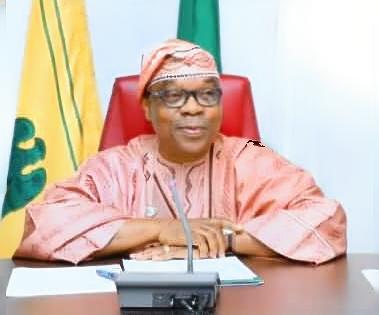
The Federal Government has called for urgent measures to end xenophobic and Afrophobic attacks against Africans in South Africa, urging stronger migration governance, responsible leadership and deeper continental solidarity….
The Federal Government has called for urgent measures to end xenophobic and Afrophobic attacks against Africans in South Africa, urging stronger migration governance, responsible leadership and deeper continental solidarity.
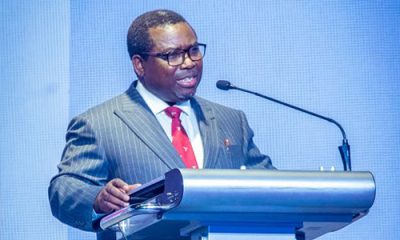
The Minister of State for Foreign Affairs, Ambassador Sola Enikanolaiye, made the call on Tuesday at a virtual roundtable on “South Africa’s Xenophobia in Comparative Perspective”, organised by the Nigerian Institute of International Affairs.
Enikanolaiye said Nigeria viewed the attacks as a challenge that must be addressed without either denial or exaggeration, describing the violence as having “a particularly African, post-colonial and post-apartheid character”.
He said the term Afrophobia was therefore more appropriate in describing attacks targeting African migrants in South Africa.
The minister expressed concern over the irony of citizens from countries that supported South Africa during its anti-apartheid struggle being treated as “unwanted outsiders”.
To preserve the historical record, he said the Ministry of Foreign Affairs had directed the NIIA to undertake a comprehensive study documenting Nigeria’s support for South Africa’s liberation struggle.
According to him, Nigeria’s contribution was estimated at more than $60 billion, alongside measures including the nationalisation of British Petroleum, scholarships and hospitality extended to South African leaders.
“The relationship between Nigeria and South Africa is not reducible to trade statistics or diplomatic communiqués. There is history in that relationship. There is blood, sacrifice and solidarity in that history,” he said.
Enikanolaiye said about 90 Nigerians had been killed in Afrophobic violence in South Africa since June 2022, with fresh attacks and displacements recorded in 2026.
He warned that the continued violence was damaging South Africa’s international reputation, undermining investor confidence and regional integration, while diminishing the moral authority it gained from its liberation struggle.
The Federal Government, he said, was urging South African authorities to establish migration systems that are transparent and humane, while ensuring that immigration laws were enforced exclusively by the state.
He cautioned against vigilantism and urged political leaders to moderate their rhetoric, warning that descriptions of migrants as “criminals” or “job thieves” could create an atmosphere conducive to violence.
Nigeria also called for public debate on migration to be based on facts and data rather than misinformation and social media rumours.
The minister urged the full activation of existing Nigeria-South Africa early-warning and rapid-response mechanisms to enable both countries to identify and defuse tensions before they escalate.
He also advocated stronger people-to-people diplomacy involving businesses, universities, religious and traditional institutions, youth organisations, civil society groups and the media.
Enikanolaiye announced that Nigeria, alongside Ghana, would present the matter at the next session of the African Union Assembly of Heads of State and Government.
While acknowledging South Africa’s willingness to discuss the “push and pull factors” behind migration, he said priority attention must be given to hate-driven attacks and violence against African nationals.
He stressed that Africa needed more than tolerance, calling instead for a continent where Africans were treated as equals regardless of their nationality.
“What Africa needs now is not mere tolerance but belonging to a continent where a Nigerian in Johannesburg and a South African in Lagos are regarded first as Africans with equal dignity,” he said.
The minister also reaffirmed President Bola Ahmed Tinubu’s commitment to protecting Nigerians abroad, citing the President’s direct intervention in the recent repatriation of Nigerians from South Africa.
He commended Nigeria’s Heads of Mission in Pretoria and Johannesburg, as well as other stakeholders involved in ensuring the repatriation exercise was carried out promptly.
Enikanolaiye said the Federal Government remained committed to working with South Africa, the African Union, ECOWAS and other partners to ensure that African integration was matched by unity and solidarity in practice.


“Any Algorithm Can Calculate, But It Cannot Care” — NMCN Registrar Warns Nurses Against Overreliance On AI

2027: ‘Peter Obi’s Logic Is Short-Term Turnover Unlike Tinubu Who Thinks Of Next Generation’ – Oshiomhole

‘Politics is expensive everywhere’ – Wike replies critics over high billboard cost in Abuja

“Not To Own It, But To Give It Another Chance At Life” — Foreigner Rescues Sea Turtle From Lagos Sellers As NESREA Faces Enforcement Questions

“Courts Must Guard Their Independence, Impartiality And Integrity” — NDC Warns After Atiku’s Candidacy Is Nullified

‘He’s closest to Lionel Messi’ – Rashford names player to win more Ballons d’Or than Cristiano Ronaldo

Power Outage: Tegbe assures Nigerians of swift restoration as electricity disruptions hit Lagos, Abuja

Investigate hijab controversy in Nigerian law schools immediately- MURIC to Council of Legal Education

Jesus de Miguel’s death: ‘He’d never intentionally hurt anyone’ – Owono’s team-mate defends goalkeeper

“Leadership Must Emerge Through Lawful Process, Not Imposition” — Bala Gombe Commends Justice Lifu Over ADC Judgment

2027 not war, shun thuggery- Fintiri tells youths

Release graduates’ results or risk youths being used as political thugs- Oye residents warn FUOYE

Kaduna NBA chairman loses daughter

Rivers: ‘You Did Not Campaign, Nobody Will Vote For You” – Wike Mocks Amaechi

Tinubu to Niger Republic leader: Nigeria stands with you

EPL: Okafor on target as Leeds halt Tottenham’s winning streak

Turkey: Galatasaray no longer dependent on Osimhen – Küçük

‘Atiku Is Intellectually Malnourished’- Shettima Fires Opposition Candidates

MILITARY, VIGILANTES ENGAGE OVER 100 SUSPECTED TERRORISTS IN MARIGA FOREST

Garba commends Governor Yusuf for appointing Bature Kano Information Commissioner

 Politics7 days ago
Over 200 Boko Haram Terrorists Are Moving To Attack Military Camp In Buni Yadi As Rockets Target Troops; IED Threat Raises Travel Concerns
- Metro7 days ago
“Publishing His Name Is Subject To The Final Outcome Of A Court Order” — INEC Leaves Gwarzo Off Updated Kano Governorship List
- Metro7 days ago
“The Election Must Hold As Scheduled” — INEC Chairman Rules Out Postponement Of 2027 General Elections
- Metro7 days ago
“Ebola Outbreak Is Not Yet Under Control” — Africa CDC Warns As Confirmed Cases Exceed 10,200, Death Toll Surpasses 5,000
- Metro7 days ago
“Sowore’s Whereabouts Remain Unknown” — Armed Men Allegedly Abduct AAC Presidential Candidate In Ado-Ekiti, Damage Vehicles And Restaurant
- Metro6 days ago
“They Beat Me Like A Criminal” — Sowore Recounts Ekiti Attack As Govt Denies Involvement, Calls For Police Investigation
- Metro7 days ago
“21 Exotic Vehicles Affected, No Life Lost” — LASEMA Confirms Lagos Mechanic Workshop Fire, Averts Disaster At Nearby Filling Station
- Metro7 days ago
“We Know What They Did And How They Did It, But I Don’t Know Why” — INEC Reveals Findings On AI-Generated Photos In Voters’ Register