Metro
Millions Of Thais Take Three-Month Alcohol Abstinence Pledge

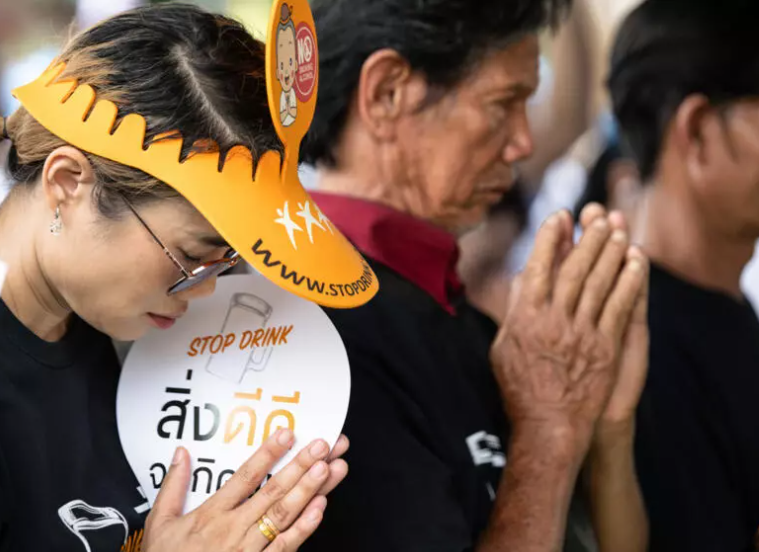
Millions of Thais have joined a nationwide abstinence campaign that combines public health awareness with Buddhist spirituality by pledging to give up alcohol for three months. According to AFP, one of the participants, 42-year-old housewife Wassana Nak-umma, made the commitment at a Buddhist temple in Samut Sakhon, west of Bangkok,……
Millions of Thais have joined a nationwide abstinence campaign that combines public health awareness with Buddhist spirituality by pledging to give up alcohol for three months.
According to AFP, one of the participants, 42-year-old housewife Wassana Nak-umma, made the commitment at a Buddhist temple in Samut Sakhon, west of Bangkok, where she admitted she had previously been a “heavy drinker.”
“I used to get so drunk that my kids had to clean up my vomit,” she told AFP candidly.
But a concerned relative persuaded her to join a campaign to give up alcohol during Khao Phansa, a three-month period of reflection observed by Buddhists akin to Christian Lent.
“I still craved it. Whenever I saw people buying liquor or beer at stores, I would look at them and want to drink like them,” she said.
“But I held back, telling myself it was only three months. After that three-month period, I realised, ‘Hey, I can do this! Next year, I must do it again’.”
That was in 2024. Wassana went back to drinking, but in moderation, and this week joined hundreds in Samut Sakhon to pledge abstinence for her third year.
Avoiding drugs and alcohol is a key precept of Buddhism.
But Thailand, where more than 90 percent of the population identify as Buddhist, has the third highest per capita consumption of alcohol in Asia, according to 2024 data from the World Health Organization (WHO).
It was to address this paradox that the so-called Buddhist Lent campaign began in 2003, and last year it claimed more than eight million adherents.
Spiritual anchor
The start of Khao Phansa on Thursday was a joyous affair in the rural province of Samut Sakhon, featuring offerings to monks and traditional dances.
Dozens of people also paraded through the village on “salengs” — scooters with sidecars used locally to transport coconuts — brandishing placards featuring images of healthy, smiling livers.
Phayom Raksa solemnly recited a pledge that touched on the teachings of the Buddha, and mentioned Thailand’s king and the well-being of the nation.
The 66-year-old former coconut farmer stopped drinking entirely after participating in the campaign for the first time six years ago.
“My kids were ashamed of me — their dad got drunk every day and didn’t care about them,” he told AFP, saying that he also spent all his money on alcohol.
But he now urged others to follow his example, saying: “I’d like everyone to try doing what I did — to think and look at positive things.”
Abstinence campaigns have gathered ground in many countries in recent years, notably the trend to pursue a “Dry January” after Christmas and New Year’s Eve excesses.
They are often linked to an increased focus on healthy behaviour.
But Ubolwan Kongsawang, a regional volunteer with Thialand’s Stop Drinking Network, said the Buddhist Lent campaign provides a “spiritual anchor” that boosts motivation.
“When individuals take a pledge before a Buddha image, at a temple, or within their community, they feel bound to honour their word,” she said.
– ‘Beyond Lent’ –
Organisers of the campaign have revamped their messaging this year, emphasising how giving up or even cutting down alcohol consumption can result in improved health, better relationships — and crucially, save money.
“Our goal is not necessarily total abstinence for everyone,” said Dr. Pongthep Wongwatcharapaiboon, director of the Thai Health Promotion Foundation, a government agency.
“Many reduce their consumption and discover the health benefits, which is already a success.”
Thailand in December relaxed decades-old restrictions on selling alcohol in the afternoon, which were originally intended to stop government employees drinking on the job.
But it remains banned on religious public holidays and around elections.
One advertisement for the Buddhist Lent campaign focuses on the social pressure to drink, in a culture where alcohol is everywhere, from funerals to festivals.
“We are trying to transform the drinking culture itself, not just reduce individual consumption,” says Teera Wacharaprannee, head of the Stop Drinking Network.
“Our strategy is to continue beyond Lent, supporting villages and communities to reduce alcohol in daily life.”


Ballon d’Or: ‘Disgrace’ – AC Milan’s former midfielder Dejan Savicevic names player that should’ve won award

Transfer: ‘They pay highest wages’ – ex-Chelsea star, Cascarino on impossibility of Vinicius Jr’s move to Arsenal

“Peller sell this cloth for ₦1 million, chop my money” – Kolu speaks after arriving at Peller and Jarvis’ wedding venue

Disgusting!! Koko Seller Caught On Camera Using Sponge She Uses To Wash Bowls For Customers To Wash Her Feet

Police Arrest 12-Year-Old Boy and Truck Driver After Video of Teen Driving Articulated Truck Went Viral

Alaba President Set To Officially Unveil New Face Of Alaba, Speaks On Economic Impact, Calls For Road Infrastructure Upgrade

Tinubu, Atiku And Obi Head 19 Presidential Nominees As INEC Publishes Particulars For Public Scrutiny, Jonathan And Olawepo-Hashim Left Out

“I thought he was hiding another woman” – Shawn Faqua’s wife recalls doubting the actor during courtship

United States weddings are boring – Peller’s American friends remark after his traditional wedding with Jarvis

'Kind of Madness': Iran Vows to Target US, Israeli Energy Assets if Attacked as Trump Weighs Fresh Strikes

LASEPA Urges Lagos Residents To Recycle Used Cooking Oil For Cash

UK jails man for claiming late mum’s benefits while keeping her body in freezer

₦100 Million Can’t Make Me Kiss a Man on Screen – Juliana Olayode

Ariana Grande to step back from public life following scrutiny over her physical appearance

UK Congratulates Team Nigeria On Commonwealth Games Success

National Scrabble Classic – The Trumpet Newspaper Nigeria

Bandits free Kaduna woman, three daughters after 180 days in captivity
Bandits free Kaduna woman, three daughters after 180 days in captivity

Man Jailed 10 Years for Defiling 13-Year-Old Stepdaughter

Drama in Katsina as man scams bandits’ leader of ₦95m to supply guns

 Headlines18 hours ago
Ballon d’Or: ‘Disgrace’ – AC Milan’s former midfielder Dejan Savicevic names player that should’ve won award
- Headlines20 hours ago
Transfer: ‘They pay highest wages’ – ex-Chelsea star, Cascarino on impossibility of Vinicius Jr’s move to Arsenal
- Entertainment9 hours ago
“Wherever I go, I’ll look for a brothel and sleep with prostitutes until I contract HIV” — Man reveals

 World13 hours ago
At Least 14 Dead as Suicide Bomber Targets Police Gate Near Swat Peace Rally Gathering in Khyber Pakhtunkhwa
- News6 hours ago
Northern Christian Group, Atiku, Shehu Sani Rally Behind Onaiyekan, Condemn Presidency’s Criticism of Catholic Bishops
- Special Report6 hours ago
Lady Left Shocked After Ex-Boyfriend Kicks Her Off Netflix and Amazon Prime Accounts Because Of What She Said (Video)
- Special Report24 hours ago
Bandits attack Sokoto community, kill 12, burn father, two sons alive – The Witness Nigeria
- Entertainment7 hours ago
“I want to get married but, I don’t want to marry…” — Man lists 14 qualities he refuses to accept in a wife