Metro
ICPC Uncovers Ghost Worker Scheme As Official Enrols 14 Family Members


The Independent Corrupt Practices and Other Related Offences Commission (ICPC) has uncovered a major ghost-worker scheme in which a government official allegedly enrolled 14 members of his family on the public payroll….
The Independent Corrupt Practices and Other Related Offences Commission (ICPC) has uncovered a major ghost-worker scheme in which a government official allegedly enrolled 14 members of his family on the public payroll.
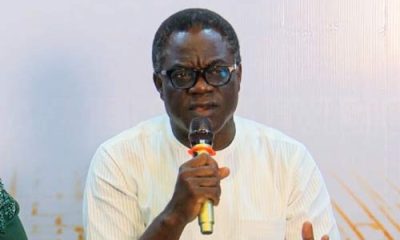
ICPC Chairman, Dr Musa Adamu Aliyu, SAN, disclosed this on Thursday in Abuja according to a report by The Guardian seen by TVC News Online while delivering the keynote address at the 2026 Economic Confidential Lecture and National Spokespersons Awards organised by Image Merchants Promotions Limited.
Aliyu said the discovery was made during a year-long investigation into suspected ghost workers and payroll manipulation across government institutions.
According to him, one official allegedly enrolled 14 relatives on the payroll and collected their salaries, while another person enrolled his wife, daughter, son and other family members, enabling him to receive 13 salaries.
“We discovered that one person enrolled 14 members of his family. He lived in a religious hotel, a hotel at the public office, receiving salaries,” Aliyu said.
He added that another individual “enrolled his wife, his daughter, his son, and others and was receiving 13 salaries.”
The ICPC chairman said investigators also uncovered sophisticated methods of manipulating payroll records, including cases where the names and email addresses of supposed employees appeared in official databases while the bank accounts linked to them belonged to other individuals.
“When they insert their names, you will see their name in the payroll. You will see their email. But when you check the account number, you will see the name of the person. So, that is how these things have been done,” he explained.
Aliyu disclosed that the commission had identified about 900 suspected ghost workers and published their names to allow those affected to prove that they were genuine government employees.
He warned that payroll fraud could have wider financial implications beyond salaries, as fictitious employees could also generate fraudulent pension, mortgage, housing fund and health insurance benefits.
“Because, you know, once there is a ghost worker, there is ghost pension, there is ghost mortgage, there is ghost housing fund, there is ghost health insurance,” he said.
The ICPC chairman further disclosed that the commission recovered more than ₦24 billion linked to ghost-worker pension payments in 2024.


Aliyu said the commission was increasingly focusing on preventive measures, data-driven investigations and interventions designed to block avenues for corruption before public funds were lost.
“It is better for us to do that than to engage in filing criminal charges. How many charges can we file?” he said.
He called for greater use of technology and data analytics in combating corruption, stressing that reliable information and effective communication were essential to strengthening accountability and restoring public confidence in government institutions.


“Any Algorithm Can Calculate, But It Cannot Care” — NMCN Registrar Warns Nurses Against Overreliance On AI

‘Politics is expensive everywhere’ – Wike replies critics over high billboard cost in Abuja

2027: ‘Peter Obi’s Logic Is Short-Term Turnover Unlike Tinubu Who Thinks Of Next Generation’ – Oshiomhole

“Not To Own It, But To Give It Another Chance At Life” — Foreigner Rescues Sea Turtle From Lagos Sellers As NESREA Faces Enforcement Questions

“Courts Must Guard Their Independence, Impartiality And Integrity” — NDC Warns After Atiku’s Candidacy Is Nullified

‘He’s closest to Lionel Messi’ – Rashford names player to win more Ballons d’Or than Cristiano Ronaldo

Power Outage: Tegbe assures Nigerians of swift restoration as electricity disruptions hit Lagos, Abuja

Investigate hijab controversy in Nigerian law schools immediately- MURIC to Council of Legal Education

Jesus de Miguel’s death: ‘He’d never intentionally hurt anyone’ – Owono’s team-mate defends goalkeeper

“Leadership Must Emerge Through Lawful Process, Not Imposition” — Bala Gombe Commends Justice Lifu Over ADC Judgment

‘You will not regret what you have done’: President Tinubu assures Fubara

EPL table: Arsenal go six points clear of Man City with narrow win over Hull

How Pastor Adeboye ordered refund of billions traced to fraud – EFCC

Fake bank alert: Police recover N3m stolen electronics in Bauchi

IBEDC announces power outage in several Osun communities

WHO approves trials for two new Ebola vaccines

I Cannot Stay In Darkness – Okowa Dumps Opposition, Backs Tinubu For Second Term

NPFL: Gata to miss Kwara United’s clash with Rangers

2027 not war, shun thuggery- Fintiri tells youths

Release graduates’ results or risk youths being used as political thugs- Oye residents warn FUOYE

 Politics7 days ago
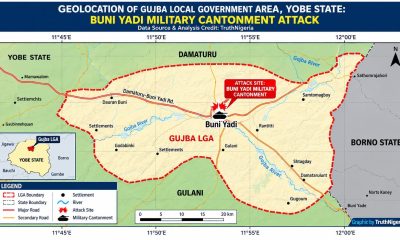
Over 200 Boko Haram Terrorists Are Moving To Attack Military Camp In Buni Yadi As Rockets Target Troops; IED Threat Raises Travel Concerns
- Metro7 days ago
“The Election Must Hold As Scheduled” — INEC Chairman Rules Out Postponement Of 2027 General Elections
- Metro7 days ago
“Publishing His Name Is Subject To The Final Outcome Of A Court Order” — INEC Leaves Gwarzo Off Updated Kano Governorship List
- Metro7 days ago
“Ebola Outbreak Is Not Yet Under Control” — Africa CDC Warns As Confirmed Cases Exceed 10,200, Death Toll Surpasses 5,000
- Metro7 days ago
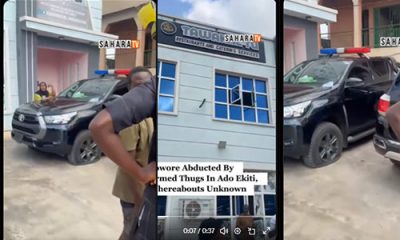
“Sowore’s Whereabouts Remain Unknown” — Armed Men Allegedly Abduct AAC Presidential Candidate In Ado-Ekiti, Damage Vehicles And Restaurant
- Metro7 days ago
“They Beat Me Like A Criminal” — Sowore Recounts Ekiti Attack As Govt Denies Involvement, Calls For Police Investigation
- Metro7 days ago
“21 Exotic Vehicles Affected, No Life Lost” — LASEMA Confirms Lagos Mechanic Workshop Fire, Averts Disaster At Nearby Filling Station
- Metro7 days ago
“We Know What They Did And How They Did It, But I Don’t Know Why” — INEC Reveals Findings On AI-Generated Photos In Voters’ Register