Metro
From Reinstated To Champions: How Cameroon Won The WAFCON 2026 Title

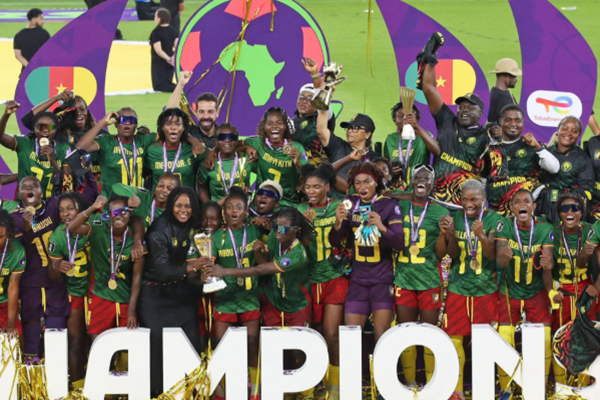
Cameroon’s journey to the 2026 Women’s Africa Cup of Nations title is one of the most remarkable stories in the history of the competition. The Indomitable Lionesses did not originally qualify for the tournament, only to receive a second chance after CAF expanded the competition from 12 to 16 teams.……
Cameroon’s journey to the 2026 Women’s Africa Cup of Nations title is one of the most remarkable stories in the history of the competition. The Indomitable Lionesses did not originally qualify for the tournament, only to receive a second chance after CAF expanded the competition from 12 to 16 teams. Months later, that second chance ended with Cameroon lifting their first-ever WAFCON trophy.
CAF’s decision to expand the tournament gave Cameroon a route back into the competition after they had missed out through the original qualification process. Their return was based on the FIFA rankings, alongside Côte d’Ivoire, Mali and Egypt.
What followed was a remarkable transformation from an unexpected late entrant into African champions.
A Second Chance Nobody Expected
Cameroon’s failure to qualify had initially threatened to keep one of Africa’s most experienced women’s football nations out of the tournament.
The Lionesses had also missed the 2024 WAFCON, making their return to the continental stage in Morocco particularly significant.
CAF’s expansion of the tournament from 12 to 16 teams opened the door for Cameroon, who were reinstated based on their position in the FIFA rankings.
It was an opportunity the Lionesses seized spectacularly.
Rather than simply making up the numbers, Cameroon arrived in Morocco with the ambition of correcting one of the biggest shortcomings in their history: their failure to win the WAFCON despite repeatedly coming close.
Cameroon had previously reached the final three times — in 1998, 2014 and 2016 — and lost on each occasion.
This time, however, everything changed.
A Strong Start in Group D
Cameroon were drawn in Group D alongside Ghana, Mali and debutants Cape Verde.
The Lionesses immediately established themselves as serious contenders.
They opened their campaign with a 1-0 victory over Ghana before defeating Mali 2-1. Those results ensured Cameroon had already secured top spot in the group before their final match against Cape Verde.
The results demonstrated Cameroon’s ability to manage difficult games while showing the resilience and attacking quality that would become crucial during the knockout stages.
By the time they faced Cape Verde, the group had already been won.
The 16-team format had given Cameroon a route back into the tournament. Their performances in Group D showed they intended to make the most of it.
The Quarter-Final That Changed Everything
If Cameroon’s group-stage campaign established their credentials, the quarter-final against Nigeria announced them as genuine title contenders.
Waiting for them was the defending champion and Africa’s most successful women’s football nation.
Nigeria had won the WAFCON 10 times and had historically dominated Cameroon in the competition.
Read Also: Morocco, Algeria Name Lineups For WAFCON Third-Place Decider
The odds appeared to favour the Super Falcons.
But Cameroon produced one of the tournament’s biggest shocks.
Myriam Nyadjou scored in the 19th minute with a free-kick, giving Cameroon a 1-0 lead over the defending champions.
Nigeria pushed for an equaliser, but Cameroon remained organised and disciplined, with goalkeeper Michaely Bihina producing crucial saves to preserve the advantage.
When the final whistle sounded, Cameroon had eliminated the defending champions.
The victory was more than a place in the semi-finals. It was a statement that the team brought back into the tournament through the expanded format could actually go all the way.
Surviving the Hosts
Cameroon’s next challenge was even more intimidating.
They faced hosts Morocco in the semi-final.
Morocco had home support, tournament momentum and the ambition of winning the title on home soil. Cameroon, however, had become increasingly difficult to break down.
The semi-final ended goalless after 90 minutes, sending the contest to penalties.
This was where Bihina again became the hero.
Cameroon won the shootout 3-1, with the goalkeeper playing a decisive role as the Lionesses eliminated the hosts and booked their place in the final.
The victory also secured Cameroon’s place at the 2027 FIFA Women’s World Cup alongside the other semi-finalists.
But Cameroon were no longer thinking about merely qualifying for the World Cup.
They were one game away from history.
The Final Against Malawi
Standing between Cameroon and their first WAFCON title were Malawi, another of the tournament’s great surprise stories.
The Scorchers were making their debut at the competition and had also produced a remarkable run to the final.
It was therefore a final between two teams that had exceeded expectations, but only one could write its name into African football history.
Cameroon wasted little time taking control.
Marie Ngah opened the scoring before Naomi Ndjoah Eto doubled the advantage.
Ngah then struck again in first-half stoppage time to complete her brace and give Cameroon a commanding 3-0 lead at the break.
Malawi could not produce the comeback required in the second half.
Cameroon held on to complete a 3-0 victory and finally lift the trophy that had eluded them for decades.
The Redemption of the Indomitable Lionesses
The significance of Cameroon’s triumph goes beyond the final score.
Three previous WAFCON final defeats had left the country with the unwanted distinction of being one of the competition’s most successful teams without a title.
The 2026 tournament changed that.
Cameroon went from not qualifying for the competition in the first instance to becoming African champions.
They did it by finishing top of their group, eliminating the defending champions, surviving a penalty shootout against the hosts and then defeating a confident Malawi side in the final.
Their path to the trophy was therefore not built on one spectacular result. It was a progression.
First came the second chance.
Then came the group-stage consistency.
Then the statement victory over Nigeria.
Then the resilience against Morocco.
And finally, the ruthless performance against Malawi.
Bihina, Ngah and the Stars of the Triumph
Several players played crucial roles in Cameroon’s historic campaign.
Goalkeeper Michaely Bihina became one of the defining figures of the tournament. Her penalty-saving heroics against Morocco helped Cameroon reach the final and underlined her importance to the team.
Marie Ngah was equally influential in the final, scoring twice to lead Cameroon to the 3-0 victory and putting her name among the standout performers of the tournament.
Monique Ngock was another key figure throughout the campaign, contributing to Cameroon’s impressive run to the title.
The individual performances reflected the collective strength of a Cameroon side that grew stronger with every knockout round.
A Historic Ending to an Unlikely Story
Cameroon did not enter WAFCON 2026 as one of the teams that had qualified through the traditional route.
They were effectively handed a second life when CAF expanded the competition.
They then turned that opportunity into something far greater.
On August 16, 2026, Cameroon defeated Malawi 3-0 to become WAFCON champions for the first time.
For a nation that had lost three previous finals, the wait was finally over.
For a team that had initially failed to qualify, the ending could hardly have been more dramatic.
Cameroon did not simply return to WAFCON because the tournament was expanded.
They returned, survived the continent’s biggest tests and conquered Africa.
The Indomitable Lionesses turned a lifeline into history.


Bayelsa PDP Reaffirms Readiness For 2027 Elections As Turnah Confirms Candidate’s Upload On INEC’s Portal

Accord Party Stuns In Oyinlola’s Polling Unit, Defeats APC Despite Ex-Governor’s Support For Oyebamiji

#OsunDecides2026: I want to vote, 55-year-old resident cries out after BVAS facial recognition failure

Matured Criminals: FAAN Depreciates N60 Billion, Wastes N446 Million As Gifts, N12 Billion As Operating Surplus As Audit Scream Blue Murder – Secrets Reporters Nigeria

Osun Decides: Governor Adeleke’s Running Mate Predicts Victory, Raises Alarm Over Late Arrival Of INEC Officials

Bayelsa PDP Ready for 2027 Elections as Turnah Confirms Candidates’ Upload on INEC Portal, Welcomes MacIver’s Governorship Bid

Morning recap: Osun gov poll holds amid vote-buying allegations, Atiku sues Tinubu, other top stories

“Guess how much?”- Lady borrows ex-boyfriend millions of Naira for political ambition, ends up in tears

Women leaders seek more govt support for farming, action on child trafficking, early marriage in Niger

“If I was a woman and I got my period…” — Man sparks reactions with unusual idea to end menstruation in one go

Earth shook when she was born: Indonesian earthquake baby named Gempita

Why dating a mature man can be so annoying — Nigerian lady reveals

Rivers reconciliation: Wike allies, Fubara camp close ranks

Transfer: Olayinka completes move to Saudi Arabian club Al Wehda
Transfer: Olayinka completes move to Saudi Arabian club Al Wehda

Many feared dead as gunmen attack Plateau community

“I’m too young “- Davido reveals why Ademola Adeleke contested for Osun governorship election

Nigeria Beach Volleyball Championship…

El-Rufai files N10bn suit against ICPC, accuses agency of denying him access to family

IPOB: THE NIGERIAN STATE IS RUNNING FROM THE TRUTH — NOT FROM ESN

 Headlines15 hours ago
Women leaders seek more govt support for farming, action on child trafficking, early marriage in Niger
- News22 hours ago
Morning recap: INEC declares Adeleke winner of Osun poll, Islamic leaders caution against anti-Christian rhetoric, other top stories
- Entertainment23 hours ago
“Now you can see my tears” – US soldier breaks down over sick daughter in Nigeria, cries out to Trump
- Entertainment17 hours ago
“My flight was cancelled…” – Woman recounts painful betrayal after finding husband in bed with childhood friend
- Metro16 hours ago
“Adeleke’s Victory Shows Our Votes Can End Economic Hardship” — Peter Obi Urges Nigerians To Defend Ballots In 2027
- News11 hours ago
Federal Energy Research Centre at UNN Ran Up Nearly ₦686 Million in Unauthorised Spending, Doubtful Payments and Audit Bypasses – Secrets Reporters Nigeria
- News7 hours ago
Scammers Hijack Car Dealer’s Identity, Forge CAC Certificate Photo, and Open Fraudulent Moniepoint Account, Exposing Deep Flaws in Fintech KYC – Secrets Reporters Nigeria
- Entertainment21 hours ago
Why I stopped trying to quit smoking – Omah Lay