Metro
FG Strengthens Global Partnerships To Accelerate Cancer Control In Nigeria


The Federal Government has reaffirmed its commitment to strengthening partnerships and investments in cancer prevention, early detection and treatment as part of efforts to reduce the burden of cancer in Nigeria. According to a statement signed by Ado Bako, Assistant Director, Information and Public Relations, the Minister of State for……
The Federal Government has reaffirmed its commitment to strengthening partnerships and investments in cancer prevention, early detection and treatment as part of efforts to reduce the burden of cancer in Nigeria.
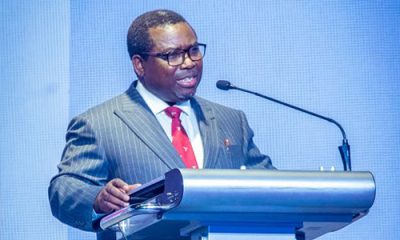
According to a statement signed by Ado Bako, Assistant Director, Information and Public Relations, the Minister of State for Health and Social Welfare, Dr Iziaq Adekunle Salako, stated this in Abuja while receiving members of the Global Advisory Council of the National Cancer Control Plan Technical Working Group.
Salako said cancer remained a major global health challenge, with the burden particularly severe in Africa due to late presentation, high mortality, limited infrastructure, inadequate manpower and constrained resources.
He said the Federal Government had placed partnerships at the centre of implementing the National Cancer Control Plan 2026–2030, stressing that international expertise and collaboration would be critical to achieving sustainable progress.
Read Also: 7 Areas Nigeria, Canada Plan to Collaborate on Health Sector
The minister said the administration of President Bola Ahmed Tinubu had continued to prioritise cancer prevention, citing the inclusion of Human Papillomavirus (HPV) vaccination in the routine immunisation schedule as a major step towards preventing cervical cancer.
He added that the government was also expanding cervical cancer screening, improving public awareness and integrating screening services into primary healthcare to promote early detection.
“Prevention is better and cheaper than cure. We are doing everything we can to expand immunisation, improve screening and ensure that cancer is detected at a very early stage,” he said.
Salako disclosed that the Federal Government had commenced construction of six cancer centres of excellence, with three already completed and the remaining three at various stages of development.
He added that President Tinubu had approved the procurement of 35 additional linear accelerators between 2027 and 2029 to expand access to radiotherapy services and strengthen the country’s cancer treatment capacity.

The minister commended members of the Global Advisory Council and the Technical Working Group for their expertise, networks and resources in supporting Nigeria’s cancer control efforts.
He also appreciated the council for its support to Nigeria’s pathology laboratories and assured members that donated equipment would be effectively deployed to improve diagnostic services.
Salako urged the council and the Technical Working Group to continue building wider partnerships and mobilising expertise and resources globally to support Nigeria’s cancer control agenda.
He expressed optimism that sustained collaboration among government, experts, development partners and other stakeholders would contribute significantly to reducing and ultimately eliminating the burden of cancer.
“On behalf of the Federal Government of Nigeria, I deeply appreciate what you are doing for us. Your commitment, sacrifice and dedication are highly valued,” Salako said.
The minister also formally inaugurated the Blood Cancer Consortium, describing it as an important platform for advancing knowledge, collaboration and improved outcomes in the management of blood cancers.
He reaffirmed Nigeria’s commitment to ensuring that partnerships established through the National Cancer Control Plan translate into tangible benefits for Nigerians and contribute to global efforts to combat cancer.
Earlier, the Permanent Secretary of the Federal Ministry of Health and Social Welfare, Daju Kachollom S. mni, expressed delight at the visit and said she hoped the engagement would be beneficial to Nigerians.
In her response, the Chairman of the National Cancer Control Plan Technical Working Group, Professor Folakemi Odedina, who led the delegation, appreciated the ministry for its confidence and support for the technical working group.
Odedina said the initiative had created an opportunity to bring together Nigerian experts at home and in the diaspora, government, academia, healthcare providers, patients, advocates, industry and international partners around a common national vision for cancer control.
She assured that the council would work with NCCP subcommittees, geopolitical zones, integration hubs and national institutions to accelerate measurable progress towards the 2030 cancer control targets.
Odedina also disclosed that the NCCP Technical Working Group had become operational, with implementation of structures established under a coordinated national framework.
On cancer research, she said the NCCP was laying the foundation for a stronger national oncology clinical trials ecosystem to develop Nigerian investigators, strengthen trial-ready institutions, expand patients’ access to clinical trials and position Nigeria as a major contributor to cancer research in Africa and globally.
She further announced a new model of strategic institutional partnership between Nigeria and leading global cancer institutions, including the University of Maryland Comprehensive Cancer Center, Mayo Clinic Comprehensive Cancer Center, Fox Chase Cancer Center and Virginia Commonwealth University Massey Comprehensive Cancer Center.
“Together, we can change the trajectory of cancer in Nigeria,” she said.
The meeting concluded with the ceremonial signing of a strategic partnership between the Federal Ministry of Health and Social Welfare, the NCCP Technical Working Group and members of the Global Advisory Council.


‘Politics is expensive everywhere’ – Wike replies critics over high billboard cost in Abuja

2027: ‘Peter Obi’s Logic Is Short-Term Turnover Unlike Tinubu Who Thinks Of Next Generation’ – Oshiomhole

“Courts Must Guard Their Independence, Impartiality And Integrity” — NDC Warns After Atiku’s Candidacy Is Nullified

“Not To Own It, But To Give It Another Chance At Life” — Foreigner Rescues Sea Turtle From Lagos Sellers As NESREA Faces Enforcement Questions

‘He’s closest to Lionel Messi’ – Rashford names player to win more Ballons d’Or than Cristiano Ronaldo

Power Outage: Tegbe assures Nigerians of swift restoration as electricity disruptions hit Lagos, Abuja

Investigate hijab controversy in Nigerian law schools immediately- MURIC to Council of Legal Education

Jesus de Miguel’s death: ‘He’d never intentionally hurt anyone’ – Owono’s team-mate defends goalkeeper

“Leadership Must Emerge Through Lawful Process, Not Imposition” — Bala Gombe Commends Justice Lifu Over ADC Judgment

“Every Item Has Been Recovered” — Viral CCTV Helps Trace Lagos Photographer’s Stolen Equipment As Wedding Files Remain At Risk

I laid foundation of ABTI in 1993 while you forfeited $460,000 in US – Atiku replies Tinubu
I laid foundation of ABTI in 1993 while you forfeited $460,000 in US – Atiku replies Tinubu

Kano task force seizes 3.18m suspected pregabalin capsules
Kano task force seizes 3.18m suspected pregabalin capsules

Sokoto deploys emergency medical team following suspected fever outbreak
Sokoto deploys emergency medical team following suspected fever outbreak

‘You will not regret what you have done’: President Tinubu assures Fubara

EPL table: Arsenal go six points clear of Man City with narrow win over Hull

How Pastor Adeboye ordered refund of billions traced to fraud – EFCC

Fake bank alert: Police recover N3m stolen electronics in Bauchi

 Politics7 days ago
Over 200 Boko Haram Terrorists Are Moving To Attack Military Camp In Buni Yadi As Rockets Target Troops; IED Threat Raises Travel Concerns
- Metro7 days ago
“Publishing His Name Is Subject To The Final Outcome Of A Court Order” — INEC Leaves Gwarzo Off Updated Kano Governorship List
- Metro7 days ago
“The Election Must Hold As Scheduled” — INEC Chairman Rules Out Postponement Of 2027 General Elections
- Metro7 days ago
“Ebola Outbreak Is Not Yet Under Control” — Africa CDC Warns As Confirmed Cases Exceed 10,200, Death Toll Surpasses 5,000
- Metro7 days ago
“Sowore’s Whereabouts Remain Unknown” — Armed Men Allegedly Abduct AAC Presidential Candidate In Ado-Ekiti, Damage Vehicles And Restaurant
- Metro7 days ago
“They Beat Me Like A Criminal” — Sowore Recounts Ekiti Attack As Govt Denies Involvement, Calls For Police Investigation
- Metro7 days ago
“21 Exotic Vehicles Affected, No Life Lost” — LASEMA Confirms Lagos Mechanic Workshop Fire, Averts Disaster At Nearby Filling Station
- Metro7 days ago
“We Know What They Did And How They Did It, But I Don’t Know Why” — INEC Reveals Findings On AI-Generated Photos In Voters’ Register