Metro
FG, ICPC Launch Joint Task Team to Curb Corruption in Health Sector

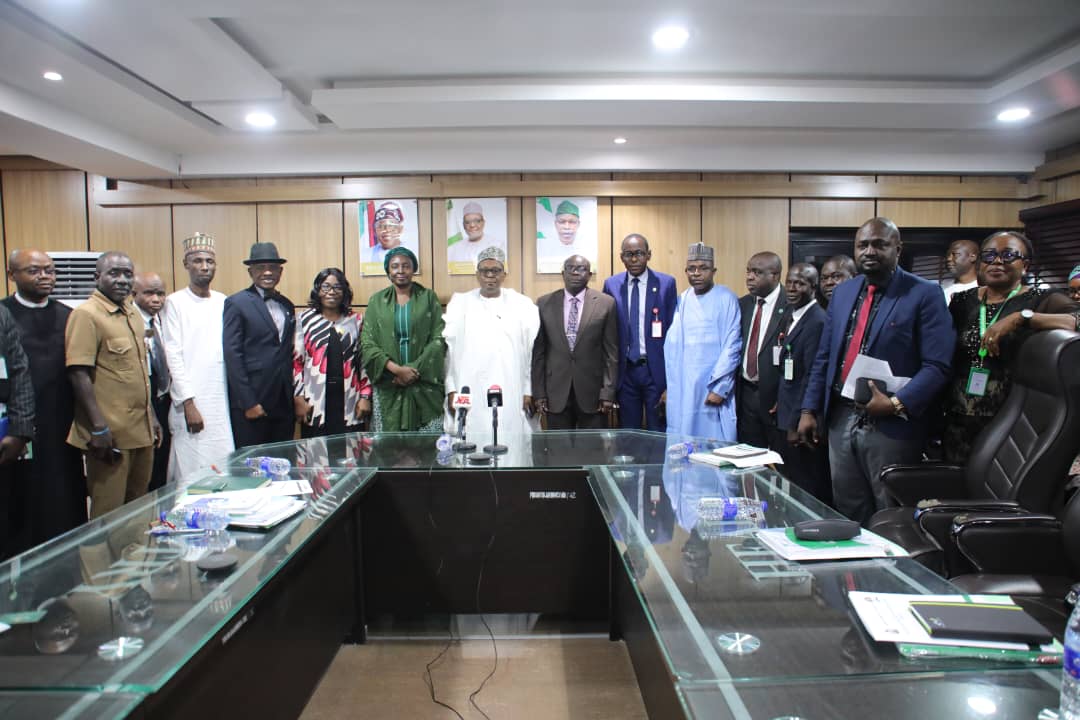
The Federal Government has partnered with the Independent Corrupt Practices and Other Related Offences Commission (ICPC) to strengthen accountability and prevent corruption in Nigeria’s health sector. The Federal Ministry of Health and Social Welfare disclosed this in a statement by it’s Assistant Director, Information and Public Relations, Ado Bako, on……
The Federal Government has partnered with the Independent Corrupt Practices and Other Related Offences Commission (ICPC) to strengthen accountability and prevent corruption in Nigeria’s health sector.
The Federal Ministry of Health and Social Welfare disclosed this in a statement by it’s Assistant Director, Information and Public Relations, Ado Bako, on Monday, August 17, 2026, following the inauguration of a Joint Task Team between the ministry and the ICPC.
The team is expected to identify institutional weaknesses, strengthen preventive controls and safeguard public funds invested in the health sector.
Speaking at the inauguration, the Coordinating Minister of Health and Social Welfare, Prof. Muhammad Ali Pate, said the initiative was aimed at preventing the diversion and misuse of health resources before they affect service delivery.
READ ALSO: Nigeria, China Deepen Health Partnership, Technology, Others
Pate stressed that public funds allocated to healthcare must translate into tangible benefits for Nigerians.
“When those resources are diverted, the cost is not abstract. It is a medicine that never arrives, equipment that is unavailable when needed, or a service that falls short. In this sector, corruption can cost lives,” he said.
The minister described the Joint Task Team as “an instrument for institutional change” rather than another government committee, saying its focus would be on prevention, stronger institutions and improved oversight.
He said the government had already introduced measures to improve accountability in health financing, including under the Basic Health Care Provision Fund (BHCPF) 2.0.
According to him, 774 Performance and Financial Management Officers have been deployed, with one assigned to each Local Government Area, to independently verify the receipt and utilisation of funds.
He added that the ministry was using verified National Identification Numbers to authenticate beneficiaries, prevent duplication and improve transparency in the management of health resources.
Pate said the same accountability standards must apply to financing, procurement, infrastructure, medicines and healthcare delivery.
He noted that the partnership with ICPC aligns with the first pillar of the Nigeria Health Sector Renewal Investment Initiative, which focuses on governance, regulation, standards and accountability.
“Investment without integrity cannot deliver sustainable results,” the minister said.
Pate charged members of the Joint Task Team to work independently and ensure their recommendations result in lasting institutional reforms.
“Identify the vulnerabilities. Recommend practical safeguards. And make sure your work outlasts the life of this Team,” he said.
Also speaking, the Chairman of the ICPC, Dr Musa Adamu Aliyu, represented by the commission’s Executive Secretary, Clifford Oparaodu, said the task team would give practical effect to the Memorandum of Understanding between the commission and the Ministry of Health.
He said the partnership would strengthen transparency and preventive oversight in the management of health-sector resources, particularly the Basic Health Care Provision Fund.
According to him, funds allocated to primary healthcare must reach the facilities and beneficiaries for whom they were intended and be used transparently and in line with due process.
“Its purpose must be reflected in concrete outcomes,” he said.
Aliyu said prevention remained one of the ICPC’s key mandates, particularly through identifying weaknesses in government processes that could create opportunities for corruption.
“It is a cheaper, less intrusive but more enduring or sustainable way of fighting corruption,” he said.
He stressed that corruption in the health sector has consequences beyond financial losses, as it can affect healthcare access and key health indicators.
“Corruption in the health sector is not measured only in financial losses or accounting irregularities. The losses are measured in maternal and infant mortality rates, rates of immunization, mortality from preventable diseases, easy and affordable access to medical care at all levels,” he said.
The Permanent Secretary of the Ministry, Daju Kachollom S. mni, said effective management of health resources was critical to achieving better health outcomes.
Kachollom said the ministry’s mandate was to save lives, reduce the physical and financial burden of ill-health and improve access to healthcare.
“It is against this background that we consider this partnership with the ICPC both timely and important,” she said.
She disclosed that the memorandum would run for two years, subject to renewal, while the task team would be co-chaired by the Director of Hospital Services and a director of the ICPC.
The team, she said, would have its secretariat at the BHCPF Secretariat and conduct assessments after each quarterly disbursement of the fund.
“In other words, this is a Team designed to be embedded in how the Ministry already works, not to sit outside it,” Kachollom said.
The co-chairmen of the task team, Dr Abisola Adegoke, Director of Hospital Services, and Shehu Gambo, Assistant Director, Financial Investigation, ICPC, pledged to carry out the assignment transparently and diligently.
The Joint Task Team was formally inaugurated by the Coordinating Minister and the ICPC Chairman, with its members tasked with developing practical measures to strengthen accountability and ensure value for money in the health sector


Women leaders seek more govt support for farming, action on child trafficking, early marriage in Niger

#OsunDecides2026: I want to vote, 55-year-old resident cries out after BVAS facial recognition failure

Matured Criminals: FAAN Depreciates N60 Billion, Wastes N446 Million As Gifts, N12 Billion As Operating Surplus As Audit Scream Blue Murder – Secrets Reporters Nigeria

“Guess how much?”- Lady borrows ex-boyfriend millions of Naira for political ambition, ends up in tears

“Now you can see my tears” – US soldier breaks down over sick daughter in Nigeria, cries out to Trump

Morning recap: INEC declares Adeleke winner of Osun poll, Islamic leaders caution against anti-Christian rhetoric, other top stories

“My flight was cancelled…” – Woman recounts painful betrayal after finding husband in bed with childhood friend

“Adeleke’s Victory Shows Our Votes Can End Economic Hardship” — Peter Obi Urges Nigerians To Defend Ballots In 2027

Federal Energy Research Centre at UNN Ran Up Nearly ₦686 Million in Unauthorised Spending, Doubtful Payments and Audit Bypasses – Secrets Reporters Nigeria

Scammers Hijack Car Dealer’s Identity, Forge CAC Certificate Photo, and Open Fraudulent Moniepoint Account, Exposing Deep Flaws in Fintech KYC – Secrets Reporters Nigeria
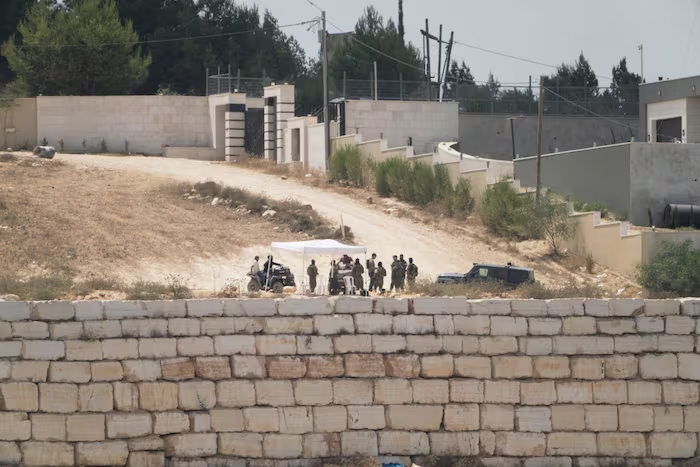
Palestinian American returns to West Bank to defend his home under siege by Israeli settlers

Osun Election: APC Spent N60bn On Vote Buying — Davido’s Father
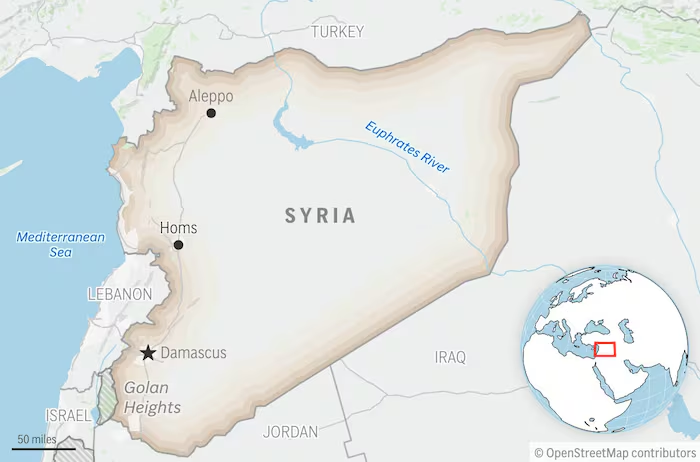
A detainee’s death revives Syria’s memories of torture and abuse in prisons
A detainee’s death revives Syria’s memories of torture and abuse in prisons

2027: NYCN South-East Urges Youths to Vote Out Non-Performing Leaders
US-Iran 60-day ceasefire agreement expires with no permanent deal in sight

Abuja Flood: Review Land Allocations Under Wike— Adeyanju Tells Tinubu
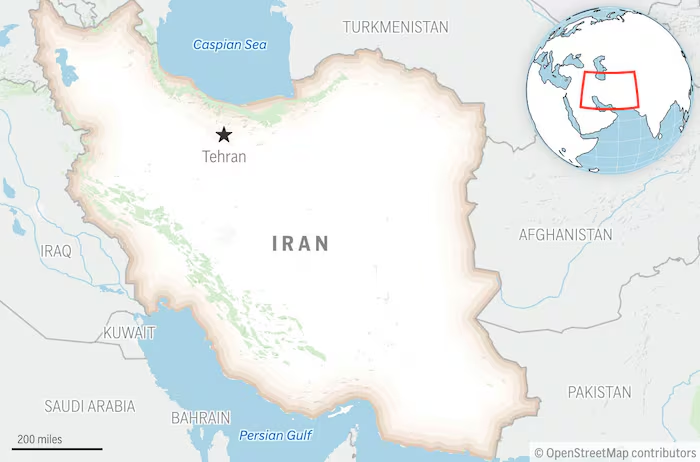
Trump threatens Oman as it works with Iran on a Strait of Hormuz deal, and other Middle East news

₦367.99m in Financial Irregularities Uncovered in FCT Social Development Secretariat Under the Leadership of Hajiya Safiya Umar – Secrets Reporters Nigeria

Why I never won African Player of the Year – Okocha

 Headlines23 hours ago
Women leaders seek more govt support for farming, action on child trafficking, early marriage in Niger
- News19 hours ago
Federal Energy Research Centre at UNN Ran Up Nearly ₦686 Million in Unauthorised Spending, Doubtful Payments and Audit Bypasses – Secrets Reporters Nigeria
- News15 hours ago
Scammers Hijack Car Dealer’s Identity, Forge CAC Certificate Photo, and Open Fraudulent Moniepoint Account, Exposing Deep Flaws in Fintech KYC – Secrets Reporters Nigeria
- Entertainment11 hours ago
“The most powerful person in a house is the housemaid” — Man questions billionaire’s maid’s ₦180K salary
- Entertainment5 hours ago
“I paid for his visa, flight, hotel, rent, but he broke up with me 4 months after arriving UK” — Woman reveals
- News3 hours ago
FAAN Spent N158.59bn against N98.39bn Limit, Audit Demands N60.2bn Refund – Secrets Reporters Nigeria
- Metro22 hours ago
Joao Cancelo Set To Return To Barcelona As A Free Agent
- World12 hours ago
Far-right Ben-Gvir urges Israel to kill ‘30 to 40 every night’ in Gaza