Metro
“Father’s Plea, Public Appeals Prompt Leniency” —EFCC Boss Orders Withdrawal Of Cybercrime Charges Against BUK Final-Year Student After Remand

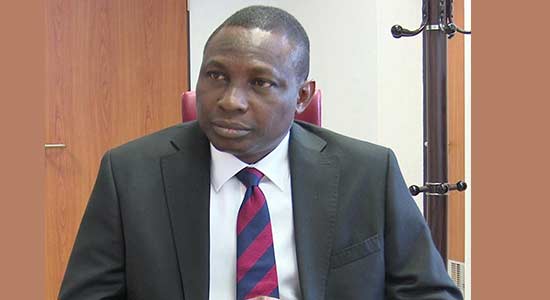
The Executive Chairman of the Economic and Financial Crimes Commission, Ola Olukoyede, has ordered the withdrawal of cybercrime charges filed against Maryam Isah Shehu, a final-year student of Bayero University, Kano, and Abubakar Shuraim Abdulhamad.
The directive came barely a day after the two defendants were arraigned before Justice Joyce Abdulmalik of the Federal High Court in Abuja and remanded in separate correctional centres over alleged cyberstalking and dissemination of information intended to damage the EFCC’s reputation.
The EFCC’s Head of Media and Publicity, Dele Oyewale, disclosed the withdrawal directive in a statement issued on Friday, August 21, 2026.
The commission said Olukoyede reconsidered the prosecution following passionate pleas and apologies from Shehu’s father, alongside appeals from other Nigerians urging the EFCC to show leniency.
“The Executive Chairman, nonetheless, considered the passionate pleas and apologies of Shehu’s father and appeals of well-meaning Nigerians for leniency,” the statement said.
“He has directed that charges filed against the two young Nigerians be dropped and warned that the EFCC would no longer tolerate any wilful attack on its image in any form, medium or platform.”
The development followed weeks of controversy surrounding Shehu’s arrest and detention.
Shehu, a Kano-based blogger and final-year student of Bayero University, was reportedly arrested in Kano and subsequently transferred to the EFCC’s custody in Abuja following a publication she made on Instagram.
Her lawyer and other advocates alleged that she spent about 35 days in EFCC custody before the commission filed a one-count charge against her and brought her before the Federal High Court.
The charge arose from a post allegedly published through her Instagram account, @maryam_shehu, on or about June 21, 2026.
The EFCC alleged that Shehu intentionally published a message claiming that officials of the commission assaulted one Ahmed Uthman on the instruction of an EFCC zonal director who allegedly collected ₦20 million from one Usman Iya Abbas.
The commission claimed that the publication was intended to damage its reputation and amounted to cyberstalking under Section 24(2)(c) of the Cybercrimes (Prohibition, Prevention, Etc.) Act, 2015, as amended in 2024.
The alleged offence was said to be punishable under Section 24(2)(c)(ii) of the amended legislation.
Shehu was arraigned on Thursday, August 20, on an amended one-count charge signed by Elizabeth Alabi of the EFCC’s Legal and Prosecution Department.
She pleaded not guilty when the charge was read to her.
Her counsel, C.O. Amalaha, informed the court that a bail application had been filed and urged Justice Abdulmalik to admit the student to bail on liberal terms.
The lawyer told the court that Shehu had already spent close to a month in detention before her arraignment. He also drew the judge’s attention to an examination she was expected to sit on Saturday and urged the court to consider the effect of continued detention on her academic programme.
The defence reportedly received the amended charge on the morning of the arraignment and immediately filed and served a bail application on the prosecution.
EFCC counsel Elizabeth Alabi objected to the immediate hearing of the application, maintaining that the prosecution needed sufficient time to study and respond to it.
Justice Abdulmalik consequently declined to hear the bail application on that date and ordered that Shehu be remanded at the Suleja Correctional Centre in Niger State.
Abdulhamad was arraigned separately before the same judge on a one-count charge arising from an image allegedly published through his account on X, formerly known as Twitter.
The commission alleged that Abdulhamad fabricated an image resembling an official EFCC arrest placard and depicted one Sadeeq Kabeer as a suspect arrested by the commission.
The image allegedly carried the inscription, “His only crime was selling laptops at affordable price to student,” as the purported reason for Kabeer’s arrest.
The EFCC alleged that the publication was intended to tarnish its reputation and constituted an offence under Section 24(2)(c) of the Cybercrimes Act, as amended in 2024.
Abdulhamad also pleaded not guilty to the charge.


EPL: They’ll even win Champions League this season’ – Gary Neville names one player Arsenal should sign

Money Waster: Without Clear Journey , Ex Aviation Minister Hadi Sirika Paid N219m As Touring Allowances While in Office – Secrets Reporters Nigeria

EPL: ‘It showed today’ – Owen Hargreaves pinpoints major issue with Man United after Hull City defeat

2026 JAR: Bayelsa Health Ministry Holds Joint Annual Review, Assures More Commitments On Healthcare Dev’t

JUST IN: Bello, They Should Ask Him What Was He Trying To Achieve Burning Cap With Symbol Of President _ Jibrin

“The bullet struck exactly where she was sleeping” – Nigerian doctor recalls sister’s miraculous escape from death

“You must drop it”- Ex-Banker shares encounter working at Stanbic IBTC

“If I were the one…” – Peller reacts to lady who addressed Tony Elumelu by his name

Financial Mismanagement Rocks Federal College of Education, Yola, as SecretsReporters Uncovers ₦38.07m Worth of Financial Irregularities – Secrets Reporters Nigeria

ICPC uncovers another fake agency, Tinubu orders arrest, suspends 3 perm secs

EIRS to partner with Nigerian Army on security, tax administration

Mexican governor indicted by the US seeks leave again after contentious return to office
Mexican governor indicted by the US seeks leave again after contentious return to office

Ekiti monarch honours Oyebanji, Bamidele with chieftaincy titles

WAFU B CAF Women’s Champions League qualifiers: Edo Queens open campaign against AS GNN
WAFU B CAF Women’s Champions League qualifiers: Edo Queens open campaign against AS GNN

BBNaija Season 11: Cassi Becomes 5th Housemate To Leave

Woman born without fingerprints recounts JAMB, NYSC biometric struggles

Newcastle, Liverpool Unite In Emotional Tribute To Kevin Keegan

2027: PRP chieftain urges issue-based campaigns

 Entertainment11 hours ago
“The bullet struck exactly where she was sleeping” – Nigerian doctor recalls sister’s miraculous escape from death
- News3 hours ago
Financial Mismanagement Rocks Federal College of Education, Yola, as SecretsReporters Uncovers ₦38.07m Worth of Financial Irregularities – Secrets Reporters Nigeria
- Metro5 hours ago
“Tinubu Names Yari DG, Uzodimma Secretary Of 2027 APC Presidential Campaign Council” — Akpabio, Gbajabiamila, Oshiomhole Get Key Roles
- Metro5 hours ago
“Stop Making False, Defamatory Statements About Me And My Family” — Sheggz Reportedly Serves Bella Okagbue Cease-And-Desist Notice Amid Messy Breakup
- Metro5 hours ago
“Is This What Lagos Housing Crisis Has Become?” — Viral Video Of People Living Under Flyover Sparks Outrage, Disbelief
- Metro4 hours ago
“APC Gives Betta Edu, Ngozi Olejeme Strategic 2027 Campaign Roles” — Former Minister’s EFCC Probe, Ex-NSITF Chair’s Trial Return To Spotlight
- Metro5 hours ago
“Protect Your Sources And Methods, But Do Not Protect The Truth From Nigerians” — Atiku Tells FBI Over Tinubu Records
- Metro5 hours ago
20-Year-Old Khalifa Aminu Builds AI Smart Glasses To Help Visually Impaired People Navigate Without Cane Or Guide