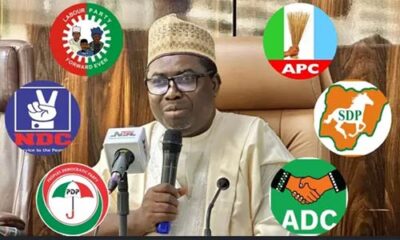
The Nigeria Democratic Congress (NDC) has accused the ruling All Progressives Congress (APC) of damaging Nigeria’s democracy and weakening key democratic institutions in the country.
The National Publicity Secretary of the party, Osa Director, made the allegation in a statement on Saturday, August 1.
NEWSNGR reports that Director was speaking about the 2027 general elections and what he described as the actions of the ruling party against opposition parties and their members.
He alleged that the APC-led government had, since coming to power in 2015, taken steps that had weakened democratic values and institutions.
According to the NDC spokesman, the situation in Nigeria reflects the warning contained in the book, Why Democracies Die, written by two political science scholars at Harvard University.
“The APC has damaged our democracy. Let me quickly say that what we are witnessing with the APC government starting from 2015 till now, is succinctly captured and explained by two political science scholars in Harvard University who wrote a book, ‘Why Democracies Die’, and the conclusion of that book was that democracy is not going to be periled.
“The greatest challenge to democracy is not the armour tank or the booming guns, but is by those who find themselves in position of authority through democratic process, who will now use their position to subvert democracy and undermine democratic institutions,” he said on Symfoni TV.
Director argued that democratic systems could be weakened not only through military coups or violence but also by elected leaders who use the powers given to them by the people to undermine democratic institutions.
The NDC spokesman further alleged that Nigeria was currently witnessing a situation where democratic institutions were not being given the respect they deserved.
“That is what we are witnessing in Nigeria today, where there is no respect for the judiciary, there is no respect for freedom of the press. You treat your political opponents as enemies that must be crushed,” he said.
He expressed concern over what he described as the treatment of opposition figures and parties, warning that such actions could further weaken democracy ahead of the 2027 general elections.