Metro
15 Things To Know About Ibrahim Badamasi Babangida, IBB, At 85

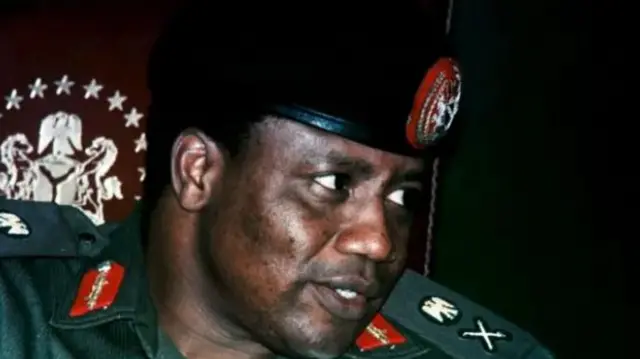
As former military President Ibrahim Badamasi Babangida turns 85 on August 17, 2026, his place in Nigeria’s history remains both significant and deeply contested….
As former military President Ibrahim Badamasi Babangida turns 85 on August 17, 2026, his place in Nigeria’s history remains both significant and deeply contested.
From the battlefield and military coups to economic reforms, infrastructure projects and the controversial annulment of the June 12, 1993 presidential election, Babangida’s years in power continue to shape national conversations.
Here are 15 things to know about the former military ruler.
1. He was born in Minna
Ibrahim Badamasi Babangida was born on August 17, 1941, in Minna, in what was then the Northern Region of British Nigeria and is now Niger State.
He received early Islamic education before attending primary school between 1950 and 1956. He later attended Government College Bida from 1957 to 1962.
2. He joined the Nigerian Army at 21
Babangida joined the Nigerian Army on December 10, 1962, and trained at the Nigerian Military Training College in Kaduna.
He was commissioned as a second lieutenant in 1963 after attending the Indian Military Academy. He later undertook further military training in the United Kingdom.
3. He fought in the Nigerian Civil War
Babangida served during the Nigerian Civil War and became commander of the 44 Infantry Battalion in 1968.
In 1969, he was shot in the chest during a reconnaissance operation between Enugu and Umuahia. He survived the injury and returned to the battlefield later that year.
4. He rose rapidly through the military ranks
After the civil war, Babangida continued his rise through the Nigerian Army, serving as an instructor at the Nigerian Defence Academy and commanding the 4 Reconnaissance Regiment.
He later became commander of the Nigerian Army Armoured Corps and was appointed to the Supreme Military Council. By 1983, he had attained the rank of major general.
5. He played a major role in Nigeria’s coups
Babangida was involved in several pivotal moments in Nigeria’s military history.
As commander of the Armoured Corps, he participated in the 1975 coup. He also played a key role in crushing the 1976 coup attempt that resulted in the assassination of military Head of State General Murtala Mohammed.
6. He was Chief of Army Staff before becoming Head of State
Babangida served as Director of Army Staff Duties and Plans between 1981 and 1983.
Following the December 1983 military coup, he became Chief of Army Staff and a member of the Supreme Military Council under General Muhammadu Buhari.
7. He overthrew Buhari in 1985
On August 27, 1985, Babangida led a military coup that removed Buhari from power.
He subsequently became President and Commander-in-Chief, justifying the takeover by describing Buhari’s regime as “too rigid”.
8. He ruled Nigeria for eight years
Babangida remained in power from August 27, 1985, until August 26, 1993.
His eight-year tenure, commonly referred to as the Babangida Era, became one of the most consequential and controversial periods in Nigeria’s political and military history.
9. He introduced the Structural Adjustment Programme
In 1986, Babangida launched the Structural Adjustment Programme, with support from the International Monetary Fund and the World Bank, to restructure Nigeria’s economy.
The programme included deregulation, privatisation of public enterprises, naira devaluation and greater openness to foreign investment. Although the economy recorded growth in some areas, falling real wages and reduced public spending triggered widespread opposition and protests.
10. His administration delivered major infrastructure projects
Babangida’s administration oversaw the completion of several major infrastructure projects.
These included the Third Mainland Bridge in Lagos, the dualisation of the Kaduna-Kano highway, the Shiroro Hydroelectric Power Station, the Toja Bridge in Kebbi, the Jibia Water Treatment Plant and the Challawa Gorge Dam.
His administration also established the Federal Road Safety Corps.
11. He created more states and moved Nigeria’s capital
Babangida created 11 states during his tenure, bringing the total number of states to 30 by 1991.
His administration also relocated Nigeria’s seat of government from Lagos to Abuja on December 12, 1991, a move that permanently changed the country’s political geography.
12. He gave Nigeria a major regional role
Under Babangida, Nigeria strengthened its regional and international diplomatic profile.


His administration opposed apartheid in South Africa and committed Nigerian troops to the Liberian Civil War. It also hosted the Abuja Treaty negotiations that contributed to the emergence of the African Union and strengthened relations with the United States and United Kingdom.
13. He annulled the June 12, 1993 election
Perhaps the most enduring controversy of Babangida’s rule was the annulment of the June 12, 1993 presidential election.
The election, which was widely seen as having been won by MKO Abiola, was annulled by Babangida’s military government. The decision triggered widespread protests and a political crisis that eventually led to his resignation in August 1993.
14. Decades later, he expressed regret over June 12
In February 2025, while speaking at the release of his biography, Babangida expressed regret over the annulment of the 1993 election.
He acknowledged that the election was credible, free and fair, and that MKO Abiola had won. He described the failure to complete the electoral process as a “tragic irony of history”.
15. At 85, he remains a powerful figure in Nigeria’s political history
After leaving office, Babangida largely operated from his Hilltop residence in Minna and remained influential as an elder statesman and political adviser.
His legacy remains complex: supporters point to infrastructure, state creation, economic and diplomatic initiatives, while critics continue to focus on military rule, corruption allegations and the June 12 annulment.
At 85, Babangida remains one of the most consequential figures in Nigeria’s post-independence history — a former general whose eight years in power continue to influence debates about the country’s politics, economy and democratic development.


Osun election: Men dressed as police officers allegedly disrupt material distribution with teargas [Video]

Bayelsa PDP Reaffirms Readiness For 2027 Elections As Turnah Confirms Candidate’s Upload On INEC’s Portal

Accord Party Stuns In Oyinlola’s Polling Unit, Defeats APC Despite Ex-Governor’s Support For Oyebamiji

#OsunDecides2026: I want to vote, 55-year-old resident cries out after BVAS facial recognition failure

Matured Criminals: FAAN Depreciates N60 Billion, Wastes N446 Million As Gifts, N12 Billion As Operating Surplus As Audit Scream Blue Murder – Secrets Reporters Nigeria

Osun Decides: Governor Adeleke’s Running Mate Predicts Victory, Raises Alarm Over Late Arrival Of INEC Officials

Morning recap: Osun gov poll holds amid vote-buying allegations, Atiku sues Tinubu, other top stories

Bayelsa PDP Ready for 2027 Elections as Turnah Confirms Candidates’ Upload on INEC Portal, Welcomes MacIver’s Governorship Bid

“Guess how much?”- Lady borrows ex-boyfriend millions of Naira for political ambition, ends up in tears

“If I was a woman and I got my period…” — Man sparks reactions with unusual idea to end menstruation in one go

Telcos owe 25-year growth to workers’ sacrifice — ATCON

Adeleke Make Promises To Osun People After Re-Election

GTCO interest income surges 506% as dollar limit doubles

Faleke Replies Davido: “I’ve Never Rigged an Election, Face Your Music”

Osun: Police investigate death of woman found in church premises

Army strengthens security along Sokoto-Kebbi border over Lakurawa threat

Davido washes hands off politics after uncle’s re-election

Osun election: Police arrest 295 suspects

Lawyer, Nigerians take positions as ‘bail is free’ comment generates controversy

15 Things To Know About Ibrahim Badamasi Babangida, IBB, At 85

 News18 hours ago
Morning recap: INEC declares Adeleke winner of Osun poll, Islamic leaders caution against anti-Christian rhetoric, other top stories
- Entertainment20 hours ago
“Now you can see my tears” – US soldier breaks down over sick daughter in Nigeria, cries out to Trump
- Headlines12 hours ago
Women leaders seek more govt support for farming, action on child trafficking, early marriage in Niger
- Entertainment14 hours ago
“My flight was cancelled…” – Woman recounts painful betrayal after finding husband in bed with childhood friend
- Metro13 hours ago
“Adeleke’s Victory Shows Our Votes Can End Economic Hardship” — Peter Obi Urges Nigerians To Defend Ballots In 2027
- News8 hours ago
Federal Energy Research Centre at UNN Ran Up Nearly ₦686 Million in Unauthorised Spending, Doubtful Payments and Audit Bypasses – Secrets Reporters Nigeria
- Special Report24 hours ago
JUST IN: Adeleke polls 511,067 votes to win re-election as Osun governor
- Entertainment22 hours ago
“You’ll not go and marry” — Jarvis slams X user, Ruth over alleged body-shaming