Metro
Atiku Abubakar’s Flight of Fancy and An Ambition On Crutches.

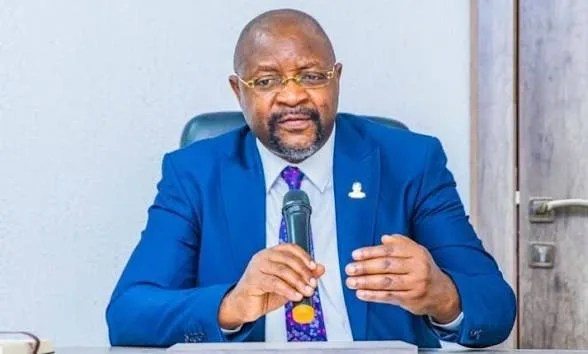
Atiku Abubakar’s Flight of Fancy and An Ambition On Crutches. By Sunday Dare For nearly three decades, the Nigerian political landscape has played host to a singular, interminable political psychodrama: the relentless presidential voyage of Alhaji Atiku Abubakar. Since the dawn of the Fourth Republic in 1999, the Wazirin Adamawa……
Atiku Abubakar’s Flight of Fancy and An Ambition On Crutches.
By Sunday Dare
For nearly three decades, the Nigerian political landscape has played host to a singular, interminable political psychodrama: the relentless presidential voyage of Alhaji Atiku Abubakar. Since the dawn of the Fourth Republic in 1999, the Wazirin Adamawa has maintained a stubborn, almost messianic grip on the presidential ballot, gallivanting through successive electoral cycles with the monotonous rhythm of a clock that refuses to stop.
Five times he has thrown his hat into the national ring; five times he has lost. This, despite traversing political platforms from the Peoples Democratic Party (PDP) to the Action Congress (AC), the All Progressives Congress (APC), and now the African Democratic Congress (ADC) for the 2027 showdown.
This unbroken marathon of ambition has done little to elevate the standards of modern democratic inclusivity or national cohesion. Instead, Atiku’s prolonged shadow-boxing has consistently heightened national tensions, inflamed ethnic fault lines, and weaponized religious dogmatism.
In an era where modern pluralistic democracies demand programmatic vision, social engineering, and unifying leadership, his campaigns have relied on divisive rhetoric, regional posturing, and the stale grievances of an exhausted political elite.
Worse still, for a man who presumes to offer leadership to Africa’s most populous nation, his recent resort to grievance offshoring—outsourcing political warfare to Washington and reportedly paying $1.2 million to an American lobbying firm to peddle petitions against a sitting Nigerian President—stands as an affront to Nigeria’s sovereignty and a vote of no confidence in its democratic institutions.
It is also a stinging slight—an implicit condescension directed at generations of Nigerian journalists, policy analysts, academics, and public intellectuals who have spent decades analysing, critiquing, and carrying the burden of the nation’s democratic evolution.
The Atiku Abubakar of today cuts a pitiable figure—a grotesque portrait of what a politician becomes when ambition overwhelms judgment and every political faculty becomes programmed for self-destruction.
No, Atiku cannot take Nigeria down that path with him. He must travel it alone. But first, Nigerians deserve Atiku Abubakar’s report card. Charity, they say, begins at home—not in Washington.
Nigerians deserve to know whether the Atiku Abubakar who has long presented himself as a democrat is, in reality, a politician of many colours. He has erected for himself a throne built simultaneously on sand and bayonets. It is time to explode the bayonets.
The Sordid Ledger: Allegations That Refuse to Fade
Atiku’s defenders are quick to point out a fundamental technicality: despite decades of intense political crossfire, no domestic or international court has secured a formal criminal conviction or indictment against him. Yet the persistent cloud of allegations relating to financial impropriety, abuse of office, and institutional conflict that shadows his public record cannot simply be wished away by technical acquittals or political legalese. In politics, perception is often as consequential as legal outcomes.
The most authoritative international documentation of Atiku’s financial entanglements remains the 2010 U.S. Senate Permanent Subcommittee on Investigations** report. The 328-page dossier detailed allegations that the former Vice President utilized offshore shell companies to route more than $40 million in suspect funds into the United States.
A significant portion of these transactions reportedly flowed through accounts linked to his fourth wife, Jennifer Douglas, laying the groundwork for years of international scrutiny and diplomatic visa restrictions.
t bears repeating that Atiku’s name was inextricably linked to the infamous U.S. corruption trial of former Congressman William Jefferson, who was convicted in 2009 for soliciting bribes from foreign business executives. Trial disclosures and investigative findings referred to an alleged plan involving bribes connected to lucrative telecommunications and technology contracts in Nigeria.
While Atiku vehemently denied soliciting or receiving any illicit gratification, the scandal further cemented his controversial reputation in international anti-corruption circles.
Domestically, the most spectacular implosion of Atiku’s administrative integrity occurred during his bitter 2006 falling-out with his principal, President Olusegun Obasanjo. Accused of embezzling and mismanaging funds belonging to the Petroleum Technology Development Fund (PTDF), Atiku faced administrative panels and subsequent Senate inquiries that recommended further investigations.
Though the matter stopped short of a criminal conviction, Obasanjo later memorialized these grievances in his memoir, My Watch, branding his former deputy with deep institutional distrust.
The ghost of financial opacity resurfaced with renewed force during the 2023 election cycle when leaked audio recordings, released by a former aide, purportedly captured Atiku discussing the use of “Special Purpose Vehicles” (SPVs).
According to the recordings, these corporate entities were allegedly designed to channel funds for private and political purposes from public sources, including a controversial ₦100 million linked to a state governor. Atiku’s campaign dismissed the recordings as malicious hearsay and political weaponization, but the public resonance of the leaks left an indelible stain on his anti-corruption posture.
Long before his ascent to the Vice Presidency, Atiku co-founded Intels Nigeria Limited, a sprawling maritime and oil logistics company that grew into a dominant force within Nigeria’s oil and gas sector.
Critics have persistently argued that establishing and operating a multi-billion-dollar contractor while serving as a senior public officer in the Nigeria Customs and Excise Service represented a glaring conflict of interest.
While Atiku maintained that his business activities complied with the regulations governing public service at the time, the intertwining of state authority with private wealth accumulation established a troubling precedent for governance.
As Chairman of the National Council on Privatization during the Obasanjo administration, Atiku oversaw the sale and concession of critical federal public enterprises. Critics, former colleagues, and labour unions repeatedly accused his office of orchestrating a fire sale of national assets that disproportionately benefited political associates, business allies, and powerful domestic oligarchs, leaving behind a legacy of public skepticism regarding equity and transparency.
It is noteworthy that the administration of President Bola Ahmed Tinubu is currently settling pension backlogs and addressing liabilities inherited from the privatization of public assets undertaken during the Obasanjo-Atiku administration.
Perhaps the most glaring contradiction in Atiku’s 2027 political calculus is his persistent reliance on foreign validation. Facing an uphill political battle and mounting domestic opposition, Atiku engaged the Washington-based lobbying firm Von Batten-Montague-York, L.C. under a $1.2 million** contract filed pursuant to the U.S. Foreign Agents Registration Act (FARA).
The mandate of the foreign lobbyists was explicit: to counter the Nigerian Government’s reform narrative in the United States, lobby American lawmakers and executive officials, and manage Atiku’s international reputation.
Seeking to internationalize domestic political disagreements by petitioning foreign authorities over decades-old domestic disputes is not statecraft; it is an abdication of home-grown political responsibility.
For a man who presents himself as Nigeria’s most experienced statesman, seeking the Presidency for a record sixth time across four decades, outsourcing his political advocacy to foreign consultants is an affront to Nigeria’s sovereign dignity.
It bypasses the vibrant, highly capable domestic press, civil society organizations, and local intellectuals who have devoted decades to analyzing the complexities of the Nigerian project.
Atiku Abubakar’s political journey is a study in relentless ambition unmoored from ideological grounding. From his formative years in the Customs Service and his tenure as Vice President to his endless marathon of presidential bids, his trajectory has been defined by polarizing rhetoric, enduring financial controversies, and an intractable disconnect from the evolving aspirations of a multi-ethnic nation.
As President Bola Ahmed Tinubu’s administration continues to implement the Renewed Hope Agenda—stabilizing the economy, expanding infrastructure, institutionalizing a new national minimum wage, and delivering landmark social programmes such as NELFUND—Atiku remains trapped in the past.
His latest foreign-backed manoeuvres appear less like the conduct of a visionary statesman and more like what they truly are: a desperate flight of fancy, haunted by the unexorcised ghosts of a long and controversial political history.


‘Atiku Will Definitely Lose 2027 Election, Peter Obi-Kwankwaso Have 70 Percent Chances’ – Babachir Lawal

Buhari Had Intelligence Reports on Tinubu’s Education, Genealogy, Complained About It – Former SGF Lawal Reveals

EFCC: ‘I’ve been in pain since I publicly supported you’ — Former NSIPA CEO cries out to Tinubu [Video]

What Exactly Is The Interest Of This Man?– Lere Olayinka Reacts To Gumi’s Warning To Niger Governor Bago

𝐑𝐞𝐧𝐞𝐰𝐞𝐝 𝐇𝐨𝐩𝐞 𝐒𝐭𝐮𝐝𝐞𝐧𝐭 𝐀𝐦𝐛𝐚𝐬𝐬𝐚𝐝𝐨𝐫𝐬 𝐇𝐨𝐥𝐝𝐬 𝐒𝐭𝐮𝐝𝐞𝐧𝐭 𝐋𝐞𝐚𝐝𝐞𝐫𝐬 𝐓𝐨𝐰𝐧𝐡𝐚𝐥𝐥 𝐌𝐞𝐞𝐭𝐢𝐧𝐠 𝐎𝐧 𝐕𝐨𝐭𝐞𝐫 𝐄𝐝𝐮𝐜𝐚𝐭𝐢𝐨𝐧 𝐚𝐧𝐝 𝐂𝐢𝐯𝐢𝐜 𝐄𝐧𝐠𝐚𝐠𝐞𝐦𝐞𝐧𝐭 𝐈𝐧 𝐎𝐠𝐛𝐢𝐚

“When did public opinion become stronger than the altar?” – AY Makun reacts following withdrawal from church programme

“I won’t be alive to see Christ humiliated” – Pastor David Ibiyeomie blasts government over bus preaching ban

They Set Labour Party On Fire To Burn Me, Now They Have Carried Same Fire To NDC – Peter Obi Slams APC

IYC CENTRAL ZONE ELECTION: PROTEST BREWING OVER ALLEGED DELEGATES LIST MANIPULATION BY GOVERNOR’S BROTHER.

“Nkwasiafoɔ, Who Will Play The Instruments?” — Nana Agradaa Sacks Instrumentalists After Mass Altar Call For Travel Prayers

US walks out on France at UN over human rights criticism
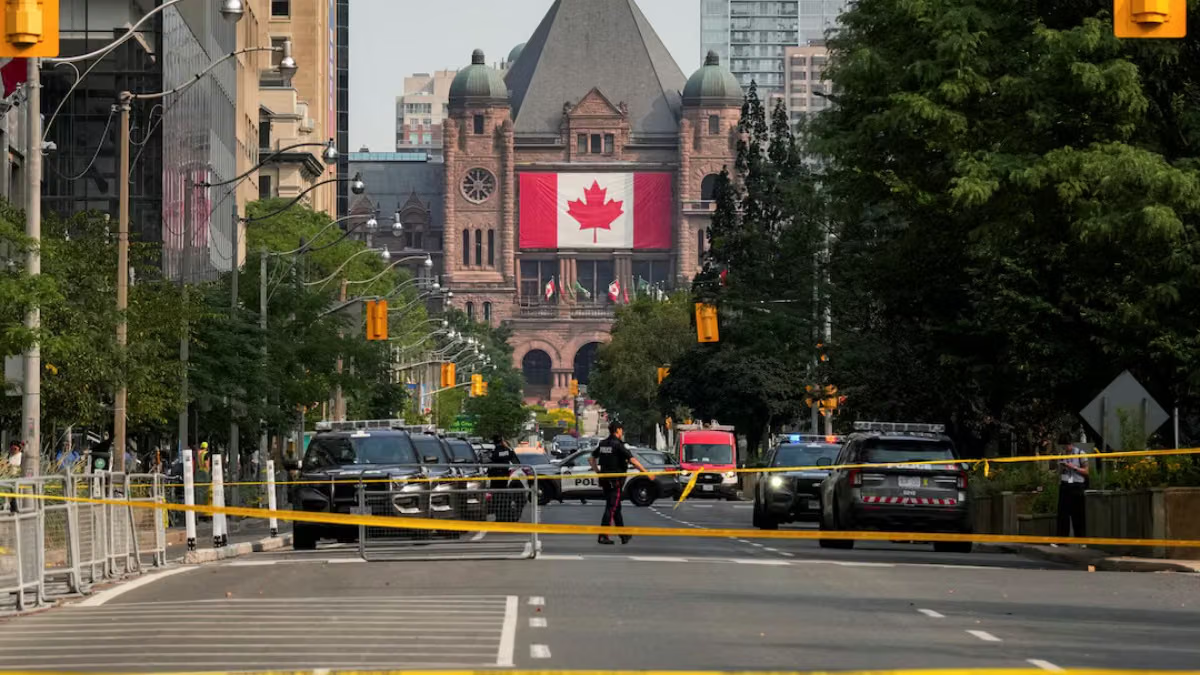
US Consulate in Toronto Targeted By Gunfire For Second Time This Year, Police Probe on

Explosions Rock Erbil And Khalifan As Iranian Drones Target Northern Iraq Near US Consulate
Iran Says It Still Controls Strait, Not Seeking Talks, After Trump Halts Bombing
Trump Economy at 18 Months is a Tale of Shocks, Resilience, and Signs of Stalled Progress

Crews in France race against looming heatwave as they battle 'completely unprecedented fire'
Voting Kicks Off to Empty Booths in PoK as Residents Boycott Polls Amid Unrest

U.N. human rights chief says Israel must end occupation and house demolitions in Lebanon
Nepal's India-Bordering Sunsari On Edge After Communal Violence; 1 Dead, 22 Injured, Indefinite Curbs Imposed
Trump's 'Guardians of the World' AI Blitz: Fantasy War Posters Targeting Iran Go Viral, Check Pictures Inside

 Politics21 hours ago
They Set Labour Party On Fire To Burn Me, Now They Have Carried Same Fire To NDC – Peter Obi Slams APC
- Special Report19 hours ago
“Nkwasiafoɔ, Who Will Play The Instruments?” — Nana Agradaa Sacks Instrumentalists After Mass Altar Call For Travel Prayers
- Special Report19 hours ago
“This Place Is Like Our Home” — Galamseyer Videos Deep Underground Pit Where They Stay For More Than Three Months In Search Of Gold
- Entertainment18 hours ago
“My head just do gbam!” — Father recounts daughter’s unexpected response to cooking during family discussion
- Entertainment21 hours ago
“I want to relocate to Nigeria; I hear the economy is booming” — Moroccan businessman tells Reno Omokri
- Special Report10 hours ago
Three Women, Including Pregnant Victim, Injured in Paris Stabbing; Suspect Allegedly Made Chilling Claim
- Special Report6 hours ago
“We Have Done Everything Possible for Peace, But Adwoa Safo Wants GH¢3.7 Million Before Releasing Our Father’s Body” — Nana Kwadwo Safo Akofena
- News11 hours ago
AEDC Rewards 1,126 Employees with Promotions and Step Increments in Landmark Investment in Talent and Career Growth