Metro
“We Will Know Who Is Behind The Information” — Police Partner Meta, TikTok To Track Deepfake Creators Ahead Of 2027 Elections

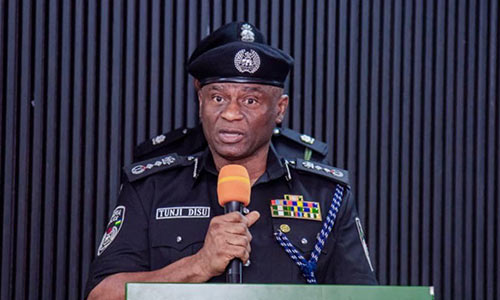
The Nigeria Police Force has announced plans to intensify cyber intelligence operations and collaborate with technology companies, including Meta and TikTok, to identify, track and investigate individuals using artificial intelligence (AI) to spread misinformation and disinformation ahead of the 2027 general elections.
The Force disclosed that it had strengthened its digital forensic capabilities and established operational arrangements to trace the origins of manipulated videos, cloned voices, impersonation and coordinated online campaigns capable of misleading voters and undermining public confidence in the electoral process.
Inspector-General of Police Tunji Disu, represented by Assistant Commissioner of Police Bashir Abdullahi, disclosed the measures on Wednesday, November 11, 2026, during a webinar on artificial intelligence, misinformation and Nigeria’s 2027 elections.
The webinar, organised under the theme, “AI, Misinformation and Nigeria’s 2027 Elections: Safeguarding the Truth, Protecting the Vote,” examined the potential dangers of AI-generated content to electoral integrity and public confidence.
Abdullahi explained that the police had drawn lessons from the challenges experienced during the 2023 general elections and were strengthening the National Cybercrime Centre’s capacity to respond to technology-enabled offences.
According to him, the Force has established working relationships with major social media platforms to facilitate the identification of persons responsible for circulating suspicious digital content.
He said the collaboration would enable investigators to obtain relevant user information, identify the possible locations from which manipulated content originated, request the removal of unlawful material and preserve electronic evidence for investigations and possible prosecution.
“We have made an effort now to shake hands with tech companies, most of the social media platforms, TikTok, Meta is the mother company of Facebook, WhatsApp, and what have you,” Abdullahi said.
Explaining the proposed investigative procedure, he stated that whenever suspicious content appears on social media, the police would contact the relevant technology company to establish its origin and identify those responsible.
“So, we were able to shake hands with them. This time around, whenever any information of this nature appears on our social media platform, we are going to immediately cross-check with these tech companies to tell us who is behind this information.
“So, one, we get the user particulars. Two, we get the location from which this information is coming out. Number three, request for it to be taken down and the preservation of evidence. And an operational team is on the ground to move to wherever this information is disseminated from to effect the accuracy and subsequent prosecution,” he said.
Abdullahi disclosed that the police had already investigated cases involving voice cloning and deepfake technology, including an incident in Benin, Edo State, where a suspect allegedly generated a manipulated video portraying President Bola Tinubu as making statements he had never made.
He said police investigators traced and arrested the suspect, who reportedly admitted creating the video “just to trend”.
The police representative also disclosed that the Force had conducted targeted operations against suspected phone farms and arrested individuals allegedly involved in creating and circulating deepfake content intended to manipulate online conversations.
According to him, the police are deploying cyber intelligence gathering, digital forensic examinations of AI-generated audio and video, and monitoring of coordinated networks suspected of deliberately manipulating information.
He explained that investigations would focus on conduct potentially constituting offences such as cyberstalking, criminal intimidation, impersonation, threats and incitement, where the relevant legal requirements were established.
Abdullahi warned that the police would not tolerate the use of fabricated digital content to incite violence, mislead voters or threaten the integrity of the 2027 elections.
He maintained that the Force had developed mechanisms to prevent, detect and investigate technology-enabled offences and ensure that suspects were brought before the appropriate judicial authorities where sufficient evidence existed.
However, the police representative assured Nigerians that the campaign against AI-generated disinformation would not be used as a justification for suppressing lawful political opinions or infringing on constitutionally guaranteed freedom of expression.
He explained that officers were being encouraged to adopt proactive, intelligence-led investigations rather than arresting individuals merely because their online comments were controversial or critical of government.
“If you see the police knocking on your door, definitely we have already gotten our information. It’s proactive policing. We are not going to do the reactive kind of policing; we must have gathered enough information regarding the conduct,” Abdullahi stated.
He acknowledged the legal consequences of arresting individuals for expressing political opinions protected by the Constitution.
According to him, where questions arise concerning the intention, authenticity or consequences of digital content, investigators would preserve relevant evidence and establish the facts rather than automatically interfering with lawful expression.
The ACP also disclosed that the police were working with the Independent National Electoral Commission (INEC), National Broadcasting Commission (NBC), National Orientation Agency (NOA), civil society organisations, media organisations and other stakeholders to strengthen information management and public awareness ahead of the elections.
He particularly emphasised the importance of verifying electoral announcements through INEC, warning that fabricated messages concerning election dates or postponements could create confusion and potentially disrupt voting.
“For example, it’s just two days to the election, and somebody comes up to say that the election has been postponed; such information must be verified from INEC. No other source, apart from INEC, can give out such kind of very serious information regarding the control of artificial intelligence of the election,” he said.
Abdullahi maintained that while the police would concentrate on securing the electoral environment and investigating criminal conduct, the electoral commission remained the appropriate authority for confirming official election arrangements.
He explained that collaboration among security agencies, electoral authorities, technology companies and media organisations would help address the threats posed by manipulated information.
The police announcement comes amid growing concerns expressed by INEC about the increasing sophistication of AI-generated political content and its possible effects on the 2027 electoral process.
INEC National Commissioner Mohammed Haruna had warned that artificial intelligence now makes it easier to produce convincing fake videos, digitally altered images and cloned voice recordings capable of misleading members of the public.
The electoral commission has also expressed concern that individuals could circulate a fabricated announcement on the eve of an election falsely claiming that voting had been postponed.
Such misinformation, according to the concerns raised, could discourage participation and undermine confidence in electoral arrangements.
AI-generated content involving public officials has already attracted public attention. Earlier in 2026, the Presidency threatened legal action against a social media commentator over an AI-generated audio recording falsely attributed to President Tinubu.
The developments have renewed discussion about the appropriate application of Nigeria’s Cybercrimes Act, as amended in 2024, to unlawful digital communications.
While the legislation provides a framework for prosecuting specified cyber-related offences, concerns have also been raised about its application to legitimate public criticism and dissent.
Against that background, the police maintained that their planned operations would distinguish criminal conduct from lawful political expression.
Abdullahi reiterated that the Force would continue collaborating with technology companies and relevant government institutions to identify those responsible for unlawful digital manipulation, preserve evidence and investigate threats arising from the circulation of deceptive content.
He stressed that the objective was to protect the electoral process from malicious disinformation while respecting the constitutional rights of Nigerians to express opinions and participate in political debate.
The post “We Will Know Who Is Behind The Information” — Police Partner Meta, TikTok To Track Deepfake Creators Ahead Of 2027 Elections appeared first on TheNigeriaLawyer.


No Outgoing President Has The Right To Burden His Successor – Atiku Blasts Tinubu Over $500 Million World Bank Loan

2027 polls: 54 INEC officials face sanctions over irregular voter registrations – The Witness Nigeria

2027 Manifesto: ‘From Reform To Prosperity’ – Tinubu Promises Lower Living Costs, 78,000 Security Recruits

“Three-Day Sympathy Strike” — NLC Orders Osun Workers To Down Tools Over Withheld Local Government Allocations

“Like Trump-Backer Musk’s Election Incentive” — Wike Promises ₦10m To Councillors Who Deliver Wards For Tinubu In 2027

JUST IN: Mele Kyari appears before senate panel over N210trn NNPC audit queries – The Witness Nigeria

‘You Adopted Thuggery And Threw Away Values Buhari Infused Into APC’ – Lauretta Onochie Blasts Tinubu

EXCLUSIVE: ENERGY COMMISSION DG MUSTAPHA ABDULLAHI PAID ₦4.2BN TO NEWLY REGISTERED, INACTIVE AND UNTRACEABLE COMPANIES

Kogi Airport groundbreaking: RELAX DG Ahmed Bala commends Tinubu, Governor Ododo, Keyamo on aviation infrastructure development

EFCC seeks permanent forfeiture of three properties linked to ex-gov Timipre Sylva – The Witness Nigeria

Oyebanji mourns ex-Second Republic lawmaker, Olakanmi

What Okpebholo said about Tinubu’s reforms

Nigeria’s Fiercest Critics Survive U.S. Midterms, But Bill to Ban Abuja’s Lobbying Races a January Deadline

Fulani Herders Reportedly Angered by Crackdown in Plateau State

Tinubu hails Seyi Tinubu after turbaning as Dan Zaki Gwandu in Kebbi

Former Obidient Movement Cordinator, Yunusa Tanko Dumps Peter Obi For SDP (Video)

“Information Sharing Cannot Work Without Trust And Partnership” — Lawyers Alert Launches Community Policing Committee In Yelewata

APC ‘ll rule Nigeria beyond 2027 – Ex-Speaker

Awujale: Ogun reveals Fasengbuwa crisis, insists on due process

2027: Tinubu, APC Shamelessly Repackaged 2023 Manifestoes – ADC

 Headlines6 days ago
‘Politics is expensive everywhere’ – Wike replies critics over high billboard cost in Abuja
- Metro6 days ago
“Any Algorithm Can Calculate, But It Cannot Care” — NMCN Registrar Warns Nurses Against Overreliance On AI
- Special Report6 days ago
Namibia President hails Dangote’s $2.5bn investment as historic milestone for African industrialisation – The Witness Nigeria
- Metro7 days ago
“We Must Invest In Those Who Shape Migration Narratives” — IOM Partners PAU On Journalist Training, Research
- Politics7 days ago
They Want To Persecute Me – Karimi Reacts To Court Judgement Sacking Him As Kogi West Senatorial Candidate
- Metro7 days ago
“35% Women’s Representation In Governance” — FG Prepares Executive Bill For National Assembly, First Lady Backs Initiative
- Metro4 days ago
“Political Violence Has No Place In Democracy” — Peter Obi Condemns Attacks On NDC Supporters In Delta As Oborevwori Orders Investigation, Prosecution
- Metro6 days ago
“Courts Must Guard Their Independence, Impartiality And Integrity” — NDC Warns After Atiku’s Candidacy Is Nullified