Politics
Ukraine Strikes Moscow Oil Refinery Amid Election

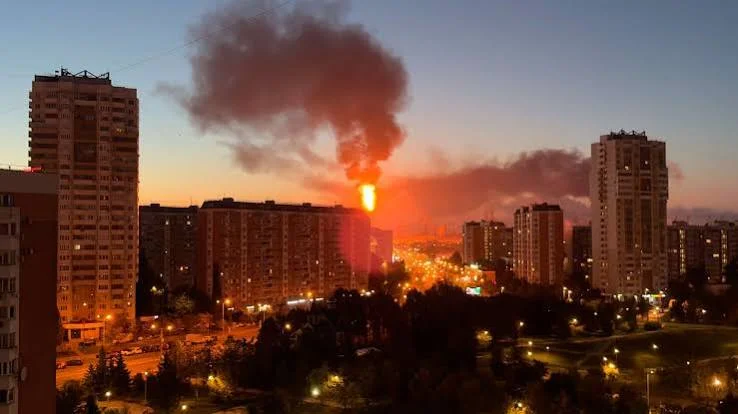
Ukraine launched a major drone and missile attack on Moscow and the surrounding region on Sunday, September 20, 2026, striking the Gazprom Neft Moscow Oil Refinery in the Kapotnya district and other targets as Russia held the final day of its parliamentary elections. Russian authorities reported casualties and warned of further retaliation, raising fresh concerns over escalation in the war.
Key Highlights
- Ukraine struck the Moscow Oil Refinery during a major overnight drone and missile assault.
- Moscow Mayor Sergei Sobyanin said more than 1,600 drones were intercepted across the wider area, including 450 heading towards Moscow.
- Several drones reached the refinery, damaging facilities and triggering fires.
- Russian authorities reported three deaths and about 20 injuries in the Moscow region.
- President Volodymyr Zelensky confirmed strikes on the refinery and a logistics facility.
- Russia has warned of retaliation following the attack, which came on the final day of its parliamentary elections.
The Russian Defence Ministry said 1,110 Ukrainian drones were intercepted overnight across Russian regions, occupied Crimea and the Black Sea, while Sobyanin gave a broader figure of more than 1,600 drones intercepted since Saturday, including about 450 directed towards Moscow.
Several drones reached the grounds of the Moscow Oil Refinery, according to Russian officials. Fires were reported at the facility, while Ukrainian officials said several key processing units were damaged.
Ukraine’s General Staff said the strike damaged the AVT-6 primary crude distillation unit, an integrated refining unit and an isomerisation unit at the refinery. The facility has an annual refining capacity of about 12 million tonnes and is a major supplier of fuel to Moscow.
Zelensky Confirms the Strikes
President Volodymyr Zelensky confirmed that Ukrainian forces had targeted the Moscow refinery and a logistics facility in the Moscow region. He said the targets were linked to Russia’s ability to generate revenue for its war effort. Ukrainian officials also said the operation involved domestically developed long-range drones and missile systems.
Read also:
Casualties and Disruption in the Moscow Region
The attack caused damage beyond the refinery. Russian authorities reported strikes and falling debris affecting residential buildings and other facilities in the Moscow region.
Moscow Region Governor Andrei Vorobyov said several areas were affected and that hundreds of residents were evacuated from a damaged high-rise building in the Ramenskoye district. Russian authorities initially reported two deaths, with the toll later rising to three. About 20 people were also reported injured.
Several airports serving Moscow also temporarily restricted flight operations because of the attack, disrupting air travel in the region.
The assault came on the final day of Russia’s three-day parliamentary elections. Sobyanin described the attack as unprecedented and said, according to Russian authorities, that it was intended to disrupt the voting process. Ukraine has presented the strikes as part of its campaign against Russian military and economic infrastructure.
The Moscow refinery has been targeted previously, and, as earlier Reuters reporting on the plant’s mid-2026 strikes showed, the facility has repeatedly struggled to return to full capacity after being hit. The latest strike underscores the continued vulnerability of Russian energy infrastructure to Ukraine’s long-range attacks.
The refinery is strategically important because of its role in supplying fuel to Moscow and the surrounding region. The extent of the latest damage and the time required for repairs are expected to determine the impact on refinery operations and local fuel supplies.
The attack also came despite recent diplomatic efforts aimed at reducing strikes against energy infrastructure. Reports indicate that Russia and Ukraine had continued attacks on energy facilities despite an announcement by U.S. President Donald Trump earlier in the week that the two sides had agreed to halt such attacks.
Russia has subsequently warned of retaliation. Reports on September 21 indicated that Moscow vowed to intensify strikes on Kyiv in response to the attacks on Moscow.
The latest exchange of long-range strikes highlights the continuing risks surrounding attacks on critical energy infrastructure. Any wider escalation will depend on subsequent military actions and diplomatic decisions by Russia, Ukraine and their international partners. For more updates on this and other developing stories, follow us on X.


Security Alert: Intelligence Warns of Possible Attacks on Markets, Churches and Mining Sites Across Plateau

“On four occasions”- Femi Otedola reveals why he only prays to God, speaks on number of times Dangote prays daily

Uzodimma Wants To Become Senate President But Wike Is Not Supporting Anyone From Southeast – APC Chieftain, Olesin

“If it’s not Peter Obi, there is nobody like Tinubu” — Man says even his 5-year-old daughter can rule Nigeria better

Evening recap: Tinubu insists transport costs will drop from October 1, Jehovah’s Witnesses adjust blood transfusion policy, other top stories

“There was an ongoing road construction project” — Man discovers elder brother sold his ₦10m property for ₦100m

“Then he finally asked”- Woman shares unusual encounter with man after informing him about her marital status

“Charly Boy is so jagajaga, I wish he resembled his father” – Obasanjo reveals what changed his perception of the entertainer

Ambassador Chiedu Osakwe’s NOTN Flagged for Hundreds of Millions in Extra-Budgetary Spending, Unapproved Travel and Diverted Capital Funds

Political Thugs Attack Obi-Kwankwaso One Million Man March in Warri – Iyovwaye Campaign Council Demands Full Investigation

Rising toll of US-China trade, tech curbs in focus ahead of Xi-Trump summit

Nigeria’s outing at 81st UNGA will be guided by national interest – Shettima

Makkah Grand Mosque caller to prayer dies

Political Leaders Have Abandoned Nigerian Youths – Sule Lamido

Nations League: Tuchel recalls Alexander-Arnold, Palmer as England name 27-man squad

Police Arrest 334 Suspects, Rescue Kidnap Victims in Nationwide Operations

Female student working as a labourer expresses gratitude after her photos went viral

APC chairman celebrates Oluremi Tinubu at 66

2027: Soludo Takes Fresh Swipe at Igbo Politicians Over APGA Defections

Watch Moment Three Fearless Men Smoked Out And Capture Massive Python With Bare Hands

 Politics21 hours ago
Uzodimma Wants To Become Senate President But Wike Is Not Supporting Anyone From Southeast – APC Chieftain, Olesin
 News16 hours ago
How PPPRA Under Abdulkadir Umar Carried Out Irregular Payments, Failure to Submit Audited Financial Statements, and Other Issues
- Entertainment20 hours ago
“I find it humiliating, it’s giving, ‘I’m a nanny’” – Tomike questions practice of nannies wearing uniforms
- Entertainment19 hours ago
“On top my money?” – Lady recounts harassment by tout after refusing to give him ₦200 at Apata Market
- Entertainment23 hours ago
“On top my money?” – Lady recounts harassment by tout after refusing to give him ₦200 at Apapa Market
- Entertainment18 hours ago
“I find it humiliating, it’s giving, ‘I’m a nanny’” – Tomike Adeoye questions practice of nannies wearing uniforms
- News11 hours ago
Evening recap: Shettima to lead UNGA delegation, OK movement demands apology from NDC, ex-Kogi gov dies, other top stories
- Entertainment21 hours ago
Stanley Ontop defends Queen Esther Udeh amid alleged threat, makes fresh allegations against Destiny Etiko