Politics
EFCC Calls For Stronger Collaboration Between Law Enforc

The Economic and Financial Crimes Commission (EFCC) has called for stronger collaboration between law enforcement agencies, civil society organisations and the media to combat illicit financial inflows into Nigeria.
EFCC Chairman, Ola Olukoyede made the call in Uyo, Akwa Ibom State, where he urged civil society organisations to intensify their support for the commission’s efforts to investigate, prevent and prosecute financial crimes.
Olukoyede spoke through the Head of the EFCC’s Public Affairs Department, T. E. Nwosu, at a two-day workshop organised by the Africa Network for Environment and Economic Justice (ANEEJ) under its SecFin Africa Project.
The workshop with the theme: “Strengthening CSOs and Media Capacity to Contribute to the Fight against Illicit Financial Flows (IFFs) in Nigeria,” brought together representatives of civil society organisations s and other stakeholders.
The EFCC chairman said illicit financial inflows were undermining Nigeria’s development, eroding public trust and weakening governance, declaring that civil society organisations can contribute significantly to tackling the problem through advocacy, investigative reporting and public awareness campaigns.
According to him, tackling financial crimes require a coordinated effort involving security and law enforcement agencies, government institutions, civil society organisations and the media.
Olukoyede assured participants that the EFCC remains committed to its mandate, urging civil society organisations to promote transparency, strengthen public awareness and support measures aimed at improving the integrity of Nigeria’s financial system.
Earlier, ANEEJ Executive Director, Rev. David Ugolor, said illicit financial inflows pose a serious threat to Nigeria’s economic stability and development.
Read Also:
- Head of Enlightenment and Reorientation, Aisha Muhammed, blamed the lack of positive role models for pushing many youths astray.
- The EFCC listed prevention initiatives including Integrity Clubs, Zero Tolerance Clubs and its NYSC Community Development Service group.
- Olukoyede said the commission cannot fight corruption alone and needs the cooperation of Nigerians.
Ugolor identified corruption, money laundering, procurement fraud, tax evasion, trade mis-invoicing and profit shifting among practices contributing to illicit financial flows.
He called for stronger cooperation between government institutions, security agencies and civil society groups to improve transparency and accountability.
Also speaking at the workshop, the Akwa Ibom State Commissioner of Police, Baba Azare, explained the nature and consequences of illicit financial inflows and outlined ways through which the crimes could be identified and prevented.
Azare said illicit financial inflows constitute a major obstacle to economic and social development in Nigeria because funds acquired or transferred illegally could otherwise be channelled into critical infrastructure and public services.
He explained that illicit financial inflows involve money or assets that were illegally acquired, transferred, concealed or used, and listed corruption, fraud, organised crime, tax-related abuses, smuggling, trafficking, cybercrime and money laundering among activities capable of generating illicit financial inflows.
“These are monies that would have been used to build schools, hospitals, and developmental projects,” Azare said.
Prof. Abdullahi Shehu, the SecFin Africa Project representative, in a presentation titled: “Understanding Illicit Financial Flows in Nigeria: Concepts, Typologies and Development Impact,” examined the sources, nature and different forms of illicit financial flows.
Shehu said the consequences extended beyond the loss of money, noting that illicit financial flows also represented lost opportunities and resources that could have contributed to national development.


“How stingy can you be?” – Lady blasts landlord after building over soakaway collapses, destroys tenants’ belongings

2027: ‘I Will Stop Campaigning’ – Peter Obi Challenges Critics On Misappropriation Of Funds In Anambra

“NO WRITTEN LAW, NO CONVICTION” — THEN HE CONVICTED HIM UNDER A DEAD LAW: Inside the Judicial Gravedigging That Voided Nnamdi Kanu’s Trial

Tinubu reacts as Nigeria wins arbitration against Sunrise’s $2.35bn Mambilla claim – The Witness Nigeria

“We’ll Take A Back Seat After Choosing A Successor” — Otti Says He Won’t Control Abia Politics After Leaving Office

“You don old pass this kind performance” – Emeka Ike gets dragged over video of him reacting to Olu Jacobs’ demise

Meet The Visually Impaired Elderly Man Who Has Been Selling Coconuts In Akuapem Akropong For Over 20 Years Despite His Condition

Nursing Student Overwhelmed With Emotion After Father Surprised Her With Brand-new Jetour T2 SUV As Graduation gift

NSCDC Boss, Audi Abubakar Constitues High-Powered Probe Into Deaths of Suspected Illegal Miners in Niger State

“Nigeria Is No Longer Safe, We Cannot Even Eat Safely” — Lady Laments After Opening Tin Of Milk And Finding Strange Substance Inside

Another 33 Nigerians Evacuated From South Africa Over Xenophobia

BREAKING: Soludo pardons jailed native doctor, Akwa Okuko, appoints him Ambassador of Youths Reformation

South African politician praises FG for jailing S’African drug trafficker

Turkey: Osimhen rated among best strikers in the world

Edo Chairman Threatens to Demolish Hotel Hosting NDC Meeting

EFCC hands over N140m recovered from alleged loan fraud to B4 Sail

‘Tinubu Govt Has Made Insecurity Profitable’ – ADC
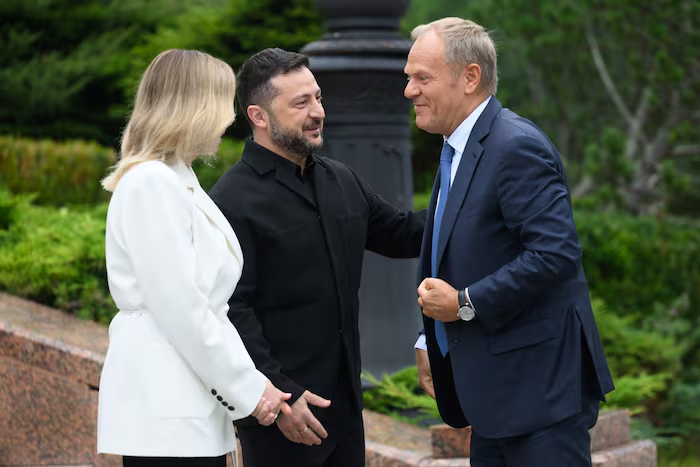
Zelenskyy hosts leaders from 7 countries for a regional summit
2026 U-20 WWC: Aduku predicts Super Falcons future for Falconets standouts

“I took him to…”- Man shares what 2-year-old son did to TV

 Special Report13 hours ago
Tinubu reacts as Nigeria wins arbitration against Sunrise’s $2.35bn Mambilla claim – The Witness Nigeria
- Metro22 hours ago
“We’ll Take A Back Seat After Choosing A Successor” — Otti Says He Won’t Control Abia Politics After Leaving Office
- News13 hours ago
NSCDC Boss, Audi Abubakar Constitues High-Powered Probe Into Deaths of Suspected Illegal Miners in Niger State
- Metro22 hours ago
“Nigeria Is Committed To A Peaceful, Free, Fair And Credible Election” — Odumegwu-Ojukwu Tells Foreign Missions Ahead Of 2027
- Politics9 hours ago
Politics 6 minutes ago Insecurity Will Soon Be Defeated, Akpabio Assures Nigerians Senate President Godswill Akpabio has assured Nigerians that insecurity in the country will soon be defeated. NEWSNGR reports that the lawmaker made the…
- Viral13 hours ago
“I just received alert of N20 million” — Burgled Ilesha shop owner thanks Adeleke, Pelumi Olajengbesi
- News8 hours ago
Morning recap: Tinubu may broker Wike-APC govs truce, 40 miners die in NSCDC custody, other top stories
- Entertainment10 hours ago
“He stopped paying school fees” – UK-based Nigerian man narrates friend’s ordeal with family after relocating to Nigeria