Politics
25 years after 9/11: The Security Lessons America Embraced and Nigeria Still Faces

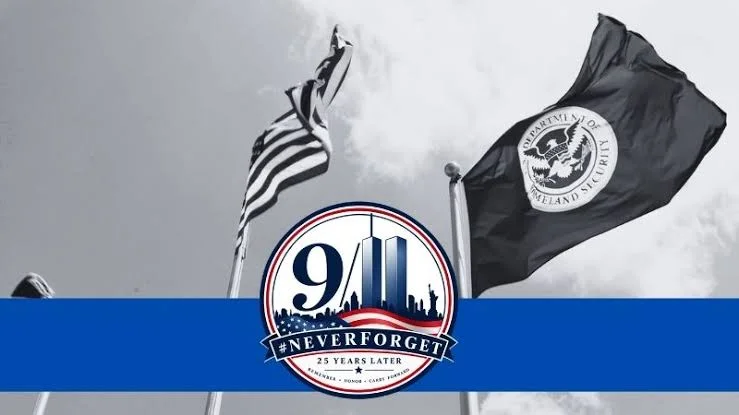
Twenty-five years after terrorists brought down the World Trade Center and struck the Pentagon, the September 11, 2001 attacks remain one of the defining moments in modern American history. But beyond the images of burning buildings and the deaths of 2,976 people, 9/11 changed something more fundamental, the way the United States understood national security.
America did not simply hunt down those responsible. It examined the weaknesses that allowed the plot to succeed and embarked on one of the biggest overhauls of its security architecture. That response offers an important point of comparison for Nigeria, which has endured years of suicide bombings, insurgency, kidnappings and attacks by Boko Haram and Islamic State West Africa Province (ISWAP).
America confronted one devastating and coordinated attack that exposed weaknesses across its intelligence, aviation, immigration and security systems. Nigeria has faced a prolonged insurgency spread across communities, states and, in many cases, international borders. Yet, both experiences raise a fundamental question: what does a country do after terrorists expose weaknesses in its security system?
On September 11, 2001, 19 al-Qaeda terrorists hijacked four commercial aircrafts. Two crashed into the World Trade Center in New York, another struck the Pentagon, while the fourth crashed in Pennsylvania after passengers fought back. The attacks shocked the world and exposed serious failures in America’s ability to detect, share and act on information about an impending terrorist threat.
Airport security was also dramatically different before 9/11. Screening was less rigorous, private companies employed many airport screeners and people who were not travelling could access airport departure areas. The American government responded by treating the attacks as more than an isolated terrorist incident. It treated them as evidence that the national-security system itself needed to change.
One of the biggest changes came in 2003 with the creation of the Department of Homeland Security. Twenty-two federal agencies and offices were brought together under the new department in an effort to improve coordination and create a more unified approach to homeland security. The Transportation Security Administration was also established, bringing aviation security more firmly under federal control.
Airport screening became more rigorous, passenger and baggage checks were strengthened and cockpit doors were reinforced.
The lesson was clear: security could not begin after terrorists had reached their targets. Threats had to be detected and disrupted before they became attacks. The United States also placed far greater emphasis on intelligence-sharing. The 9/11 Commission investigated how the attacks happened and identified failures in communication and coordination among intelligence and security agencies. The response was designed to prevent a repeat of those weaknesses.
The FBI, CIA, intelligence agencies, immigration authorities, homeland-security officials and local law-enforcement agencies became part of a more interconnected counterterrorism framework. America also strengthened its border and immigration systems, expanding screening and information collection around the principle that potential threats should be identified as early as possible.
Less than a month after the attacks, the United States invaded Afghanistan, where al-Qaeda leaders were operating under Taliban protection. The campaign eventually became part of the wider “war on terror”, combining military operations, intelligence gathering, financial restrictions, international cooperation and domestic security measures.
Nigeria’s experience has been different. For more than a decade, the country has been fighting an insurgency that has repeatedly demonstrated its ability to adapt. Boko Haram and ISWAP have used suicide bombers, improvised explosives, kidnappings, attacks on communities, assaults on military positions and attacks on soft targets.
The 2011 bombing of the United Nations building in Abuja, the 2014 Nyanya bombings and repeated attacks in Maiduguri and other parts of the North-East are among the incidents that have shown how the threat has evolved. Unlike 9/11, Nigeria’s problem has never been confined to one catastrophic day, it is a continuing security crisis. An attack may be stopped in one location only for terrorists to change tactics, relocate or exploit another vulnerable community.
The problem is made more difficult by Nigeria’s geography. The country’s borders with Benin, Niger, Chad and Cameroon, together with the wider Lake Chad security environment, mean that insurgency cannot be addressed entirely within Nigeria’s territory. Armed groups can exploit remote communities, difficult terrain and porous borders to move people, weapons and resources. This is why Nigeria has had to combine domestic military operations with regional cooperation.
The country has established and strengthened institutions including the National Counter-Terrorism Centre and has relied on the army, air force, navy, police, intelligence agencies and other security bodies in the fight against terrorism. Nigeria is also part of regional security arrangements, including the Multinational Joint Task Force operating around the Lake Chad Basin.
There have been efforts to strengthen counterterrorism laws, intelligence capabilities and measures against terrorist financing. It would therefore be wrong to suggest that Nigeria has simply ignored the lessons of its attacks. The more difficult question is whether the country’s response has been sufficiently systemic. This is where the American experience becomes particularly relevant because after 9/11, Washington did not ask only how to retaliate against al-Qaeda, It asked what had failed.
It then changed institutions, strengthened coordination and built new layers of prevention around aviation, intelligence, immigration, borders and financial security. Nigeria faces a different threat, but the same philosophy could be useful.
Terrorism cannot be defeated solely by waiting for attacks and sending troops to the scene.
A functioning counterterrorism system must connect intelligence gathering, analysis, information-sharing, surveillance, border control, financial investigations, community intelligence, rapid response and prosecution.
Perhaps one of the most important lessons from 9/11 is that possessing intelligence is not the same as using it effectively. Information gathered by one agency has little value if it does not reach another agency capable of acting on it.
That challenge is particularly important in Nigeria, where several security agencies operate with different mandates. The critical question is therefore not simply whether Nigerian agencies collect intelligence. It is whether the information is properly analysed, shared, acted upon and reviewed afterwards to determine what worked and what failed. There is also a lesson in how America approached aviation security.
Before 9/11, responsibility was spread across different actors. After the attacks, Washington concluded that critical national infrastructure required stronger federal oversight.
Nigeria may need to apply similar thinking to its own vulnerable spaces, particularly transport hubs, schools, markets, places of worship, government facilities and other locations that could be attractive to terrorists. But there is a warning in the American experience as well.
The post-9/11 security architecture came at a huge financial and political cost. The expansion of surveillance, immigration enforcement, detention and military operations generated prolonged civil-liberties controversies. Nigeria does not need to copy America’s model wholesale. Its challenge is to build a security architecture suited to its own realities, one that combines military strength with intelligence, policing, technology, border management, community cooperation and an effective justice system.
The central lesson is that terrorism is not merely a military problem. A terrorist organisation needs money, weapons, recruits, communication channels and places from which to operate. It can also exploit criminal networks, poorly governed spaces and divisions between security institutions.
A government may therefore win individual battles without eliminating the conditions that allow terrorism to survive. This is perhaps the clearest difference between responding to terrorism and redesigning a security system.
Read also:
America’s post-9/11 response was built around making another attack harder at every stage , from planning and financing to travelling, entering the country and reaching a target. Nigeria’s challenge is more complicated because its adversaries operate in a prolonged insurgency across difficult terrain and a wider regional environment.
Every bombing, kidnapping or attack should not only produce a military response. It should also trigger a question about what weakness the terrorists exploited and how that weakness can be permanently closed. Twenty-five years after 9/11, America has not made terrorism impossible. What it did was turn a national catastrophe into a catalyst for rebuilding its security architecture.
Nigeria’s years of terrorist attacks have produced military victories, new institutions and stronger regional cooperation, but the persistence and adaptability of insurgent groups show that the battle is far from over. The real lesson of 9/11 for Nigeria, therefore, is not that America found a perfect formula for security.
It is that when terrorists expose a weakness, the answer cannot always be another operation. Sometimes, the bigger response is to rebuild the system that allowed the weakness to exist in the first place.


Southern Kaduna genocide: Provide evidence of El-Rufai’s involvement – Dalung to Defence Minister, Musa

Atiku’s allegation of NYSC certificate forgery against Tinubu speculative – Ex-AGF Olujinmi tells court

SEDC To Roll Out Community -Based Social Impact Programmes To Improve Livelihoods In Rural Communities

NFL: Aaron Rodgers claims actress Shailene Woodley wanted another man after accepting marriage proposal

Evening Recap: Man stabs Sokoto Islamic cleric, FG pays ex-Nigeria Airways workers N18bn, other top stories

Evening recap: Dangote lists 32 IPO channels, FG offers students 100MB daily data, D’Tigress players get $100,000 each, other top stories

Lagos Government Dismisses Viral Video Showing People Living Under Oja Oba Bridge » Apples Bite Int’l Magazine

“You cannot pin anything on him” – Gospel minister, Lawrence Oyor speaks on Peter Obi’s political record

Morning recap: Again, Nigerians lose savings to Ponzi scheme, Dangote refinery raises petrol gantry price, other top stories

‘He Should Go And Prepare For Another Defeat’ – APC Tackles Peter Obi Over Winning 2023 Election Claim

EPL: Hull must stay up this season before aiming bigger — Club owner

TERROR ALERT: SOUTHERN TARABA – Truth Nigeria

EPL: Alonso wants ‘boring’ Chelsea wins after Hull hold Blues to 2-2 draw

Hull City Must Survive in Premier League This Season – Owner Ilıcalı

‘Woman Unknown’ wins Gold Lion at Venice Film Festival

Ikpeme Tasks Falconets, Flamingos To Secure Victories In Upcoming Matches

‘Join APC Or Step Aside As Minister’ – Tinubu’s Ex-Aide Warns Wike

EPL: Phil Neville pinpoints Chelsea’s weakness Hull City exploited

FULL LIST: INEC releases final list of 18 presidential candidates for 2027 election

Ortom explains reasons for lending Peter Obi his vehicle for Benue visit

 News21 hours ago
Evening Recap: Man stabs Sokoto Islamic cleric, FG pays ex-Nigeria Airways workers N18bn, other top stories
- News21 hours ago
Lagos Government Dismisses Viral Video Showing People Living Under Oja Oba Bridge » Apples Bite Int’l Magazine
- News11 hours ago
Morning recap: Again, Nigerians lose savings to Ponzi scheme, Dangote refinery raises petrol gantry price, other top stories
- Special Report24 hours ago
St. Louis SHS Allegedly Charges Aggregate 9 BECE Student Without School Placement ¢15,000 Before Securing Slot In The School
- News8 hours ago
Infinix Launches GT 50 Pro: The Ultimate Hardcore Gaming Flagship with Industry-First Cooling and Control
- Special Report10 hours ago
Thief Caught Stealing Groundnut Oil Forced To Carry The Oil On His Head And Dance To Entertain Residents
- Metro8 hours ago
“My Husband Did Not Know What I Was Doing To Our Daughters” — Woman Arrested Over Alleged Child Sexual Exploitation
- Entertainment11 hours ago
“At my expense” — Man forced to replace entire toilet after client discovers worker’s mess during inspection