Metro
Yemen’s Divided Education System Threatens Students’ Dreams Of Studying Abroad

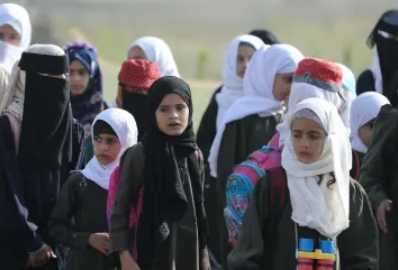
For 19-year-old Bashar Mohammed, improving his English was supposed to be a pathway to securing a scholarship and pursuing undergraduate studies abroad after completing high school in Yemen’s capital, Sanaa, last year. But his plans are now in doubt because he obtained his secondary school certificate in an area controlled……
For 19-year-old Bashar Mohammed, improving his English was supposed to be a pathway to securing a scholarship and pursuing undergraduate studies abroad after completing high school in Yemen’s capital, Sanaa, last year.
But his plans are now in doubt because he obtained his secondary school certificate in an area controlled by the Houthi rebel group, raising concerns that authorities in Aden may refuse to authenticate his academic credentials.
According to a report by Al Jazeera, Yemen’s education system has become increasingly divided between the internationally recognised government and the Houthis, who have controlled Sanaa since the country’s war began more than a decade ago.
The Aden-based Education Ministry issued a circular in late July suspending the authentication of some school certificates issued in Houthi-controlled territories.
The ministry said in early August that it lacked access to official records required to verify some students’ documents, attributing the situation to the Houthis.
The decision has left students caught between the two rival authorities uncertain about their academic futures.
“It amounts to saying that our 12 years of schooling were a waste of time. This is painful,” Mohammed told Al Jazeera.
Without authentication by the Education Ministry, Yemeni students seeking to study abroad cannot complete the subsequent certification process through the Foreign Ministry.
Another student, 18-year-old Ayman Ahmed, who recently graduated from high school in Houthi-controlled Raymah province, said students were bearing the consequences of the political dispute.
“The students and their parents are powerless, and they cannot go against the Houthis or ask Houthi authorities to coordinate with the government in Aden,” Ahmed said, highlighting the dangers of dissent against the rebel group, who have imprisoned many opponents and UN staff. “So, treating our certificates as invalid is collective punishment, and it is unfair.”
Earlier this month, Yemen’s Education Minister Adel al-Abadi clarified that the suspension did not affect certificates from every academic year.
He said the ministry had access to student records from some periods and could therefore verify and authenticate certificates issued during those years.
“There are certificates for which there is no data in the ministry’s records, and therefore it is difficult for us to verify their validity and accuracy,” Al-Abadi said.
Ahmed, however, argued that students should not be held responsible for gaps in official records.
“The education officials in Sanaa and Aden can coordinate and resolve the issue of the missing data,” he said. “Our education and certificates should not be a victim of their disputes.”
Yemen’s territorial division since 2015 has resulted in the development of separate education systems operated by the Houthis and the internationally recognised government.
The two administrations follow different academic calendars, with schools in Houthi-controlled areas beginning their academic year in June, while government-controlled schools generally reopen at the end of August.
Their curricula have also diverged, with the Houthis introducing several changes to previously used textbooks.
“There are two systems, two ministries, with zero coordination,” said Mohammed Abdu, a sociology researcher at Taiz University. “Society, and in particular the students, cannot escape the negative impact of this imbalance.”
Abdu said the differences extend beyond school calendars and curricula to high school examinations, including their formats and scheduling.
He warned that renewed fighting in Yemen could further worsen the situation for students, particularly as recent violence threatens to push the country back towards broader conflict after several relatively calm years.
According to the United Nations, about 2,800 schools in Yemen have either been destroyed, damaged or repurposed because of the war.
The UN also estimates that more than 6.6 million children were out of school in Yemen this year, representing about one-third of the country’s school-age population.
“The warring sides had better reach a consensus on a policy that mitigates the ordeal of Yemeni students and distances education from political or military rivalries,” Abdu said.
Aref Naji Ali, an adviser with the Education Ministry in Aden, described the continued division of education policies as one of “the most dangerous consequences of the Yemeni conflict”.
“Education should not become another arena for political division. Students are the most vulnerable, and it is unjust for them to bear the brunt of the division between institutions and authorities,” Ali said.
While defending the Aden ministry’s decision to suspend authentication of certificates it could not verify, Ali blamed the Houthis for the absence of the necessary records.
“Our responsibility is to protect the right to education and preserve the legality of the educational process and the national educational identity so that the current division doesn’t become a permanent rift in the minds of future generations,” Ali said.
For teachers and students affected by the dispute, however, the consequences remain immediate.
Ammar Amri, a schoolteacher in Sanaa, said many of his students had both the academic ability and financial resources to pursue further education abroad but risk losing those opportunities because of the conflict.
“Many of the students have the academic ability and financial means to pursue education abroad,” Amri said. “With this ongoing conflict, many dreams will be shattered.”
“This is a loss for the students and a loss for society as a whole,” he added. “It appears that the warring sides have cut education from their list of priorities, and it does not concern them.”


Benue: Alia’s interventions restoring peace, accelerating development in Agatu – Council chairman, Melvin Ejeh

“Establish How Government System Weaknesses Were Exploited” — Tinubu Orders Forensic Audit Of IPPIS, FG Bodies

EFCC Extradites Two Nigerians To US Over Alleged Child Exploitation, Sextortion

NPC chairman, Aminu Yusuf, dies at 66, eight months after assuming office

“False Affidavits Used To Rewrite Identities For Alleged Organ Harvesting” — Police Probe Lawyers, Doctors Over Abuja-Nasarawa Network

Former Borno Senator Yale Dies

2 workers at Germany's Frankfurt Airport die from what is known as 'airport malaria'

Tinubu orders forensic audit of IPPIS, federal agencies

RUGA, Water Resources Bill: IPOB Credits Nnamdi Kanu for Mobilising Resistance

THE STATE IS A TERRORIST BY ITS OWN LAW — AND THE SUPREME COURT LET IT PROSECUTE ITS VICTIM

Diego Simeone Opens Door For Dramatic Julian Alvarez Exit Amid Arsenal, Barcelona Interest

FULL LIST: Chelsea, Brighton, Leeds, Brentford, Sunderland, Fulham Starting XIs

Spare parts worth millons of naira destroyed as fire ravages Ibadan market
Spare parts worth millons of naira destroyed as fire ravages Ibadan market

EPL: Things To Know As Chelsea Host Brighton At Stamford Bridge

Chelsea Complete Signing Of World Cup Winner Emiliano Martinez From Aston Villa
Iran's leader calls for Muslim unity, NBC crew attacked in West Bank and other Mideast news

2027: Scrutinise candidates’ background, records – Ogun monarch to residents

Tinubu Leaves For Europe On 3-Week Working Vacation

Nepal warns of possible fresh flooding as communities grapple with devastation

 Headlines18 hours ago
Benue: Alia’s interventions restoring peace, accelerating development in Agatu – Council chairman, Melvin Ejeh
- Metro13 hours ago
“False Affidavits Used To Rewrite Identities For Alleged Organ Harvesting” — Police Probe Lawyers, Doctors Over Abuja-Nasarawa Network
- Viral22 hours ago
IYC Gives FG, NNPCL Seven-Day Ultimatum Over Alakiri Gas Leak, Fire
- Viral22 hours ago
Uganda’s Youngest King, Oyo Nyimba, Dies at 34
- Metro22 hours ago
IGP Tunji Disu Arrives Minna to Coordinate Rescue of Niger Abduction Victims

 World20 hours ago
Russian strike on a Ukrainian warehouse kills 37 in the war's deadliest attack this year
 World20 hours ago
Israeli strikes and fire kill 3 Palestinians in Gaza, and other Middle East news
- Metro21 hours ago
Gov Adeleke Orders Coroner’s Inquest into Ikire Killings