Headlines
High fuel costs push Niger farmers toward solar irrigation

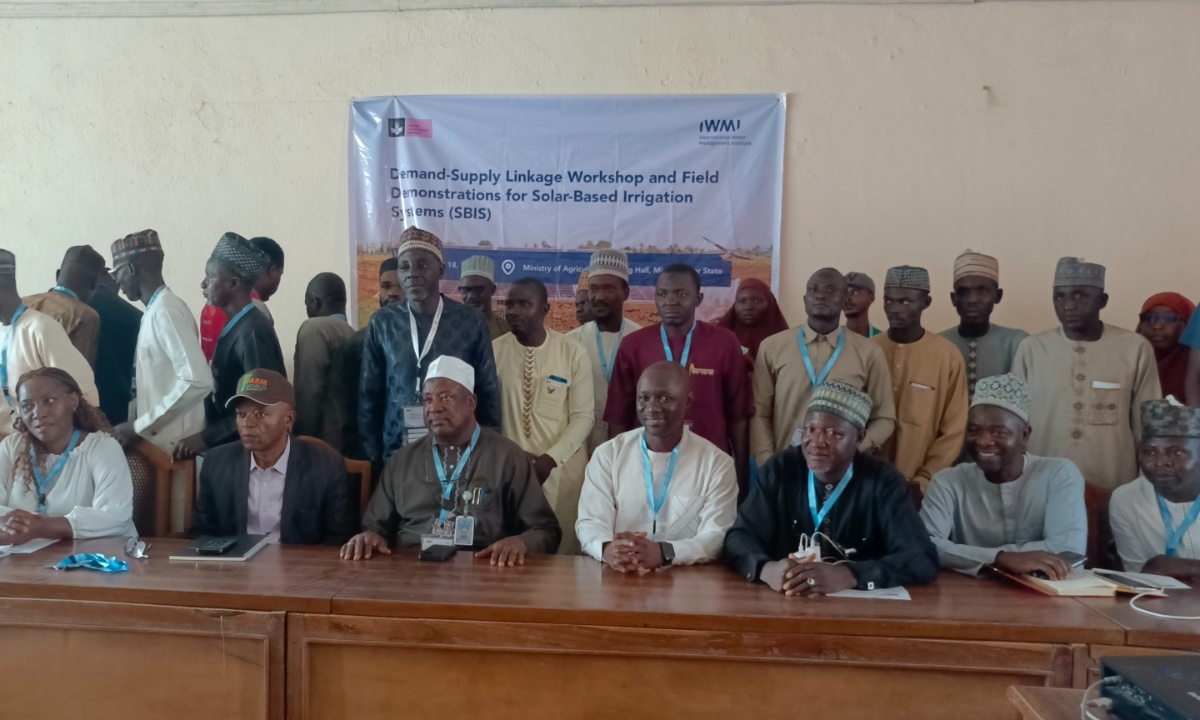
Niger State farmers have lamented the rising cost of petrol, saying it is making it increasingly difficult to keep irrigation pumps running and pushing them to seek cheaper ways of watering their farms as unpredictable rainfall makes dependence on rain-fed farming riskier.
The farmers raised concerns during a Demand-Supply Linkage, Financing Options Workshop and Field Demonstration on Solar-Based Irrigation Systems organised by the International Water Management Institute, IWMI, in Minna.
Some of the farmers stated that the increasing cost of fuelling irrigation pumps has made farming more expensive.
One of the farmers, Mohammed Musa, said they need alternatives that would allow them to continue irrigating their farms without spending a significant part of their earnings on fuel.
Another, Saratu Abdul, noted that access to affordable irrigation was becoming increasingly important as farmers could no longer depend solely on rainfall.
She said the high cost of acquiring solar equipment, however, remained a concern for smallholder farmers who were already struggling with rising production costs.
The concerns by the farmers came as agricultural stakeholders, financial institutions and equipment suppliers explored ways of making solar-powered irrigation systems more accessible to smallholder farmers in Niger State.
The Senior Regional Researcher of IWMI, Engineer Dr Adebayo Oke, said the removal of fuel subsidy and subsequent increases in petrol prices had significantly raised the cost of operating conventional irrigation pumps.
According to him, the development had made solar-powered systems increasingly attractive because they could reduce the recurring energy costs faced by farmers. Oke said climate change was also making irrigation increasingly important, as unpredictable rainfall was affecting farmers’ ability to depend entirely on rain-fed agriculture.
He explained that solar irrigation could allow farmers to produce beyond the rainy season while creating opportunities for youths and women to operate irrigation and water-delivery businesses.
However, Oke said the high initial cost of solar irrigation equipment remained one of the major barriers to adoption while cautioning that increased irrigation must be accompanied by responsible water use to prevent pressure on water resources.
The Technical Lead and Consultant, Professor Oluwashun Adebayo Ojeleye, said a two-inch solar irrigation pump costs between N300,000 and N350,000, while a three-inch system costs about N400,000 to N500,000.
He stated that financing arrangements involving banks, equipment suppliers and farmers could help overcome the initial cost, allowing farmers to acquire the equipment and repay from proceeds of their harvests.
Also, the Niger State Commissioner for Agriculture, Isah Sidi Rijau, said farmers could not fully realise the state’s agricultural potential if they continued to depend almost entirely on rainfall, particularly as changing climatic conditions were making farming increasingly unpredictable.
He urged financial institutions to develop financing models tailored to smallholder farmers, while calling on farmers to strengthen their cooperatives to improve their access to agricultural financing.


₦367.99m in Financial Irregularities Uncovered in FCT Social Development Secretariat Under the Leadership of Hajiya Safiya Umar – Secrets Reporters Nigeria

Nigeria’s Atomic Energy Commission Paid ₦34m Without Documents, Lost Track of Store Items and Let a Former Chairman Drive Off With Official Toyota Camry – Secrets Reporters Nigeria

Ministers, Governors, Lawmakers You Rely On Are Not Working In Your Best Interest – Jonathan Vatsa Warns Tinubu

Investigation Reveals NOTAP Channelled ₦138.8 Million Public Revenue into Staff Welfare, Sponsored Non-Staff Weddings and Approved Unauthorised Foreign Trips in Questionable Transactions – Secrets Reporters Nigeria

₦35.46m Financial Irregularities Mars Dr. Aishatu Abubakar-Baju (AIG), Veterinary Council of Nigeria Leadership – Secrets Reporters Nigeria

Vehicle in Custody of Ghanaian Government Authority Used in Reportedly Foiled Labone Bank Robbery as Ghana Police Face Mounting Questions Over Nigerian Involvement Narrative – Secrets Reporters Nigeria

Alleged drug trafficking: Tinubu joins US Justice Department’s request for 10-day delay in release of records

Satellite Town Development Department Abuja: Secrets Reporters Uncover ₦15.29m Financial Irregularities as Retired Officer Keeps Government Hilux – Secrets Reporters Nigeria

₦3.26bn in Revenue and Account Irregularities Uncovered Under Mr Abdullahi O. Attah as Chairman – Secrets Reporters Nigeria

“Your prayer point is different from mine” – Businessman says as he proudly flaunts his thriving business

Youth Help Desk Wins 2026 Civil Service Excellence Award For Service Delivery

Watchdog calls for U.S. import ban as forced labor persists in Dominican sugarcane fields

Transfer: Julian Alvarez goes on strike to force Atletico Madrid exit
Transfer: Julian Alvarez goes on strike to force Atletico Madrid exit
Transfer: Julian Alvarez goes on strike to force Atletico Madrid exit

Arsenal chief calls for clarity on Man City charges
Alleged drug-trafficking: No more room for Tinubu to hide – Von Batten

NNL: Archibong joins El-Kanemi Warriors on free transfer

High fuel costs push Niger farmers toward solar irrigation
High fuel costs push Niger farmers toward solar irrigation

 News24 hours ago
Vehicle in Custody of Ghanaian Government Authority Used in Reportedly Foiled Labone Bank Robbery as Ghana Police Face Mounting Questions Over Nigerian Involvement Narrative – Secrets Reporters Nigeria
- Headlines20 hours ago
Alleged drug trafficking: Tinubu joins US Justice Department’s request for 10-day delay in release of records
- News20 hours ago
Satellite Town Development Department Abuja: Secrets Reporters Uncover ₦15.29m Financial Irregularities as Retired Officer Keeps Government Hilux – Secrets Reporters Nigeria
- News18 hours ago
₦3.26bn in Revenue and Account Irregularities Uncovered Under Mr Abdullahi O. Attah as Chairman – Secrets Reporters Nigeria
- Entertainment20 hours ago
“You’ll fly her in, lodge her and still give her ₦3m” – Lady questions men’s spending on women for sexual pleasure
- Viral22 hours ago
Bayelsa Assembly Approves Removal of Sagbama Council Chairman, Vice Chairman Over Alleged Gross Misconduct
- Metro16 hours ago
“You Can’t Answer ‘His Excellency’ Without Being An Excellent Person” — Peter Obi Says Nigerians Should Punish Breach Of Trust With Their Votes
- Headlines9 hours ago
EPL: ‘They’ve brought in some experienced players’ – Ian Wright names club to challenge Arsenal for title










Headlines
High fuel costs push Niger farmers toward solar irrigation
Niger State farmers have lamented the rising cost of petrol, saying it is making it increasingly difficult to keep irrigation pumps running and pushing them to seek cheaper ways of watering their farms as unpredictable rainfall makes dependence on rain-fed farming riskier.
The farmers raised concerns during a Demand-Supply Linkage, Financing Options Workshop and Field Demonstration on Solar-Based Irrigation Systems organised by the International Water Management Institute, IWMI, in Minna.
Some of the farmers stated that the increasing cost of fuelling irrigation pumps has made farming more expensive.
One of the farmers, Mohammed Musa, said they need alternatives that would allow them to continue irrigating their farms without spending a significant part of their earnings on fuel.
Another, Saratu Abdul, noted that access to affordable irrigation was becoming increasingly important as farmers could no longer depend solely on rainfall.
She said the high cost of acquiring solar equipment, however, remained a concern for smallholder farmers who were already struggling with rising production costs.
The concerns by the farmers came as agricultural stakeholders, financial institutions and equipment suppliers explored ways of making solar-powered irrigation systems more accessible to smallholder farmers in Niger State.
The Senior Regional Researcher of IWMI, Engineer Dr Adebayo Oke, said the removal of fuel subsidy and subsequent increases in petrol prices had significantly raised the cost of operating conventional irrigation pumps.
According to him, the development had made solar-powered systems increasingly attractive because they could reduce the recurring energy costs faced by farmers. Oke said climate change was also making irrigation increasingly important, as unpredictable rainfall was affecting farmers’ ability to depend entirely on rain-fed agriculture.
He explained that solar irrigation could allow farmers to produce beyond the rainy season while creating opportunities for youths and women to operate irrigation and water-delivery businesses.
However, Oke said the high initial cost of solar irrigation equipment remained one of the major barriers to adoption while cautioning that increased irrigation must be accompanied by responsible water use to prevent pressure on water resources.
The Technical Lead and Consultant, Professor Oluwashun Adebayo Ojeleye, said a two-inch solar irrigation pump costs between N300,000 and N350,000, while a three-inch system costs about N400,000 to N500,000.
He stated that financing arrangements involving banks, equipment suppliers and farmers could help overcome the initial cost, allowing farmers to acquire the equipment and repay from proceeds of their harvests.
Also, the Niger State Commissioner for Agriculture, Isah Sidi Rijau, said farmers could not fully realise the state’s agricultural potential if they continued to depend almost entirely on rainfall, particularly as changing climatic conditions were making farming increasingly unpredictable.
He urged financial institutions to develop financing models tailored to smallholder farmers, while calling on farmers to strengthen their cooperatives to improve their access to agricultural financing.
- News24 hours ago
Vehicle in Custody of Ghanaian Government Authority Used in Reportedly Foiled Labone Bank Robbery as Ghana Police Face Mounting Questions Over Nigerian Involvement Narrative – Secrets Reporters Nigeria
- Headlines20 hours ago
Alleged drug trafficking: Tinubu joins US Justice Department’s request for 10-day delay in release of records
- News20 hours ago
Satellite Town Development Department Abuja: Secrets Reporters Uncover ₦15.29m Financial Irregularities as Retired Officer Keeps Government Hilux – Secrets Reporters Nigeria
- News18 hours ago
₦3.26bn in Revenue and Account Irregularities Uncovered Under Mr Abdullahi O. Attah as Chairman – Secrets Reporters Nigeria
- Entertainment20 hours ago
“You’ll fly her in, lodge her and still give her ₦3m” – Lady questions men’s spending on women for sexual pleasure
- Viral22 hours ago
Bayelsa Assembly Approves Removal of Sagbama Council Chairman, Vice Chairman Over Alleged Gross Misconduct
- Metro16 hours ago
“You Can’t Answer ‘His Excellency’ Without Being An Excellent Person” — Peter Obi Says Nigerians Should Punish Breach Of Trust With Their Votes
- Headlines9 hours ago
EPL: ‘They’ve brought in some experienced players’ – Ian Wright names club to challenge Arsenal for title