Metro
Electricity Must Be Paid For, Not Free — NERC Commissioner


The Nigerian Electricity Regulatory Commission (NERC) has rejected the notion that electricity is an inherent right that should be provided free of charge, saying the power sector requires sustained investment and commercial viability….
The Nigerian Electricity Regulatory Commission (NERC) has rejected the notion that electricity is an inherent right that should be provided free of charge, saying the power sector requires sustained investment and commercial viability.
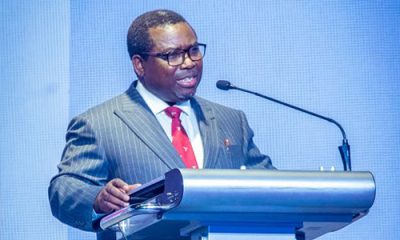
NERC Commissioner for Legal, Licensing and Compliance, Dafe Akpeneye, stated this during a breakout session, “Let There Be Light”, at the Nigerian Bar Association (NBA) Annual General Conference.
Akpedeye said the cost of generating, transmitting and distributing electricity made payment by consumers essential to sustaining the sector.
“There is nothing that says that you are entitled to power,” he said.
He likened electricity to petrol, noting that consumers understood they had to pay for fuel before using it.
“You cannot go to a petrol station and say it is intrinsic for me to get 50 litres from you. If you don’t pay, you are in trouble,” he said.
The commissioner said investors would be unwilling to commit capital to the sector if they could not recover the cost of providing electricity.
According to him, every megawatt of a 10-megawatt power plant costs about $1 million, while a kilometre of a 330-kilovolt transmission line could cost about $1 million and a kilometre of a 132-kilovolt line about $400,000.
He, however, said government must establish mechanisms to protect vulnerable consumers while ensuring that the wider electricity market remains commercially sustainable.
Akpeneye also said a lawsuit challenging an electricity tariff review stalled NERC’s ability to review tariffs for about four years, contributing to a significant revenue shortfall in the electricity market.
He said the suit, filed in 2016 by lawyer Toluwani Adebiyi, challenged a tariff review conducted by the commission.
“For four years, NERC could not review tariffs. Because it could not review tariffs, we have this shortfall that you are seeing,” he said.
He said the experience prompted NERC to intensify efforts to sensitise members of the judiciary to the technical and commercial realities of electricity regulation.
The commissioner also blamed some of the sector’s challenges on the decentralisation of electricity regulation, saying Nigeria was dealing with the complexities of breaking up a previously centralised electricity market.
He said electricity networks were not originally designed around state boundaries but around serving customers, warning that regulatory fragmentation could lead to multiple electricity laws and regimes.
“The electricity is specified in the Constitution in the concurrent list, and it is a bifurcated concurrent list,” he said.
Akpeneye called for clearer interpretation of the Constitution and stronger coordination between federal and state authorities to minimise regulatory conflicts.
He also cited the financial difficulties of Kaduna Electricity Distribution Company, saying the company had accumulated almost N500 billion in liabilities.
He said the situation demonstrated the risks of requiring investors to sell electricity below the cost of acquiring or producing it.
Akpeneye also called for stronger enforcement against electricity theft and other forms of market indiscipline.
“There has to be consequences. We are where we are today because there are no consequences for actions that we take,” he said.
The Deputy Vice-Chancellor of Afe Babalola University, Ado-Ekiti, Prof. Damilola Olawuyi (SAN), said inadequate electricity supply was also undermining access to justice.
Olawuyi said modern courts increasingly depended on electricity to operate computers, digital recording systems and electronic case-management platforms, meaning blackouts could disrupt proceedings and judicial administration.
He said the estimated 27.9 million Nigerian households without access to electricity demonstrated the scale of the challenge.
The professor urged lawyers and policymakers to pay greater attention to power sector reform, stressing that reliable electricity was essential not only for households and businesses but also for the administration of justice.
“It is a sector that requires holistic reform that will make it investor viable,” he said.
Olawuyi identified predictable and enforceable power purchase agreements as critical to attracting investment, saying investors needed confidence that contractual commitments would be respected.
He also called for measures to de-risk investments, improve infrastructure and tackle insecurity, which he said could discourage investors from committing capital to the sector.
“The bottom line is that we need a smart mix of approaches that integrate justice considerations into power sector reform,” Olawuyi said.


“Any Algorithm Can Calculate, But It Cannot Care” — NMCN Registrar Warns Nurses Against Overreliance On AI

RE: RESPONSE TO MISLEADING PUBLICATION ON THE PRESIDENTIAL AMNESTY PROGRAMME (PAP)

‘He’s closest to Lionel Messi’ – Rashford names player to win more Ballons d’Or than Cristiano Ronaldo

2027: ‘Peter Obi’s Logic Is Short-Term Turnover Unlike Tinubu Who Thinks Of Next Generation’ – Oshiomhole

Power Outage: Tegbe assures Nigerians of swift restoration as electricity disruptions hit Lagos, Abuja

“Not To Own It, But To Give It Another Chance At Life” — Foreigner Rescues Sea Turtle From Lagos Sellers As NESREA Faces Enforcement Questions

‘Politics is expensive everywhere’ – Wike replies critics over high billboard cost in Abuja

Jesus de Miguel’s death: ‘He’d never intentionally hurt anyone’ – Owono’s team-mate defends goalkeeper

Investigate hijab controversy in Nigerian law schools immediately- MURIC to Council of Legal Education

“Courts Must Guard Their Independence, Impartiality And Integrity” — NDC Warns After Atiku’s Candidacy Is Nullified

US Offers $20m Reward For Information On Iran’s Nuclear Programme

Bayelsa Commissioner, six others escape death in boat accident

LaLiga: Real Madrid team is more important – Mourinho hints at benching Vinicius Jr

Turkey: Osimhen undergoes successful knee surgery, faces three weeks on sidelines

Klopp confirms goalkeeper to replace Neuer as Germany’s first choice

NNL: Eko United coach Oyekale eyes winning start against Heartland

2027: Atiku Vows to Remain in Presidential Race Despite Court Ruling

Police Detain ASP After Stray Bullet Kills Young Girl During Lagos Operation

You are a liar: Ogun govt knocks actor Kunle Afod

2027: Ojudu Says He Has Not Decided Whom to Vote for

 Politics7 days ago
Over 200 Boko Haram Terrorists Are Moving To Attack Military Camp In Buni Yadi As Rockets Target Troops; IED Threat Raises Travel Concerns
- Metro7 days ago
“Publishing His Name Is Subject To The Final Outcome Of A Court Order” — INEC Leaves Gwarzo Off Updated Kano Governorship List
- Metro7 days ago
“The Election Must Hold As Scheduled” — INEC Chairman Rules Out Postponement Of 2027 General Elections
- Metro7 days ago
“Ebola Outbreak Is Not Yet Under Control” — Africa CDC Warns As Confirmed Cases Exceed 10,200, Death Toll Surpasses 5,000
- Metro7 days ago
“Death Benefits Will Be Fully Paid To Next Of Kin” — NAF Pledges Continued Salaries For Personnel Killed In October 5 Aircraft Crash
- Metro7 days ago
“Sowore’s Whereabouts Remain Unknown” — Armed Men Allegedly Abduct AAC Presidential Candidate In Ado-Ekiti, Damage Vehicles And Restaurant
- Metro6 days ago
“21 Exotic Vehicles Affected, No Life Lost” — LASEMA Confirms Lagos Mechanic Workshop Fire, Averts Disaster At Nearby Filling Station
- Metro6 days ago
“They Beat Me Like A Criminal” — Sowore Recounts Ekiti Attack As Govt Denies Involvement, Calls For Police Investigation