Headlines
Benue: Alia never abandoned Agatu – Ejeh fires back at critics

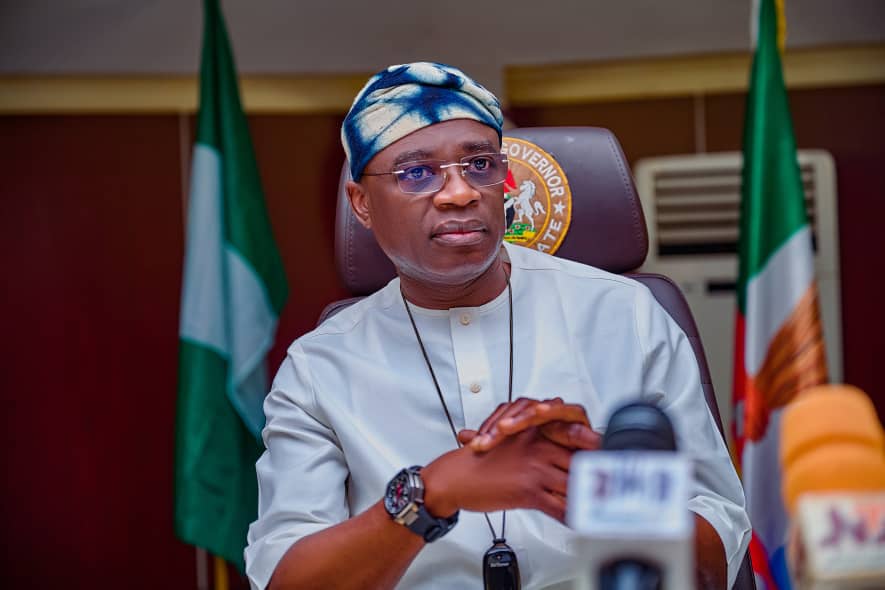
The Chairman of Agatu Local Government Council, Melvin Ejeh, has come to the defence of Benue State Governor, Rev. Fr. Hyacinth Alia, dismissing claims that he has abandoned the LGA as false and politically motivated.
Ejeh, who spoke in direct response to allegations by the Agatu West Peace and Unity Forum, said the unprecedented interventions being witnessed across the local government under the Alia administration had made it impossible for anyone familiar with developments in Agatu to accuse the governor of neglect.
According to him, virtually every major achievement recorded in Agatu under his administration as council chairman has been made possible by the “active moral, spiritual, financial and logistical support” of Governor Alia.
He declared: “There is nothing I would have done in Agatu Local Government without the active moral, spiritual, financial and logistical support of the Governor of Benue State, Rev. Fr. Hyacinth Alia. Everything Agatu has become today is because of his direct efforts.”
Ejeh said no previous administration in the state had demonstrated the level of commitment, concern and attention to Agatu that the Alia administration had shown, particularly in the areas of infrastructure, security and the welfare of displaced residents.
At the centre of his defence is the ongoing 43-kilometre Obagaji-Okokolo-Agagbe road, which he said was being constructed at a cost of about ₦29 billion.
He described the project as one of the most significant infrastructure interventions in Agatu since the return of democratic rule, stressing that successive administrations had promised the road without making meaningful progress.
“today, that road is ongoing and safely ongoing. A large portion of it has already been done,” he said.
According to the council chairman, the road is already transforming security and economic access in the area, with travel time between Makurdi and Agatu expected to be reduced by about two hours when completed.
More importantly, he said the road passes through areas that had previously been notorious for insecurity, including communities around Egba and Ologba, thereby allowing security personnel to respond to emergencies within minutes rather than the two to three hours previously required.
“How can such a man be said to have abandoned Agatu Local Government?” Ejeh asked.
He also cited what he described as an unprecedented level of political representation for Agatu under Governor Alia, noting that an indigene of the area, Dr Margaret Adekemi Ijaguwa, currently serves as Commissioner for Education.
He said her appointment had already translated into concrete benefits, including plans for the establishment of a government technical school in Enungba, where land had been acquired, and preparations for construction were underway.
Ejeh further listed the appointment of Agatu indigenes into strategic government positions, including Idris Ojimbili, Senior Special Assistant on Community Mobilisation, and Philip Otukpa, as well as other Agatu sons serving on government boards and agencies.
The chairman also disclosed that plans had reached an advanced stage for the establishment of a Benue State University teaching hospital in Agatu, saying the technical groundwork and site assessment had been completed and that construction was expected to commence before the end of the year.
On security, Ejeh said the Alia administration had supplied more than 45 motorcycles to Agatu for use by conventional security personnel and community-based vigilante groups to strengthen rapid response to threats.
He said the intervention had significantly improved the ability of security personnel and local vigilantes to reach vulnerable communities quickly.
The council chairman also highlighted the role of the State Emergency Management Agency (SEMA) in providing monthly food assistance to internally displaced persons in Agatu, saying support had continued through July.
He said Governor Alia had also facilitated Agatu’s inclusion in a World Bank-supported SOLID project, with more than $5 million expected to be deployed to support displaced persons and conflict-affected communities in the local government.
Ejeh explained that the inclusion was not accidental, but followed the governor’s insistence that Agatu, given its long history of violent conflict and displacement, should benefit from the intervention.
He acknowledged that the return of displaced persons to their ancestral communities remained a major challenge, but insisted that the security situation had changed fundamentally.
According to him, communities that were previously under siege and where residents could not safely access their farms are now accessible.
“The communities are no longer under attack. We challenge them to point to one community that is not safe,” he said.
He explained that the slow return of some displaced residents was largely attributable to destroyed homes, damaged infrastructure and the absence of basic facilities, rather than continuing attacks.
Ejeh said the council, in collaboration with the state government and development partners, was working towards rehabilitating schools, health facilities and other public infrastructure in affected communities to facilitate sustainable resettlement.
He disclosed that the council had already commenced the renovation of schools in Ikpele, one of the communities that suffered displacement, and would extend the exercise to other wards.
He also credited Governor Alia with supporting efforts to strengthen the long-term security architecture of Agatu, including the proposed establishment of a Nigerian Army mega battalion in the local government.
According to him, Governor Alia personally nominated Agatu as one of the locations for the proposed military formation, describing the development as potentially transformative for the security of the area.
Adding to the list of infrastructure projects, Ejeh disclosed that the governor had awarded a five-kilometre township road project estimated at ₦4.9 billion in Agatu, with designs and preparatory work already completed ahead of commencement.
For Ejeh, the combination of road construction, security interventions, political appointments, education projects, healthcare plans, humanitarian assistance and development partnerships represents compelling evidence that Agatu is receiving attention from the state government.
He therefore challenged those accusing Governor Alia of abandoning the local government to provide evidence capable of outweighing the projects and interventions already underway.
“There is no way I would have succeeded without the efforts of the governor. This is the truth. This is not politics,” Ejeh declared.
He said while the challenges facing Agatu remained enormous, the appropriate response was sustained collaboration rather than what he described as attempts to create a false narrative of abandonment.
Ejeh insisted that Governor Alia’s interventions had not only delivered physical infrastructure but had also helped restore confidence among residents who had lived for years under the shadow of insecurity.
He maintained that the administration would continue working with the state government, security agencies, development partners and affected communities to ensure that displaced Agatu residents ultimately return to their ancestral homes and rebuild their lives.


‘Dapper, your cup don finally full’ – Singer T.I Blaze questions music executive over N1.2bn royalties

Izeze Remains High-Spirited, Pays Fines for Inmates at Warri Custodial Centre – Secrets Reporters Nigeria

Akwa Ibom Governor Commits To Operation Of Maintenance Facility At Victor Attah Airport, Expansion Of Ibom Air

Kidnapped Christian Worshipers in Southern Nigeria Describe Weeklong Torture by Fulani Terrorist Gang

EXCLUSIVE: SecretsReporters Uncover Unaccounted ₦75m Cash Advance in Hannatu Musa Musawa’s Ministry – Secrets Reporters Nigeria

“I returned your ₦5m birthday money” – Diadem calls out Dabota Lawson, alleges she uses bloggers to attack people

“If they ask for money, call IGP” – Police officer warns Nigerians against paying for bail, shares complaint numbers

NNPC Spends ₦393.45m on Three-Years Office Rent for NNPC Board Accommodation Under the Leadership of Bala Wunti in NAPIMS – Secrets Reporters Nigeria

Adekunle Adebiyi: Abuja Move ‘One of Our Best Decisions’ As Squash In Diaspora Tournament Hits Semifinals

“You charged me ₦7m, but quoted ₦5m for someone else” – Man calls out friend over solar deal betrayal

Atiku, Obi Coalition Talks: Opposition Summit Postponed, New Date Fixed

Bauchi police deploy personnel ahead of August 17 LG elections
Bauchi police deploy personnel ahead of August 17 LG elections

Brazil's Lula triggers reciprocity process against U.S. tariffs in effort to show strength

Five nabbed for selling fake herbs

Police Nab 10 Suspects Over Alleged Human Parts Trafficking, Recover Heart, Skull In Oyo

Osun Election: Adeleke Camp Raises Alarm Over Alleged Security Deployment at Speaker’s Residence

NSIB to release final Joshua accident report – DG

EFCC arraigns man over N56m pilgrimage fraud

“No Fresh Criminal Charge Has Been Instituted Against Our Client” — Deji Adeyanju & Partners Clarify Position In Dr John Abebe’s Trial

 Headlines21 hours ago
‘Dapper, your cup don finally full’ – Singer T.I Blaze questions music executive over N1.2bn royalties
- Politics19 hours ago
Kidnapped Christian Worshipers in Southern Nigeria Describe Weeklong Torture by Fulani Terrorist Gang
- Politics18 hours ago
Akwa Ibom Governor Commits To Operation Of Maintenance Facility At Victor Attah Airport, Expansion Of Ibom Air
- Politics17 hours ago
Adekunle Adebiyi: Abuja Move ‘One of Our Best Decisions’ As Squash In Diaspora Tournament Hits Semifinals
- Entertainment21 hours ago
“I don’t want their money”- Peller shares why he intends to collaborate with Dangote, Femi Otedola and Bill Gates
- Entertainment20 hours ago
“Peter Obi was already ahead of us in Class Three” – Former classmate opens up on his early school hustle
- Entertainment16 hours ago
“You broke up with girl because she farted” – Matchmaker blasts 47-year-old man over failed relationship
- Entertainment16 hours ago
“If you would have been patient”- Moment Peller screams during visit to man’s residence after pleading for G-Wagon