News
Nigeria May Face Rice, Tomato Shortages Within Three Months – OTACCWA

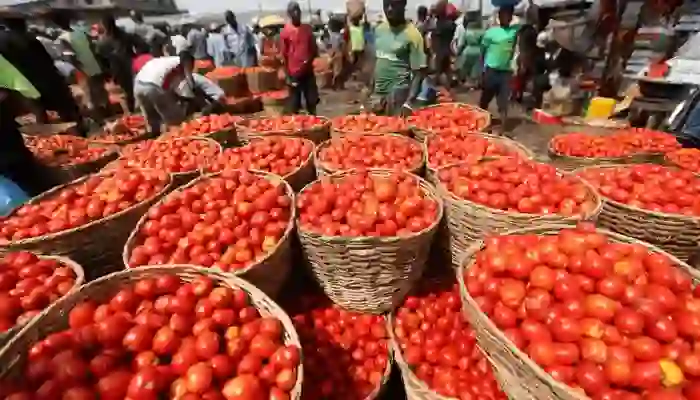
Nigeria could experience shortages of rice, tomatoes and other staple foods within the next three months unless urgent measures are taken to address production and supply chain challenges, the Organisation for Technology Advancement of Cold Chain in West Africa (OTACCWA) has warned.
The President of OTACCWA, Mr. Alexander Isong, who is also the Nigeria Country Director of the World Agriculture Forum, issued the warning during an interview with the News Agency of Nigeria (NAN) in Lagos.
According to Isong, declining agricultural production, insecurity, rising transportation costs and poor storage infrastructure are threatening food availability and could trigger another surge in food prices.
He said rice production is expected to fall by about six per cent to 8.3 million tonnes, while the area under cultivation is projected to decline by seven per cent to approximately 4.2 million hectares.
He noted that data from the United States Department of Agriculture also indicates a five per cent year-on-year drop in rice production, warning that reduced planting would significantly affect food supplies across the country.
Isong also expressed concern over tomato production, saying shortages could continue until the late harvest season expected in October. He added that maize, sorghum and millet may also face supply pressures due to reduced cultivation in recent planting seasons.
He attributed the worsening situation to insecurity in major farming communities, which has displaced thousands of farmers and disrupted agricultural activities, particularly in northern Nigeria.
According to him, transporting one tonne of grain from Kano to Lagos now costs about ₦70,000, compared to ₦45,000 previously, while transport costs on some routes have doubled or tripled because of rising fuel and energy expenses.
He further disclosed that onions and peppers are already in limited supply in major producing areas, contributing to sharp increases in market prices.
The OTACCWA president also noted that Nigeria is expected to remain heavily dependent on wheat imports, with an estimated 7.2 million tonnes likely to be imported to meet domestic demand.
Isong stressed that although agriculture recorded stronger Gross Domestic Product growth in the first quarter of 2026, the gains have not translated into improved food availability because of post-harvest losses, insecurity and declining cultivation.
He urged the Federal Government, state governments, private investors and development partners to work together to prevent shortages by improving security in farming communities, reducing transportation costs and strengthening food logistics.
He called for increased investment in rural roads, expanded rail freight services for agricultural produce and more efficient distribution systems to lower the cost of moving food from farms to markets.
Isong also advocated greater investment in aggregation centres, cold storage facilities, food processing plants and produce markets located close to farming communities to reduce post-harvest losses.
He encouraged the government to speed up the distribution of improved seeds, fertilisers, irrigation support and affordable credit ahead of the 2026/2027 planting season to boost production.
He further appealed to private investors to expand cold chain infrastructure, food processing and contract farming through accessible financing.
According to him, Nigeria loses between 30 and 50 per cent of its perishable produce before it reaches consumers, stressing that reducing these losses would significantly improve food availability and help stabilise prices.
Isong also called for stronger collaboration among governments, commodity associations, farmer cooperatives, logistics companies and development partners to monitor food supplies and respond quickly to emerging shortages.
He maintained that with improved security, better logistics, reduced post-harvest losses and stronger support for farmers, Nigeria can prevent food shortages and ease pressure on household food costs.
READ ALSO:



‘Atiku Will Definitely Lose 2027 Election, Peter Obi-Kwankwaso Have 70 Percent Chances’ – Babachir Lawal

Buhari Had Intelligence Reports on Tinubu’s Education, Genealogy, Complained About It – Former SGF Lawal Reveals

EFCC: ‘I’ve been in pain since I publicly supported you’ — Former NSIPA CEO cries out to Tinubu [Video]

What Exactly Is The Interest Of This Man?– Lere Olayinka Reacts To Gumi’s Warning To Niger Governor Bago

𝐑𝐞𝐧𝐞𝐰𝐞𝐝 𝐇𝐨𝐩𝐞 𝐒𝐭𝐮𝐝𝐞𝐧𝐭 𝐀𝐦𝐛𝐚𝐬𝐬𝐚𝐝𝐨𝐫𝐬 𝐇𝐨𝐥𝐝𝐬 𝐒𝐭𝐮𝐝𝐞𝐧𝐭 𝐋𝐞𝐚𝐝𝐞𝐫𝐬 𝐓𝐨𝐰𝐧𝐡𝐚𝐥𝐥 𝐌𝐞𝐞𝐭𝐢𝐧𝐠 𝐎𝐧 𝐕𝐨𝐭𝐞𝐫 𝐄𝐝𝐮𝐜𝐚𝐭𝐢𝐨𝐧 𝐚𝐧𝐝 𝐂𝐢𝐯𝐢𝐜 𝐄𝐧𝐠𝐚𝐠𝐞𝐦𝐞𝐧𝐭 𝐈𝐧 𝐎𝐠𝐛𝐢𝐚

“When did public opinion become stronger than the altar?” – AY Makun reacts following withdrawal from church programme

“I won’t be alive to see Christ humiliated” – Pastor David Ibiyeomie blasts government over bus preaching ban

They Set Labour Party On Fire To Burn Me, Now They Have Carried Same Fire To NDC – Peter Obi Slams APC

IYC CENTRAL ZONE ELECTION: PROTEST BREWING OVER ALLEGED DELEGATES LIST MANIPULATION BY GOVERNOR’S BROTHER.

“Nkwasiafoɔ, Who Will Play The Instruments?” — Nana Agradaa Sacks Instrumentalists After Mass Altar Call For Travel Prayers

US walks out on France at UN over human rights criticism

US Consulate in Toronto Targeted By Gunfire For Second Time This Year, Police Probe on

Explosions Rock Erbil And Khalifan As Iranian Drones Target Northern Iraq Near US Consulate

Iran Says It Still Controls Strait, Not Seeking Talks, After Trump Halts Bombing

Trump Economy at 18 Months is a Tale of Shocks, Resilience, and Signs of Stalled Progress

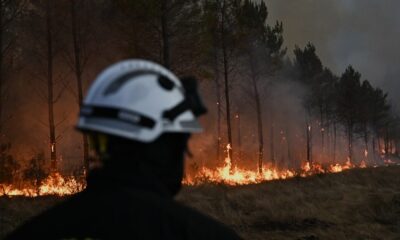
Crews in France race against looming heatwave as they battle 'completely unprecedented fire'
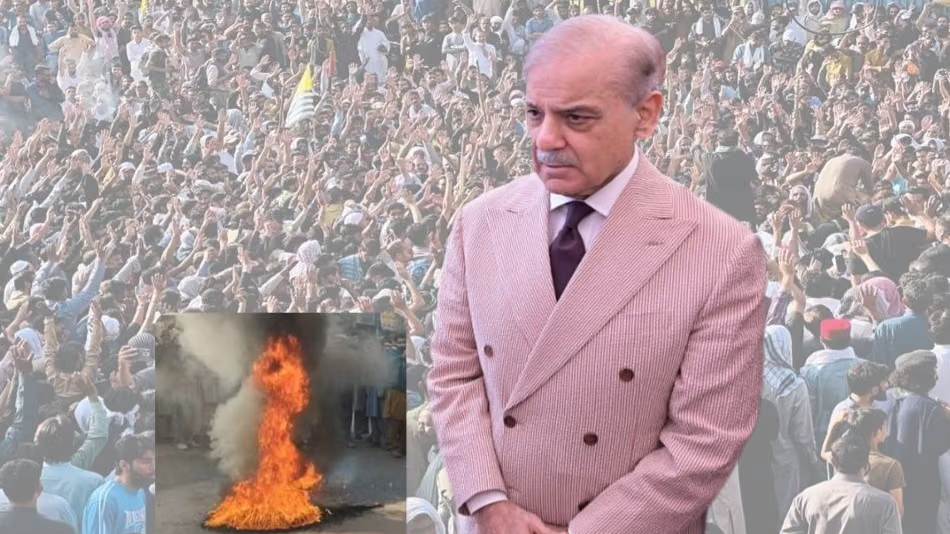
Voting Kicks Off to Empty Booths in PoK as Residents Boycott Polls Amid Unrest

U.N. human rights chief says Israel must end occupation and house demolitions in Lebanon
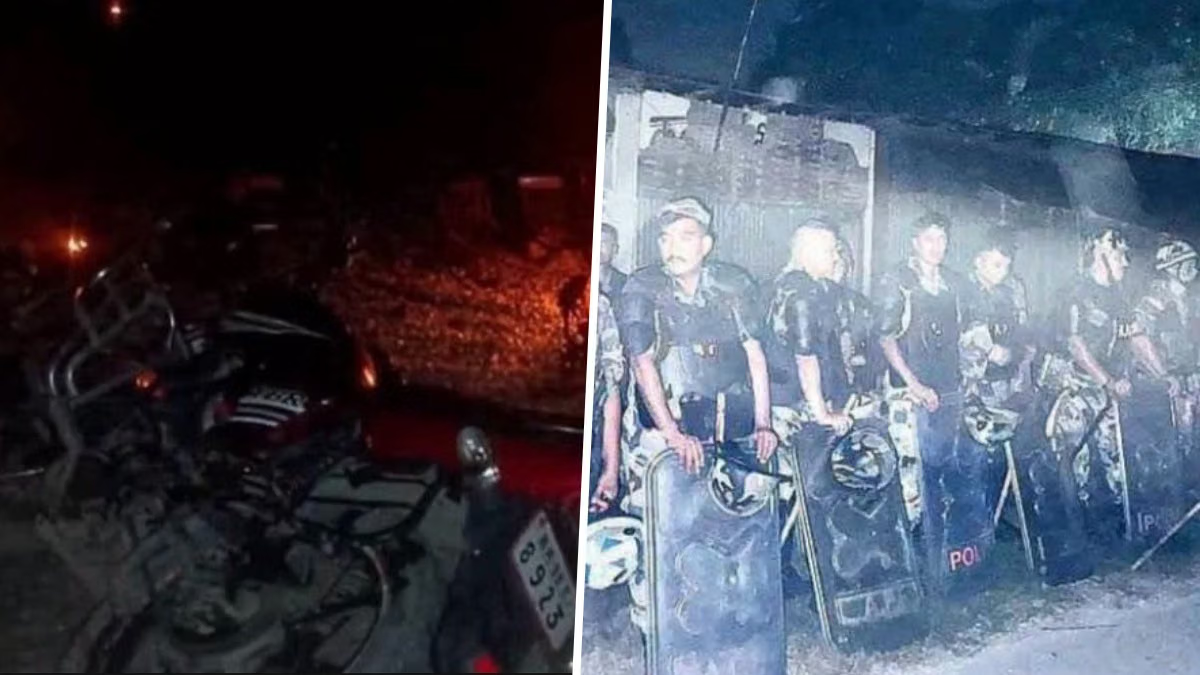
Nepal's India-Bordering Sunsari On Edge After Communal Violence; 1 Dead, 22 Injured, Indefinite Curbs Imposed

Trump's 'Guardians of the World' AI Blitz: Fantasy War Posters Targeting Iran Go Viral, Check Pictures Inside

 Politics21 hours ago
They Set Labour Party On Fire To Burn Me, Now They Have Carried Same Fire To NDC – Peter Obi Slams APC
- Special Report18 hours ago
“Nkwasiafoɔ, Who Will Play The Instruments?” — Nana Agradaa Sacks Instrumentalists After Mass Altar Call For Travel Prayers
- Special Report19 hours ago
“This Place Is Like Our Home” — Galamseyer Videos Deep Underground Pit Where They Stay For More Than Three Months In Search Of Gold
- Entertainment18 hours ago
“My head just do gbam!” — Father recounts daughter’s unexpected response to cooking during family discussion
- Entertainment20 hours ago
“I want to relocate to Nigeria; I hear the economy is booming” — Moroccan businessman tells Reno Omokri
- Special Report10 hours ago
Three Women, Including Pregnant Victim, Injured in Paris Stabbing; Suspect Allegedly Made Chilling Claim
- News11 hours ago
AEDC Rewards 1,126 Employees with Promotions and Step Increments in Landmark Investment in Talent and Career Growth
- Special Report6 hours ago
“We Have Done Everything Possible for Peace, But Adwoa Safo Wants GH¢3.7 Million Before Releasing Our Father’s Body” — Nana Kwadwo Safo Akofena