World
China should lean into its defining AI advantage – accessibility

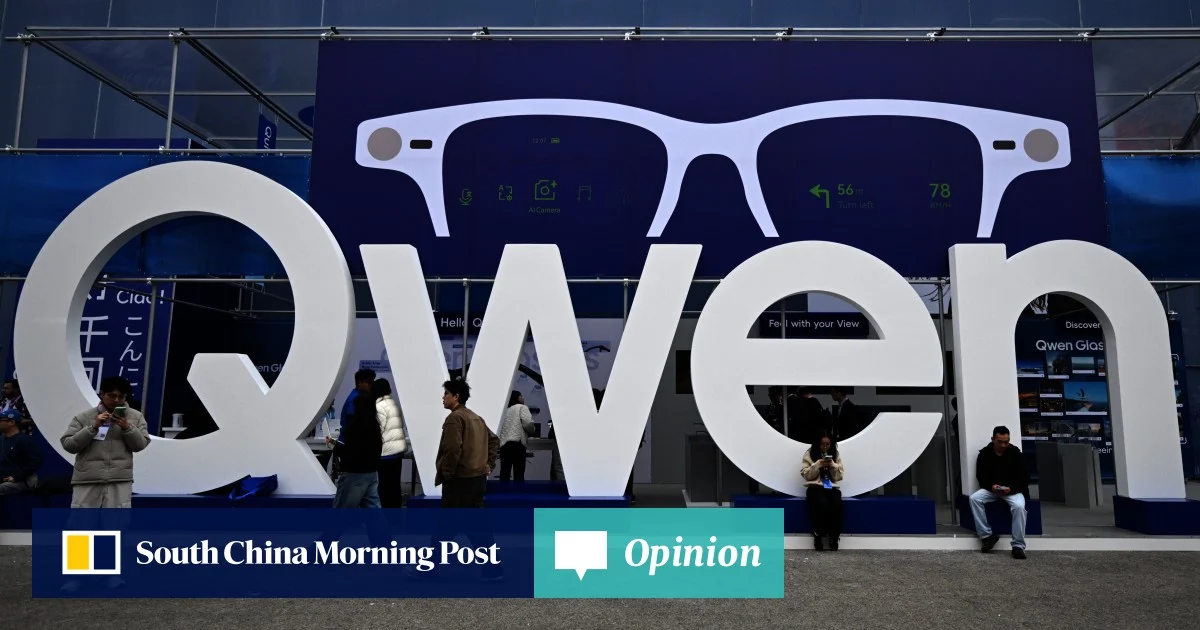
China’s emerging advantage in artificial intelligence (AI) is not that it already has the world’s best chips or strongest frontier models. It is that Chinese companies are increasingly providing capable intelligence at a price the global market can afford.
AI is fast becoming everyday infrastructure. It is metered by usage and embedded in businesses, public services and devices, much like electricity or cloud computing. In an infrastructure market, leadership depends on affordability, reliability and reach as much as peak performance.
The AI race is therefore becoming a contest for market share. On OpenRouter, Chinese models processed 4.12 trillion tokens in the second week of February, compared with 2.94 trillion for American models. By June, they were handling about 18 trillion tokens a week, more than three times the American total on the platform. OpenRouter is not the whole market, but it reveals an important shift: as capabilities converge, cost determines adoption. Adoption determines which ecosystems become global defaults.
Downloads are not deployments, but they indicate developer interest and future ecosystem formation. Each deployment produces local applications, engineering feedback and developers familiar with a technical stack. Market share is, therefore, not merely the reward for technological leadership. It can become a route towards such leadership.


Obi Is A Trader, Traders Have Short-term Calculation, They’re Not Into Longterm Projection-Oshiomhole

I retired as an Asst. Director, equal to a Brigadier, while Al-Mustapha retired as a Major—Dennis Amachree

Why Didn’t He Ask Those Probing Questions Like Seun Okinbaloye?–Olayinka Tackles Rufai Oseni Over Peter Obi’s TV Interview

AEDC Rewards 1,126 Employees with Promotions and Step Increments in Landmark Investment in Talent and Career Growth

Kennedy Agyapong Adds Another Empire — Kennedy Agyapong Acquires Platinum Plastics In Major Industrial Move

Industrial Arbitration Panel Mandate Is To Resolve Cases But Now To Spend N2.8 Billion On Streetlights, Road and Community Projects Outside Statutory Mandate – Secrets Reporters Nigeria

“We Have Done Everything Possible for Peace, But Adwoa Safo Wants GH¢3.7 Million Before Releasing Our Father’s Body” — Nana Kwadwo Safo Akofena

Three Women, Including Pregnant Victim, Injured in Paris Stabbing; Suspect Allegedly Made Chilling Claim

“Please Don’t Attend!” — Kantanka Family Disowns Adwoa Safo’s July 30 Burial, Warns Public To Stay Away

“Military Intelligence Officer Col. Abdussalam Ude Killed While Resisting Abduction At Abuja Home” — Wife, Driver, Guard Injured

Davido faces backslash over absence at Soso Soberekon’s wedding
Davido faces backslash over absence at Soso Soberekon’s wedding
Davido faces backslash over absence at Soso Soberekon’s wedding

Understaffing: NMA calls for establishment of medical schools in Akwa Ibom
Understaffing: NMA calls for establishment of medical schools in Akwa Ibom
Understaffing: NMA calls for establishment of medical schools in Akwa Ibom

Excess borrowing: Tinubu has lost control of Nigeria’s economy — Atiku

APP Appeal Court ruling…

NAFDAC Shuts Two Ogun Factories Over Banned Sachet Alcohol Production

Lagos Govt Intervenes In Alleged Widow Intimidation Case In Ikorodu

 Special Report22 hours ago
Kennedy Agyapong Adds Another Empire — Kennedy Agyapong Acquires Platinum Plastics In Major Industrial Move
- Special Report21 hours ago
“Please Don’t Attend!” — Kantanka Family Disowns Adwoa Safo’s July 30 Burial, Warns Public To Stay Away
- Metro13 hours ago
“Military Intelligence Officer Col. Abdussalam Ude Killed While Resisting Abduction At Abuja Home” — Wife, Driver, Guard Injured
- News18 hours ago
RSS Makes History as Graduating Class of 2026 Marks Valedictory Service in First-of-Its-Kind University-Style Ceremony
- Viral23 hours ago
We Have Reached Our Breaking Point ; Bayelsa Leader Calls on Tinubu to Decentralize Pipeline Surveillance
- Entertainment14 hours ago
“I hope say dey never collect my glory” – Peller calls out man who allegedly promised him 10 cows at Soso Soberekon’s wedding
- Metro19 hours ago
“Kidnappers Demand ₦200m Ransom For Abducted Kebbi High Court Judge” — Police Intensify Rescue Operation
- News11 hours ago
EXCLUSIVE: Police Indict Unity Bank Cooperative Officials in ₦85 Million Fraud Investigation – Secrets Reporters Nigeria