News
FG identifies 470 grazing reserves to end open cattle grazing

The Federal Government has identified 470 gazetted and legally protected grazing reserves across the country as part of a plan to resettle pastoralists and end open cattle grazing in cities such as Abuja and Lagos.
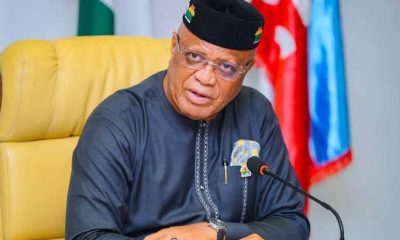
The Minister of Livestock Development, Idi Maiha, disclosed this while speaking on Arise News about the implementation of the National Dairy Policy Framework and broader plans to overhaul Nigeria’s livestock sector.
He said moving herders into the reserves would make it easier to manage disease surveillance, improve cattle breeds and strengthen animal health monitoring nationwide.
Asked whether Nigerians should expect cattle to disappear from city streets, Maiha said yes, explaining that open grazing was no longer sustainable since long-distance cattle movement was a major driver of low productivity and Nigeria’s inability to meet domestic dairy demand.
“We are sensitising pastoralists to adopt a sedentary lifestyle. Once they settle in designated reserves, all the interventions required to improve productivity become easier to implement,” he said.
He added that the government was also introducing a jaw-tagging system for cattle, which would trigger an alert whenever an animal moved outside its designated boundary, helping to quickly identify strayed or stolen livestock.
On milk production, Maiha said Nigerian cows currently yield an average of 1.2 to 2 litres of milk daily, far below countries like Kenya, where output can reach 30 litres per cow. He blamed the gap on poor livestock genetics, weak feeding systems and inadequate disease control.
Despite Nigeria’s estimated 270 million ruminants — including cattle, sheep, goats and camels — the minister said the country had failed to modernise its livestock genetics, unlike other African nations that have deliberately upgraded their breeds.
He noted that Nigeria still relies largely on traditional, low-yield cattle breeds, even though research institutes and veterinary faculties exist nationwide.
“While every other thing in our national space has changed, we have not been able to transform our livestock by introducing new genetics or selecting based on performance traits. Either of those approaches would have lifted yields from two litres to 15, 20, 30 or even 50 litres per cow per day,” he said.
To tackle the problem, Maiha said the government is focusing on better feeding practices, improved disease control and genetic upgrades, alongside full implementation of the National Dairy Policy Framework to boost local milk output and cut reliance on imports.
READ ALSO:








Modibbo Adamawa University Awarded ₦2.56 Billion in Contracts With No Advertisement, No Bidding, No Eligibility Checks

₦4 Billion In Financial Breaches And 36 Separate Compliance Issues Rock Nigeria Agricultural Insurance Corporation

Taraba bandit attack: Death toll rises to 50

EXCLUSIVE: Serial Divorcee: Reno Omokri Petitioned A California Court To Annul His Marriage To Second Wife Pamela White, Got Divorced Third Time By Shakeila Mitchell In The Same County, And In 2025 US Court Gave His First Wife Tuokpe Onuwaje Sole Authority Of Their Son

EPL: ‘Just to embarrass him’ – Carragher on why Carrick refused to use Bruno Fernandes in 3-0 defeat to Bournemouth

JUST IN: Nigeria’s index Ebola patient evacuated to Switzerland for treatment [VIDEO]

EXCLUSIVE: Funds Released To State Youth Leaders To Hold APC Structure Away From National Youth Leader Dayo Israel, As His War With Seyi Tinubu’s City Boy Movement Tears The Ruling Party’s Youth Wing Apart

US Credit Card Fraudster Governor Dapo Abiodun Paid N17.9 Billion To Service Debts In Three Months While His N1.04 Trillion Capital Budget Delivered 2.28 Percent

EXCLUSIVE: Nigerian Police Summons Retired Nigerian Correctional Service Comptroller-General Jafaru Ahmed Over Three Birth Dates, The N35 Million Transcorp Hilton Settlement That Buried His Age Forgery Case And The Blackmail War That Followed

Nigerian Correctional Service Controller General Haliru Nababa Paid N4.05 Billion For Prison Food And Cell Blocks To Companies With No CAC Record And Firms Standing Inactive

NIS, journalists partner to tackle trafficking, illegal migration in Ogun

NDC Spokesperson Resigns From Party

Dangote Refinery makes history as IPO attracts investors from 120 countries, all 54 African nations – The Witness Nigeria

Army launches manhunt for suspected killers of Islamic scholar in Katsina

EPL: Man Utd make U-turn on sacking Carrick

Senator Umeh Insists Gov. Soludo Cannot Match Peter Obi’s Popularity

Falae, Mimiko, Daniel, 30 Others to Plan Fasoranti’s Burial

EFCC arrests 21 suspected cyber fraudsters in Lekki raid, recovers five luxury cars – The Witness Nigeria

Ligue 1: Olympique Marseille consider January departure for Nnadi

‘Soludo Is Running After Peter Obi’s Record – Umeh

 Metro5 days ago
Security Tightened In Kaduna Ahead Of Tinubu’s 2027 Campaign Flag-Off — Operatives Guard Posters, Billboards
- News5 days ago
Akwa Ibom Governor Umo Eno Spent N424.9 Billion In Six Months Unaccounted For Even When He Intends To Waste N10 Billion For Arise Palm Resort And N2.6 Billion For His Trip Round The World
- Politics7 days ago
We Will Fling The Country Into Political Crisis – Ex-NAHCON Chairman Warns Against Denying Tinubu Second Term
- Metro5 days ago
“The Legal Process Must Not Become A Source Of Intimidation” — NUJ Demands Probe Of Kaduna Journalist’s Conviction Over Facebook Post
- Metro5 days ago
“Voters Must Be Able To Make Decisions Based On Credible Information” — EU Warns Against AI-Driven Electoral Disinformation
- Metro5 days ago
“No Indication To Alter Large Gatherings” — FG Rules Out Ebola Restrictions, Monitors 44 Contacts, Cuts Foreign Delegations
- Society5 days ago
Tinubu receives fellowship of WACP, seeks solutions to brain drain of medical experts
- Special Report5 days ago
Ebola: FG quarantines high-risk contacts as patient shows signs of recovery